
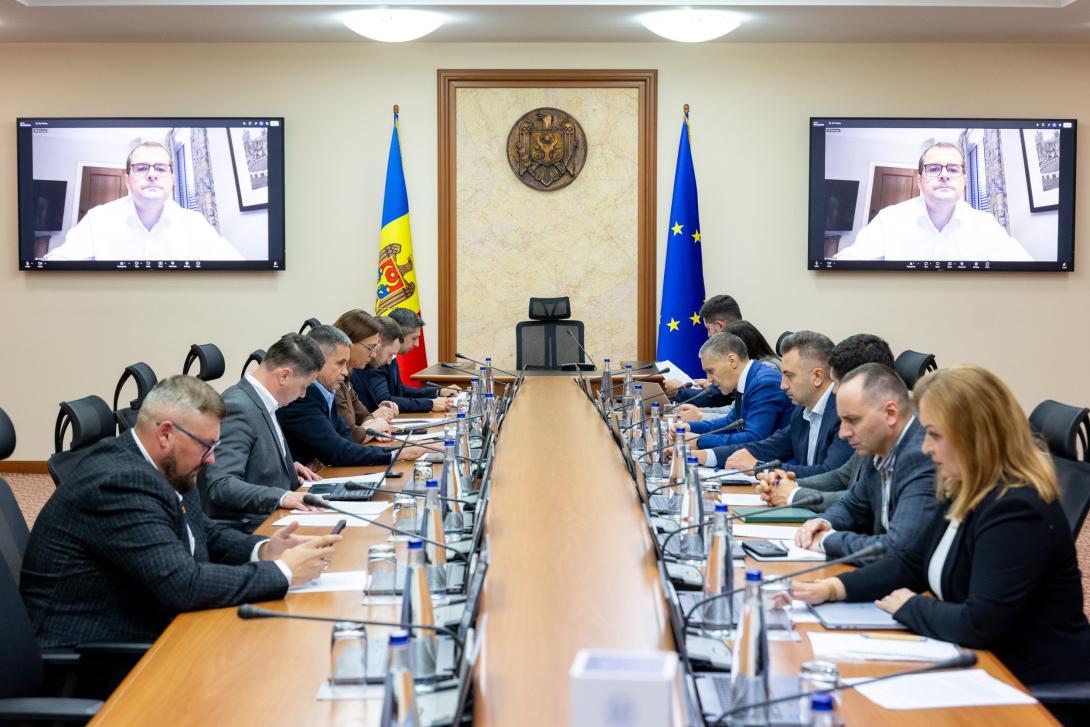
Moldova under emergency state in energy, hydrological sectors as of September 26; what measures take effect
Moldova as of September 26 will be under a nationwide state of emergency in the energy and hydrological sectors for a period of 60 days. The parliament has approved the introduction of the special regime, amid risks related to energy and fuel supplies, as well as the persistent hydrological deficit on the Dniester and Prut rivers.

Authorities say that Moldova presently has sufficient energy, fuel and water, but supply risks have intensified. The state of emergency is meant to enable faster intervention, in order to prevent potential disruptions and protect the population and critical infrastructure.

In the energy sector, approximately 59 per cent of the electricity needed for this winter is expected to be covered by imports. During peak hours, import requirements are estimated at 400–450 MW, while guaranteed commercial capacity is approximately 360 MW. The difference can be covered through additional capacity available in the region, but authorities consider rapid intervention mechanisms necessary in the event of unforeseen circumstances.

As for natural gas, more than 90 per cent of the requirements for the cold season have already been contracted. According to the National Crisis Management Commission (CNMC), the current risk is primarily financial, amid rising international prices and the need to replenish mandatory reserves.

The fuel market also remains under monitoring. In late last August, Moldova had diesel reserves for approximately 3.5 days, while 109 stations reported a lack of the product at the pump. Currently, reserves are estimated to last around 10 days and the number of stations reporting shortages has fallen to fewer than seven.

Measures for energy security

According to Decision No. 8 of the National Crisis Management Commission, hospitals, emergency services and critical infrastructure, including drinking-water intake and pumping stations and district heating facilities, will have priority access to electricity.

Between 18:00 and 22:00, the interconnection capacity available for exports will be set at zero, except for the supplier subject to a public service obligation. If a deficit arises that cannot be covered through commercial purchases, Moldova may request emergency electricity from transmission system operators in neighboring countries as a last resort.

Combined heat and power plants will be able to increase electricity production within their technical capabilities. At the same time, certain procedures for developing energy generation and storage capacity, including photovoltaic and wind installations equipped with storage batteries, will be simplified for the duration of the state of emergency.

Central and local public authorities will be required to reduce institutional fuel consumption by at least 20 per cent, compared with the same period last year and electricity consumption for public lighting - by at least 50 per cent, except where necessary to ensure the operation of critical infrastructure and essential services.

In public and commercial buildings, indoor lighting is to be reduced by at least 30 per cent where possible, while fountains, shop windows and decorative, architectural and advertising lighting will be switched off. Enterprises with energy-intensive production processes will be organized, so that the activities with the highest energy consumption take place outside the peak periods of 6:00–9:00 and 18:00–22:00.

Fuel reserves protected through special measures

To maintain domestic fuel reserves, the export and re-export of standard oil products from the Giurgiulesti International Free Port will be permitted only if at least 2,500 tons of petrol and 7,500 tons of diesel remain in storage, subject to the exceptions provided for in the decision.

Land transport bringing fuel into Moldova will have access to a dedicated lane at border crossing points, while rail transport carrying oil products will receive priority for movement and shunting on the national railway network.

At fuel stations, diesel sold in containers for consumption may be purchased in quantities of no more than 40 liters. For specialized mobile containers meant to fuel agricultural machinery, the limit is 100 liters.

The decision also stipulates that, as long as stations have standard diesel available, it must be sold at the regulated price. Other types of primary petroleum products may be sold after the standard product reserves have been depleted.

Restrictions on water use

In the hydrological sector, authorities have identified a persistent deficit on the Dniester and Prut rivers, while falling water levels and flows may affect water abstraction and, consequently, the supply of water to the population.

Available resources will be used as a priority, in order to supply the population with drinking water, meet sanitation needs, and serve hospitals, social and educational institutions, emergency services and other critical facilities. Before the heating season starts, the water needed to replenish the circuits of centralized heating systems, including Chisinau CHP and CET-Nord in Balti, will also be secured.

For the duration of the state of emergency, the operation of water-intake stations on the Dniester and Prut meant for irrigation is suspended.

The use of drinking water from public systems or the abstraction of water from surface sources for irrigating lawns and ornamental green spaces, washing streets, sidewalks, courtyards, facades, and roofs, as well as filling or topping up swimming pools, recreational basins, fountains, and ornamental ponds, is also prohibited. The restrictions apply regardless of the time of day.

Public water supply operators will be required to develop continuity plans for scenarios in which source availability falls by 10 per cent, 20 per cent, or 30 per cent. The plans must establish which types of consumption will be limited, identify alternative sources and specify which institutions will receive priority supplies.

If a decline in water levels or flows affects the operation of water-intake facilities and the supply of the population, mobile water distribution will be activated. Priority will be given to medical institutions, residential social assistance centers, schools, emergency services and residents of affected localities.

Five high-capacity pumping units have also been prepared for situations of severe shortage. They have been released from the state reserve and transferred to S.A. Apa-Canal Chisinau. In addition, artesian wells and other verified reserve groundwater sources may be connected and brought into operation.

According to the CNMC, the adopted decisions seek to prevent shortages and disruptions, while maintaining the supply of electricity, heat, water and fuel, as well as the ensuring of the operation of essential services.

The Energy Ministry is responsible for crisis-response management in the energy sector, the Environment Ministry - in the hydrological sector, while the National Crisis Management Center ensures strategic coordination and monitors the situation nationwide. The measures provided for in CNMC Decisions No. 8 and No. 9 enter into force on September 26, 2026.
 Facebook
 Instagram
 X/Twitter
 Telegram
Drone found in Florești had onboard camera, features specific to Gerbera type
Emotional moment in Parliament: six children opened plenary session with special sign language performance
Draft decisions with environmental impact compiled in new section on EcoContact
Researchers from four countries gathered in Chișinău to discuss medicinal plant biotechnology
DOC // Moldova has new media law
PHOTO GALLERY // Journey through Northern Moldova through MOLDPRES lens
New director at Teleradio-Moldova Company: Ecaterina Cheptanaru wins competition
Moldovan-American sectoral cooperation discussed at Moldova's Defense Ministry
Moldovan PM says situation on Dniester must not be turned into subject of political speculation
Moldovan PM says over 620,000 households might benefit from energy compensation during this season
Environment Minister on Dniester situation: Water reserves three times lower than discharges, situation worsened
Number of families eligible for energy compensation to increase
Government approves declaration of state of emergency in energy and hydrological sectors
Compensation for cold season to be provided throughout entire period; Moldovan president says government identifying additional resources
PHOTO // PM in New York tells Diaspora government willing to turn experience of Moldovans from United States into projects for country
Moldovan foreign affairs minister at UN says Moldova strengthening capacity to respond to health threats
Moldova under emergency state in energy, hydrological sectors as of September 26; what measures take effect
PHOTO // PM promotes Moldova's investment opportunities in New York
Balti Clinical Hospital to receive ultrasound machine through grant provided by government of Japan
Japan supports modernization of Balti Clinical Hospital with grant worth over 95,000 dollars
Moldovan parliament speaker urges students not to be afraid to express their ideas, wishes
 National Bank of Moldova
Strengthening Moldova’s cooperation with UNDP, UNOPS discussed in New York
Moldova's National Crisis Management Commission approves new measures to ensure energy security, protect water resources
Moldovan PM, U.S. investors, companies discuss potential projects in Moldova
Head of state says Moldovans must build economy where well-educated people can find opportunities at home
Moldova represented at Interparliamentary Conference on Stability, Economic Coordination and Governance in European Union

Moldova's Border Police receive six special vehicles on behalf of FRONTEX
Head of state says Moldovans must build economy where well-educated people can find opportunities at home
Moldovan president attends events dedicated to 35th anniversary of foundation of Academy of Economic Studies
New charges brought against former Moldovan president Igor Dodon in “Kuliok” case; prosecutors seek harsher sentence
Moldova represented at Interparliamentary Conference on Stability, Economic Coordination and Governance in European Union
ARMENPRESS: EU Commissioner Kos promotes Armenian products after trade measures adopted
VIDEO // Parliament speaker conveys message to coaches of Moldova
Public buildings of Moldova to undergo energy renovation with World Bank's support
Mircea Eșanu on nomination to lead Moldova Project: More information could become known in October
President’s speech at ASEM’s 35th anniversary
PHOTO GALLERY // Moldova's new passport presented by Public Service Agency
VIDEO // Moldova to introduce new passport model as of October 15; document to feature more than 100 security elements
DOC // Regulation on e-Consulat System published in Official Journal
National Award for Seniors: 15 people winners in 2026 edition
PHOTO // Moldova’s protected areas strengthened through restoration works, planting and new management tools
Moldovan, Dutch Prime Ministers discuss European path and investments
Receive the latest news directly to your email

Receive the latest news directly to your email