
Harsher penalties for human trafficking
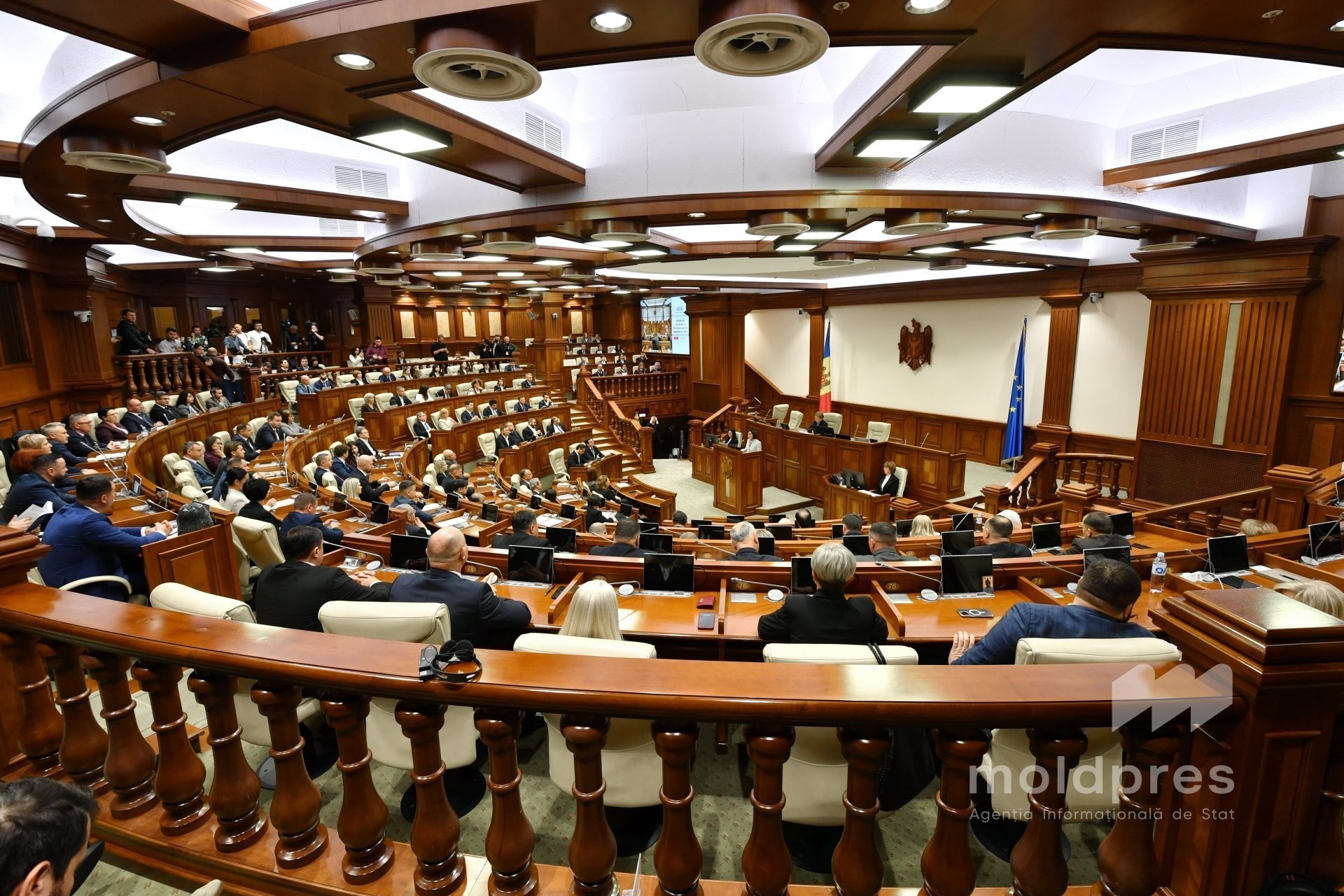
The suspended execution of sentences will no longer be applicable to aggravated forms of human trafficking. This provision is included in the draft law on preventing and combating human trafficking and protecting victims, which was passed today by Parliament in its first reading.

The legislative initiative was presented by the Secretary of State of the Ministry of Justice, Mihai Gheorghieș. He emphasized that the document aims to align national legislation with European norms and to strengthen the Republic of Moldova’s capacity to prevent and combat this phenomenon in a coherent, effective manner, in line with its international obligations.

“Through this draft law we are strengthening victim protection, improving international cooperation and ensuring a firmer criminal-law response, in accordance with international standards. On the criminal component, we are excluding the application of suspended execution of sentences for aggravated forms of human trafficking, establishing a stricter sanctioning regime,” said Mihai Gheorghieș.

The draft also extends the criminalization of retaining a victim’s documents when these are used as a means of control or coercion, even if they were initially handed over voluntarily.

“Likewise, we are expanding the forms of exploitation by including forced marriage, servitude and the transfer of control over a person, including in the absence of the victim’s geographical movement. At the same time, we are introducing aggravating circumstances for acts committed through information and communication technologies, with a focus on cases of online sexual exploitation. On the procedural side, we are including victims of human trafficking in the category of vulnerable procedural subjects. Their hearings will be guaranteed in the presence of a lawyer and, where appropriate, a psychologist, in order to reduce the risk of re-victimization,” added Mihai Gheorghieș.

In the area of social assistance, support provided to victims will take into account their actual needs, depending on gender, age and disability.

“Placement in assistance centres will be established for an initial period of 30 days, and its extension will depend on the individualized assistance plan. Thus, we are abandoning the capping of placement duration and regulating a minimum package of free medical and psychiatric services. For child victims, we are introducing the immediate appointment of a legal representative when there is a conflict of interest with the parents. At the same time, we are extending support measures to the child’s family, including members who are temporarily abroad. For foreign citizens identified as victims, we are allowing them to work during their temporary stay, without the obligation to obtain an additional work permit,” underlined Mihai Gheorghieș.

Strategic monitoring of the phenomenon and the evaluation of human trafficking trends at national and international level will be carried out by the National Coordinator for Combating Human Trafficking. The draft law is to be examined by Parliament in a second reading. After adoption, the legislative amendments will enter into force three months after publication in the Official Journal.
 Facebook
 Instagram
 X/Twitter
 Telegram
Food poisoning among some Foreign Ministry employees after diplomatic reception in Chișinău
Prosecutors Evaluation Commission holds new round of hearings
Court terminated criminal proceedings in case of former Prosecutor General on violation of privacy of former head of Anticorruption Prosecutor’s Office
Heatwave protection measures at border crossings: Customs Service recommendations for travelers
Performance of students from Moldova at Balkan Physics Olympiad: gold, bronze medals and special prize
PHOTO // National Army to be equipped with over 100 units of state-of-the-art military hardware
CNA searches at MoldATSA headquarters in criminal case of abuse of office
PHOTO // International exercise Peace Shield 2026 launched at National Army Training Center
Education Ministry continues registrations for competition to fill vacant teaching positions
Parliament hosts exhibition - Ștefan cel Mare: From History into Eternity
Public Property Agency director announces resignation
1946–1947 Famine could be recognized as crime against humanity in Moldova
VIDEO // Interactive teaching and learning methods at gymnasium in Micleușeni, Strășeni
VIDEO // European Commissioner for Environment, message of support during her first visit to Chișinău
Discover Moldova with #MOLDPRES // Wooden church in Palanca, heritage symbol of Călărași for over two centuries
Agriculture Minister announces dismissal of state secretary detained by CNA: I strongly condemn any form of corruption
Parliament creates inquiry commission for state-owned enterprises: hiring, salaries and management of public funds to be reviewed
Phone scams tackled by law: Providers to block suspicious calls, with fines of up to 75,000 lei
Union Motorway takes shape: Contract signed in Bucharest for Iași–Ungheni section during Vladimir Bolea’s visit
PHOTO // Moldova and Romania expand cooperation in transport infrastructure
Persons convicted of offences against children no to be allowed to hold positions involving interaction with minors
 National Bank of Moldova
Social benefits totaling 76.3 million lei provided to citizens of Moldova residing in Transnistrian region in first half of 2026
Government Program: 85 young people to complete paid internships within public authorities
Prime Minister met with EU Representative for Transnistrian settlement
Prime Minister and Strategic Counsellor at Tony Blair Institute discuss support for European reforms in Moldova
President met with former Prime Minister of Finland

Harsher penalties for human trafficking
New law for whistleblowers: Protection against retaliation and mandatory reporting channels
20 million lei invested in school modernization: better conditions for 11,000 students
Speaker promises solutions for farmers
State-owned enterprises to be audited
Parliament to hold public hearings on living and housing conditions of foreign workers Moldova
Republic of Moldova moves toward EU standards: Parliament adopts new Arbitration Law in first reading
ARMENPRESS: Open borders will transform Armenia's economic future, EU is ready to help make that vision a reality, says European Commission president
Social benefits totaling 76.3 million lei provided to citizens of Moldova residing in Transnistrian region in first half of 2026
Voted by Parliament. System that automatically calls 112 in road accidents to be regulated by law
Moldova to automatically exchange more categories of financial data with other countries
State Secretary of Ministry of Agriculture and Food Industry and business representative detained in corruption case
CNA searches at Ministry of Agriculture and Food Industry
Deputy Speaker’s message on U.S. Independence Day
New rules for certain postal items from Moldova to European Union countries
DOC // Published in Official Journal. Moldova joins two international maritime conventions
Receive the latest news directly to your email

Receive the latest news directly to your email