
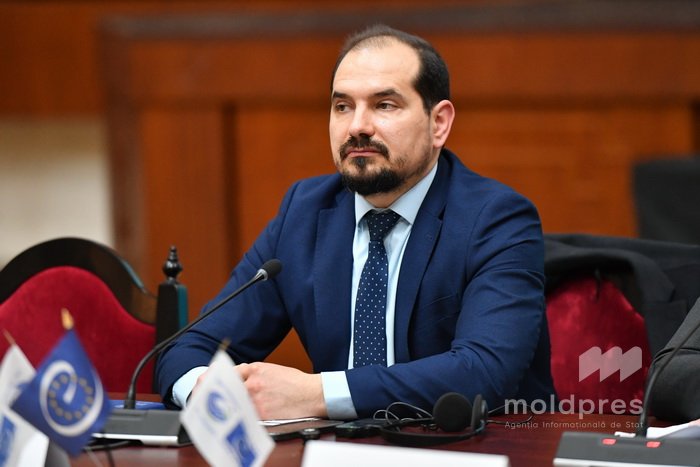
Secretary-General of Government explains how government wants to keep people in villages: services, jobs and stronger town halls
Government is preparing a broad reform of local and regional public administration, intended to speed up community development and improve citizens’ access to basic public services. Secretary-General of the Government Alexei Buzu provided details about the process at a TV show.

According to the official, the authorities aim to rethink how localities are administered, in the context of depopulation and the limited administrative capacity of many town halls.


Stronger, more accessible public services

Alexei Buzu explained that the reform primarily targets improving the quality of public services – from water and sewage to waste management, social services and road infrastructure.

“We want to accelerate development and bring more services to citizens in towns and villages. These services must be accessible, efficient and sustainable over time: water, sewage, waste management, social services, investment in roads, bridges and access routes,” he said.

The official stressed that the current administrative system, fragmented and insufficiently consolidated, makes infrastructure projects more expensive and harder to implement. In localities with a small and declining population, there is a risk that investments will not be sustainable and that the services created will deteriorate over time.


Consolidating town halls and new administrative tools

One of the solutions being examined by the Government is the reorganization and consolidation of town halls. Buzu noted that the current way local administrations operate was designed about 25 years ago and no longer matches current demographic and economic realities.

Data analyzed by the Government show that about 60% of town halls in the Republic of Moldova have fewer than 1,500 inhabitants and very small staff – in many cases only five employees: the mayor, the secretary, the accountant, the tax specialist and the cadastral engineer.

Under these conditions, mayors are forced to deal with day-to-day technical issues – equipment, lighting, networks – instead of focusing on development projects, attracting investment and managing complex procurement procedures.

“As long as mayors are busy with light bulbs, pumps or tractors and not with projects and resource mobilization, we will not achieve the level of development we want,” the Secretary-General of the Government said.

The government intends to provide local administrations with more tools, resources and professional teams so they can effectively solve community problems.


Amalgamating localities and setting a population threshold

The reform will also include a process of amalgamating town halls, meaning the administrative merger of some localities, especially where the population is small. The authorities are analyzing several scenarios, including setting a minimum population threshold for a town hall to exist, possibly between 1,500 and 5,000 inhabitants.

The final threshold will be set in law and applied after the 2027 local elections. If the population of a locality falls below the established limit, it will enter an amalgamation process, preferably voluntary, with elections to be held in the next electoral cycle.

The Government is counting on the voluntary participation of local authorities and on financial incentives for localities that accept administrative merger, so that they benefit from larger budgets, better-paid specialists and increased capacity to co-finance projects.


A broader reform than territorial reorganization

According to Alexei Buzu, the reform will not be limited to changing the administrative map, but will target the way town halls operate. Announced directions include digitizing services, improving relations with citizens and entrepreneurs, increasing staff competencies and adapting the administration to the standards of an EU candidate country.


Consultations with local authorities

The Secretary-General of the Government said that the reform is being discussed directly with local representatives. In recent weeks, representatives of the government have held consultations with over 2,500 people, mostly mayors and local representatives.

“We do not want a reform written in an office and imposed on mayors. We want them as partners and to understand together the risks and benefits,” Buzu said, noting that previous governments avoided implementing this reform because of its complexity and political risks.

The authorities consider that reorganizing local administration is essential for the economic development of villages, attracting businesses and creating jobs, the goal being to keep the population in rural communities and improve quality of life.
 Facebook
 Instagram
 X/Twitter
 Telegram
Position of director of Moldovan National Energy Regulatory Agency open to competition: applicants may submit files until March 23
Moldova connects to European Union’s secure communication network - TESTA
MD-ALERT system to be operational in 2027
Nisporeni hospital ward with violations of sanitary and hygiene norms to be renovated
Employees to be able to receive holiday vouchers
Prime Minister orders mobilization of relevant institutions amid bad weather
UPDATE 10.10 // Truck traffic temporarily restricted at entry into country through Leușeni and Sculeni border crossing points
PHOTO // National Army servicemen attend multinational exercise Defence Cyber Marvel 2026
Moldova Post Office warns of possible delays for shipments to Italy during Milano–Cortina 2026 Olympic and Paralympic Winter Games
Students in several localities holding online classes today
Free Romanian language courses: MEC opened registration
Warning for drivers: restricted access for vehicles at border with Ukraine
Two localities in Vulcănești district cut off power supply
National Police of Moldova say Palanca, Tudora border crossing points be temporarily closed over weather conditions
DOC // New lists of banned or restricted air carriers in Moldova published in Official Journal
Constitutional Court President at opening of 2026 Judicial Year: As long as constitutional review functions freely and independently, democratic balance in country remains protected
PHOTO // Made in Moldova space inaugurated at Eugen Doga International Airport – Chișinău: travelers can buy local products before flight
Danish MPs to visit Chisinau Parliament early next week
VIDEO // Authorities provide details on joint Moldova–Ukraine operation
Secretary-General of Government: Cost of not reforming local administration higher than cost of reform. We will bring investments and stronger teams to city halls
PHOTO, VIDEO // Security structures in Ukraine and Moldova dismantled Russian group preparing assassinations: group leader and accomplices arrested
 National Bank of Moldova
President issues warning about scams: Only thieves ask for money, passwords or promise quick gains by phone or online
Moldovan PM visits industrial area in commune from Chisinau municipality
Moldovan PM visits kindergarten in commune of Chisinau municipality
Revocation of Moldovan president's Decree No. 418-IX from April 11, 2022, on granting of pardon
Moldovan PM meets Ambassador of Japan

VIDEO // Alarm raised as more Moldovans fall victim to scammers
President issues warning about scams: Only thieves ask for money, passwords or promise quick gains by phone or online
Higher salaries for public sector employees as of September
Moldovan PM to present report in parliament
Simple motion against Moldova's energy minister fails
BTA: Ambassadors of Bulgaria, EU to Moldova Discuss EU Integration and Regional Development During Visit to Taraclia
Moldovan PM visits industrial area in commune from Chisinau municipality
PHOTO // Moldovan electoral authorities discuss process of organizing parliamentary elections
Moldovan PM visits kindergarten in commune of Chisinau municipality
Moldovan parliament speaker says reform of local public administration must be carried out in next autumn, there is no time to wait
Revocation of Moldovan president's Decree No. 418-IX from April 11, 2022, on granting of pardon
Moldovan energy minister in parliament says country reaches stage of maturity, after years in which energy system was fragile, dependent, vulnerable to political blackmail
Mayors of Moldova directly Involved in EU accession: launch of Local Ambassadors Network
Moldovan prosecutor to be reevaluated: Superior Council of Prosecutors rejects Vetting Commission’s negative report
Moldovan parliament speaker talks about former president of Gagauzia's people's assembly
Moldovan PM meets Ambassador of Japan
Receive the latest news directly to your email

Receive the latest news directly to your email