
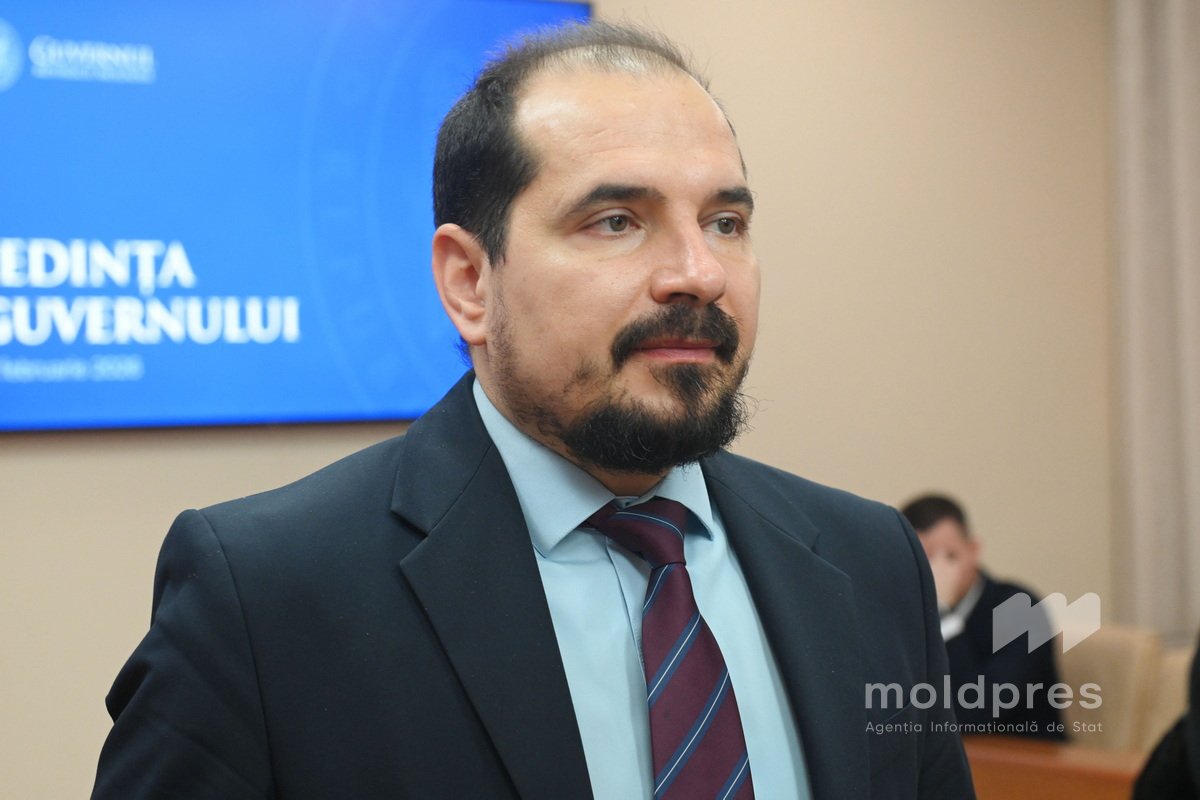
Secretary-General of Government: Cost of not reforming local administration higher than cost of reform. We will bring investments and stronger teams to city halls
The local public administration reform is a strategic necessity, and postponing it would cause higher costs than its implementation, according to Secretary General of the Government Alexei Buzu.

The official rejected the idea that the reorganization of city halls is based on budget savings or electoral calculations, noting that the main goal is to increase administrative capacity and improve services for citizens.

Cost of non‑reform is higher

Asked about the expenses involved in the amalgamation of city halls, Buzu said that the Government is analyzing the financial impact, but drew a distinction between the "cost of reform" and the "cost of non‑reform."

"We believe that the price of not making these changes is much higher than the cost of the reform," he said.

He explained that the financial incentives offered to city halls that choose to amalgamate should not be seen as expenses, but as investments in local administrative capacity.

Example of Leova: incentives and salary increases

During the discussion, the case of the municipality of Leova was mentioned, where a voluntary amalgamation process took place. According to Buzu, the Government provided about 12 million lei for the development of the waste collection service; resources were granted to cover reorganization costs; and the salaries of some employees increased by about 30%.

The official stressed that the salary increases represent an investment in skills and professionalization.

"A better‑paid, more motivated team, with better‑trained specialists means better services and a greater capacity to attract projects," he said.

He added that in voluntary processes, local teams negotiate how the reorganization will take place, and in some cases new positions can be created or people from outside the administration can be brought in.

Why the changes are necessary

According to Buzu, about 60% of the city halls in the Republic of Moldova have fewer than 1,500 inhabitants and operate with small teams—on average five to six employees—with limited responsibilities and outdated administrative structures.

"Mayors end up being managers of equipment, public lighting and technical issues, instead of developing projects and attracting investments," he said.

Through the merger of several city halls, the Government aims to create consolidated administrative structures capable of including specialists in projects and European funds, experts in public procurement, legal advisors, architects and digitalization specialists, as well as staff dedicated to citizen relations and social services.

"If we have four city halls with five employees each, after the merger we can have a structure with 20 positions, but with diversified and specialized functions," he explained.


Development budgets will increase in 2026 and 2027

Buzu announced that the 2026 budget provides for almost 2 billion lei for local and regional development through the Ministry of Infrastructure and Regional Development, a higher amount than in 2025. Even larger allocations are planned for 2027.

The funds will be used for investments and incentives in the reorganization process, in parallel with attracting external resources.

"In the European Union there are numerous funding opportunities that Moldova can apply for, but we do not have enough specialists at the local level to make use of these funds. The reform aims precisely at creating this capacity," the official said.

This is not a reform for electoral gain

Asked whether the reform might affect the governing party’s electoral support, Buzu rejected this interpretation. He stated that the government has assumed difficult reforms in recent years, including in the context of the COVID‑19 pandemic and other crises, and that its decisions will be evaluated by citizens through electoral processes.

"This is not a reform designed for immediate political benefits, but for the long‑term development of communities," he said.

Personal experience and arguments

Buzu also referred to his personal experience in local administration, noting that he has been a local councilor and comes from a village located 22 kilometers from Chișinău, where according to his statements, there is still no sewage system.

He argued that the lack of infrastructure in many localities is not only about funding, but also about the low administrative capacity to plan and implement projects.


Reform presented as investment in development

The Secretary General of the Government reiterated that the reorganization of city halls is not aimed at reducing expenses through layoffs, but at strengthening administrative capacities and creating modern structures, compatible with Moldova’s status as a candidate country for the European Union.

According to him, the goal is to create local administrations capable of providing quality public services, attracting investments, and supporting the economic development of communities, especially in rural areas.
 Facebook
 Instagram
 X/Twitter
 Telegram
Position of director of Moldovan National Energy Regulatory Agency open to competition: applicants may submit files until March 23
Moldova connects to European Union’s secure communication network - TESTA
MD-ALERT system to be operational in 2027
Nisporeni hospital ward with violations of sanitary and hygiene norms to be renovated
Employees to be able to receive holiday vouchers
Prime Minister orders mobilization of relevant institutions amid bad weather
UPDATE 10.10 // Truck traffic temporarily restricted at entry into country through Leușeni and Sculeni border crossing points
PHOTO // National Army servicemen attend multinational exercise Defence Cyber Marvel 2026
Moldova Post Office warns of possible delays for shipments to Italy during Milano–Cortina 2026 Olympic and Paralympic Winter Games
Students in several localities holding online classes today
Free Romanian language courses: MEC opened registration
Warning for drivers: restricted access for vehicles at border with Ukraine
Two localities in Vulcănești district cut off power supply
National Police of Moldova say Palanca, Tudora border crossing points be temporarily closed over weather conditions
DOC // New lists of banned or restricted air carriers in Moldova published in Official Journal
Constitutional Court President at opening of 2026 Judicial Year: As long as constitutional review functions freely and independently, democratic balance in country remains protected
PHOTO // Made in Moldova space inaugurated at Eugen Doga International Airport – Chișinău: travelers can buy local products before flight
Danish MPs to visit Chisinau Parliament early next week
VIDEO // Authorities provide details on joint Moldova–Ukraine operation
Secretary-General of Government: Cost of not reforming local administration higher than cost of reform. We will bring investments and stronger teams to city halls
PHOTO, VIDEO // Security structures in Ukraine and Moldova dismantled Russian group preparing assassinations: group leader and accomplices arrested
 National Bank of Moldova
President issues warning about scams: Only thieves ask for money, passwords or promise quick gains by phone or online
Moldovan PM visits industrial area in commune from Chisinau municipality
Moldovan PM visits kindergarten in commune of Chisinau municipality
Revocation of Moldovan president's Decree No. 418-IX from April 11, 2022, on granting of pardon
Moldovan PM meets Ambassador of Japan

VIDEO // Alarm raised as more Moldovans fall victim to scammers
President issues warning about scams: Only thieves ask for money, passwords or promise quick gains by phone or online
Higher salaries for public sector employees as of September
Moldovan PM to present report in parliament
Simple motion against Moldova's energy minister fails
BTA: Ambassadors of Bulgaria, EU to Moldova Discuss EU Integration and Regional Development During Visit to Taraclia
Moldovan PM visits industrial area in commune from Chisinau municipality
PHOTO // Moldovan electoral authorities discuss process of organizing parliamentary elections
Moldovan PM visits kindergarten in commune of Chisinau municipality
Moldovan parliament speaker says reform of local public administration must be carried out in next autumn, there is no time to wait
Revocation of Moldovan president's Decree No. 418-IX from April 11, 2022, on granting of pardon
Moldovan energy minister in parliament says country reaches stage of maturity, after years in which energy system was fragile, dependent, vulnerable to political blackmail
Mayors of Moldova directly Involved in EU accession: launch of Local Ambassadors Network
Moldovan prosecutor to be reevaluated: Superior Council of Prosecutors rejects Vetting Commission’s negative report
Moldovan parliament speaker talks about former president of Gagauzia's people's assembly
Moldovan PM meets Ambassador of Japan
Receive the latest news directly to your email

Receive the latest news directly to your email