
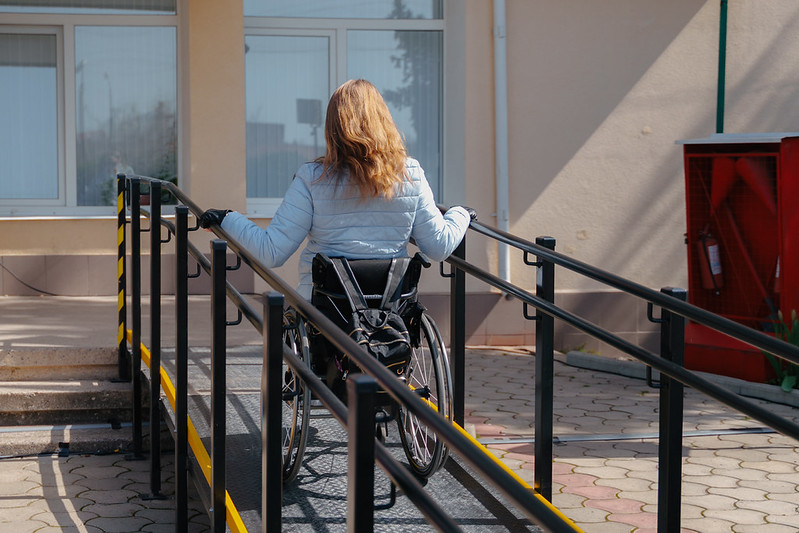
Improved access for people with disabilities in Moldova: 30 ramps to be installed in public institutions hosting polling stations
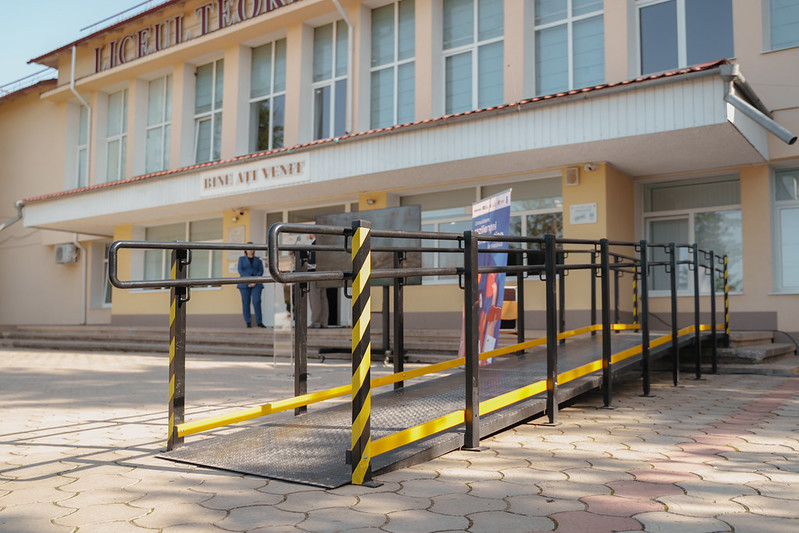
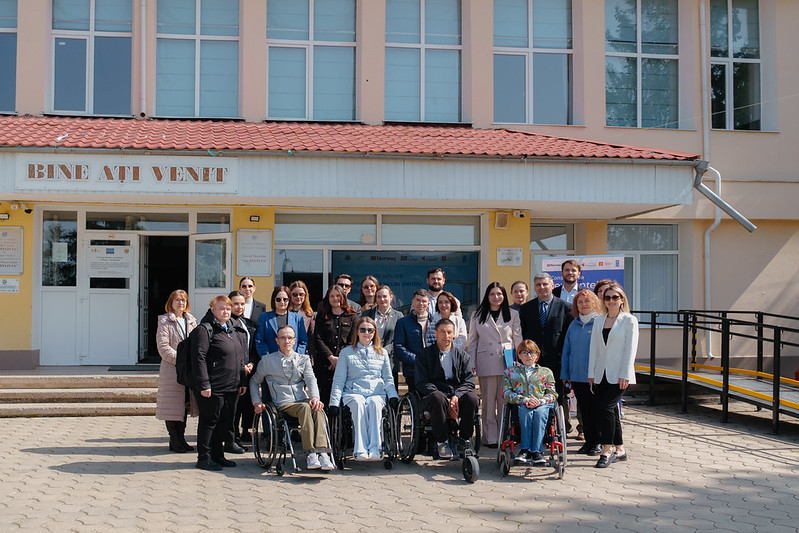
A total of 30 access ramps will be built during 2025–2026 in public institutions that host polling stations. The initiative is implemented by the INFONET Alliance, in partnership with the United Nations Development Programme (UNDP) and the Central Electoral Commission (CEC), with support from the governments of Norway, Sweden, Canada and Denmark.

The ramps are being built in public buildings, such as schools and community cultural centres, so that throughout the year, people with disabilities and all residents can have access to education and other opportunities. Later, when elections are held, these institutions will become polling stations and the ramps will facilitate access and the exercise of the right to vote for all citizens.

“Ensuring the genuine accessibility of the electoral process is a constant priority for the CEC. The installation of access ramps in polling stations is a concrete step through which we reaffirm our commitment to guaranteeing all citizens, including persons with reduced mobility, the full and unhindered exercise of their right to vote. At the same time, it is essential that the society as a whole is made aware and acts consistently to ensure access to all public institutions, not only on election day,” said CEC Secretary Dana Munteanu.

The total value of the investment is 2,120,000 dollars.

“Such initiatives help create more accessible and inclusive communities for everybody. Accessibility is about people and their everyday lives. It should not depend only on individual projects, but must become a standard integrated into the way public infrastructure is planned, financed and maintained. We will continue working together, in order to ensure equal opportunities for people,” said Seher Ariner, UNDP Deputy Resident Representative in Moldova.

The need for these investments is confirmed by the results of the national assessment of polling station accessibility, carried out in 2025 by the INFONET Alliance with support from UNDP. According to the analysis, only 112 polling stations out of a total of 1,974 are accessible. A number of 567 stations, or less than one third, are partially accessible, while 1,295, or more than two thirds, remain inaccessible.

The 2022 assessment found that only 18 stations, or 0.89 per cent, were fully accessible, 551, or 27 per cent, were partially accessible, and approximately 72 per cent were inaccessible.

Thus, the 2025 data show more than a sixfold increase in the number of fully accessible stations, from 18 to 112. At the same time, the share of inaccessible stations decreased from about 72 per cent to 65 per cent, while the proportion of partially accessible stations remained relatively constant, at 27 per cent in 2022 compared to 29 per cent in 2025.
 Facebook
 Instagram
 X/Twitter
 Telegram
PHOTO GALLERY // Old Orhei on Easter Eve
Direct train from Kyiv to Chisinau Airport launched in test mode
VIDEO // Moldovan government's secretary general says Easter fills villages, all Moldova with life, warmth
Ungheni municipality, 18 other settlements unite in voluntary amalgamation; Ungheni mayor says largest cluster in Moldova takes shape
Bomb threat reported at Chisinau Airport proves to be hoax; terminal resumes operations
Moldovan health specialists recommend rational consumption of food products during Easter holidays
Bomb threat at Chisinau Airport; passengers, airport staff evacuated
National Crisis Management Center presented integrated report on actions taken during state of emergency
Eugen Doga Chisinau International Airport ensures stable flights on easter, despite heavy passenger traffic
New EU entry rules: Entry/Exit System becomes fully operational as of today
VIDEO // Special measures at border before Easter: authorities promise shorter waiting times
DOC // Moldova setting up advisory committee on international development cooperation and humanitarian assistance
DOC // Government decision on army conscription published in Official Journal
DOC // SIS updates list of persons involved in terrorist activities
Romanian Embassy in Moldova says creation of Relations with Romania Service strengthens bilateral cooperation
Improved access for people with disabilities in Moldova: 30 ramps to be installed in public institutions hosting polling stations
VIDEO // Moldovan government transfers land needed to continue work on bridge across Prut river at Ungheni, connecting Moldova and Romania
Ana Racu elected vice-chair of UN Committee Against Torture
Victims of the organized famine from 1946–1947 to be commemorated in central Moldova settlement
Moldova strengthens economic diplomacy under coordination of Foreign Affairs Ministry
Moldovan PM pays tribute to maestro Gheorghe Urschi
 National Bank of Moldova
Moldovan PM pays tribute to maestro Gheorghe Urschi
Moldova consolidates mechanism for implementing international sanctions with EU's support
Government accelerates development of regional waste management infrastructure
Government Program Youth Capital approved by cabinet
Allocation of housing for participants in Chernobyl disaster response – clearer and fairer process

Three students of Moldova receive honourable mentions at European Girls’ Mathematical Olympiad
LIVE, VIDEO // Republic of Moldova in mourning: Gheorghe Urschi laid to rest with state honors
Moldova consolidates mechanism for implementing international sanctions with EU's support
New 1+1 meeting to take place in Tiraspol on April 16; Moldovan deputy PM for reintegration announces agenda of discussions
Gasoline and diesel stocks increasing: 33 thousand tons of fuel imported in recent days
Mourning rally and final tribute on stage for Gheorghe Urschi, master who united country through laughter
Mark Tkaciuk leaves parliamentary faction of Alternative Bloc: I do not understand point of such a faction’s existence
Deputy Prime Minister: Moldova to officially leave CIS on 8 April 2027
New organizational and operational framework for foreign ministry: Romania Relations Service and Cyber Diplomacy Service to be created
Another drop in fuel prices
Government accelerates development of regional waste management infrastructure
Government Program Youth Capital approved by cabinet
Allocation of housing for participants in Chernobyl disaster response – clearer and fairer process
Approved by Government: Republic of Moldova withdraws from another CIS agreement
Increased access to digital educational resources: they will be stored on modern national platform
Moldova to have new ambassadors to Japan and Kazakhstan
Receive the latest news directly to your email

Receive the latest news directly to your email