
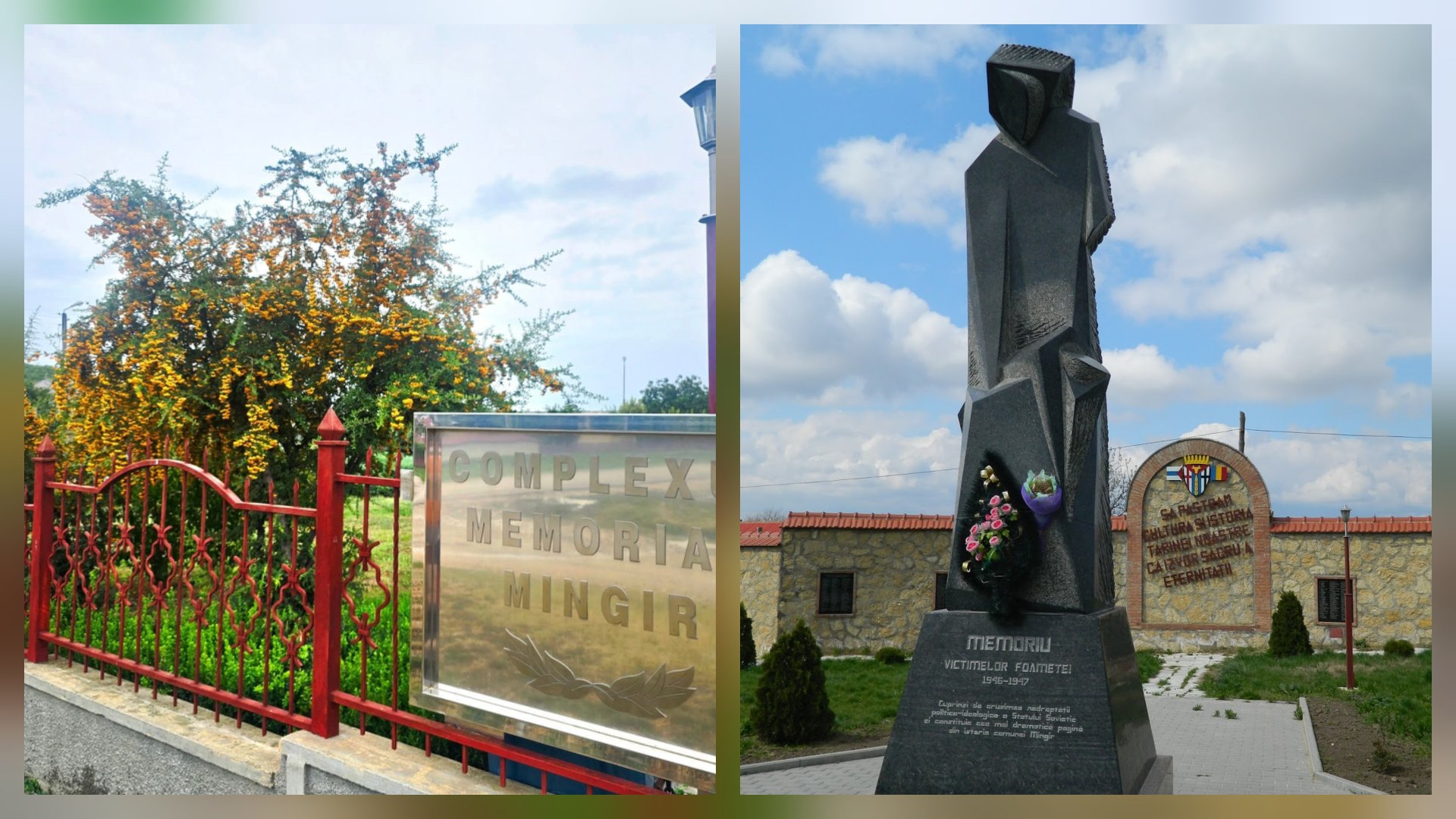
Victims of the organized famine from 1946–1947 to be commemorated in central Moldova settlement
The victims of the organized famine from 1946–1947 will be commemorated on April 16, this year, in the village of Mingir, central Hancesti district. President Maia Sandu and Culture Minister Cristian Jardan will attend the event.

In the village of Mingir, over 1,400 victims have been documented. The event aims to preserve the memory of those who suffered.

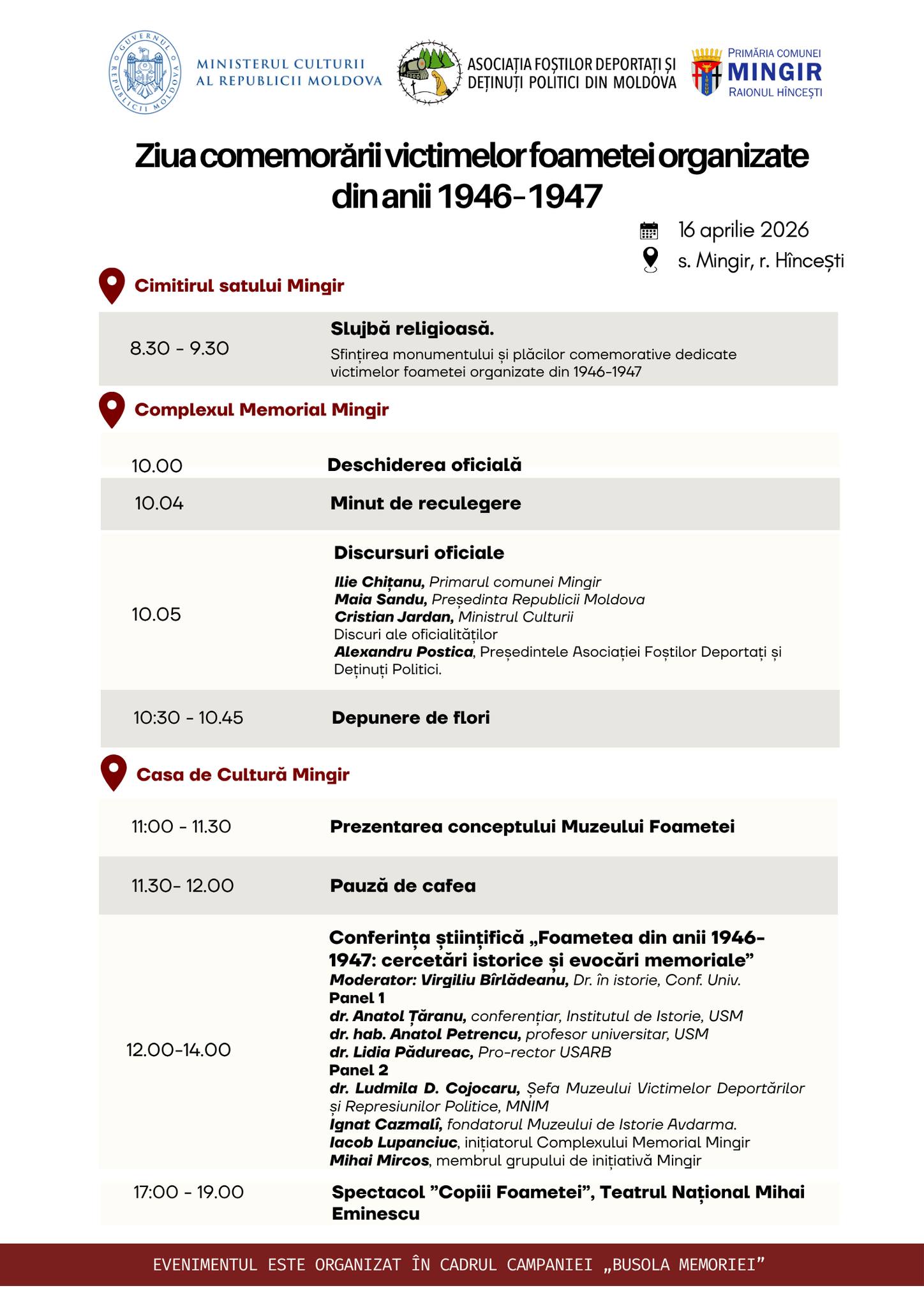
The actions dedicated to the Day of Commemoration of the Victims of the Organized Famine of 1946–1947 will start in the morning at the cemetery in Mingir, where a religious service will be held and a monument and commemorative plaques dedicated to the victims of the organized famine will be consecrated.

The event will continue at the Mingir Memorial Complex, where a minute of silence will be held in memory of those who suffered. Afterwards, official speeches will be delivered by the mayor of Mingir commune, Ilie Chitanu, President Maia Sandu, Culture Minister Cristian Jardan and the president of the Association of Former Deportees and Political Prisoners, Alexandru Postica. The speeches will be followed by a flower-laying ceremony.

Additionally, at the Mingir Community Centre, the concept of the Famine Museum will be presented and a scientific conference titled, The Famine of 1946–1947: Historical Research and Memorial Evocations, will be held.

The event will conclude with the performance, Children of the Famine, staged by actors of the Mihai Eminescu National Theatre.

The activities are organized within the framework of the Compass of Memory campaign.

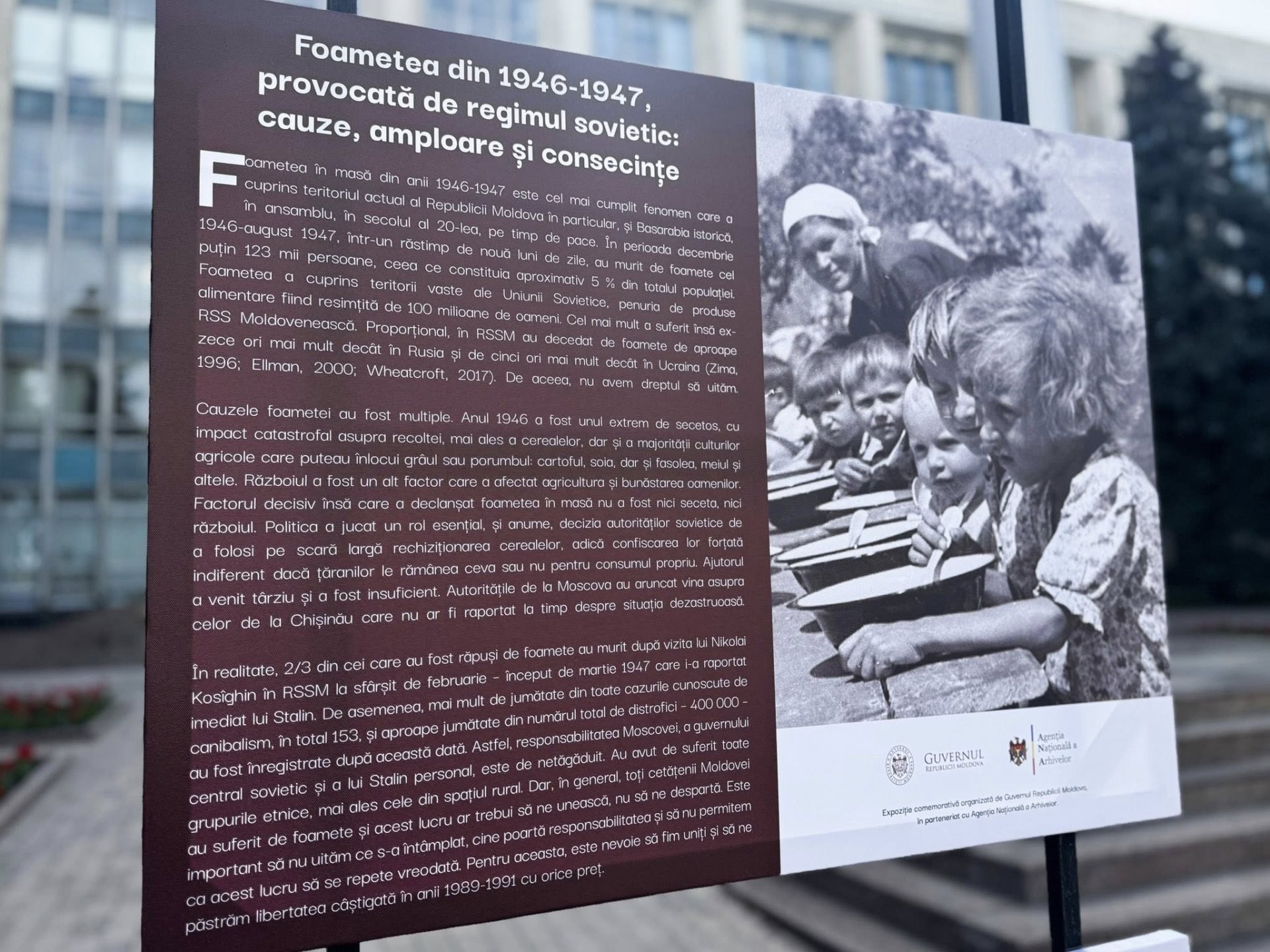
The victims of one of the most tragic chapters in our nation’s history—the organized famine of 1946–1947—are annually commemorated on the third Saturday of April. This was one of the greatest humanitarian catastrophes to strike the territory of today’s Moldova in the 20th century. The famine was not an unavoidable natural disaster, but a tragedy exacerbated by the authoritarian and repressive policies of the Soviet regime.

According to data provided by the National Archives Agency, in just a few months, more than 123,000 people died of hunger, representing about 5 per cent of the population of the Moldavian Soviet Socialist Republic (RSSM). Proportionally, Soviet Moldova was the worst hit region in the entire Soviet Union, with a mortality rate ten times higher than in Russia and five times higher than in Ukraine.
 Facebook
 Instagram
 X/Twitter
 Telegram
PHOTO GALLERY // Old Orhei on Easter Eve
Direct train from Kyiv to Chisinau Airport launched in test mode
VIDEO // Moldovan government's secretary general says Easter fills villages, all Moldova with life, warmth
Ungheni municipality, 18 other settlements unite in voluntary amalgamation; Ungheni mayor says largest cluster in Moldova takes shape
Bomb threat reported at Chisinau Airport proves to be hoax; terminal resumes operations
Moldovan health specialists recommend rational consumption of food products during Easter holidays
Bomb threat at Chisinau Airport; passengers, airport staff evacuated
National Crisis Management Center presented integrated report on actions taken during state of emergency
Eugen Doga Chisinau International Airport ensures stable flights on easter, despite heavy passenger traffic
New EU entry rules: Entry/Exit System becomes fully operational as of today
VIDEO // Special measures at border before Easter: authorities promise shorter waiting times
DOC // Moldova setting up advisory committee on international development cooperation and humanitarian assistance
DOC // Government decision on army conscription published in Official Journal
DOC // SIS updates list of persons involved in terrorist activities
Romanian Embassy in Moldova says creation of Relations with Romania Service strengthens bilateral cooperation
Improved access for people with disabilities in Moldova: 30 ramps to be installed in public institutions hosting polling stations
VIDEO // Moldovan government transfers land needed to continue work on bridge across Prut river at Ungheni, connecting Moldova and Romania
Ana Racu elected vice-chair of UN Committee Against Torture
Victims of the organized famine from 1946–1947 to be commemorated in central Moldova settlement
Moldova strengthens economic diplomacy under coordination of Foreign Affairs Ministry
Moldovan PM pays tribute to maestro Gheorghe Urschi
 National Bank of Moldova
Moldovan PM pays tribute to maestro Gheorghe Urschi
Moldova consolidates mechanism for implementing international sanctions with EU's support
Government accelerates development of regional waste management infrastructure
Government Program Youth Capital approved by cabinet
Allocation of housing for participants in Chernobyl disaster response – clearer and fairer process

Three students of Moldova receive honourable mentions at European Girls’ Mathematical Olympiad
LIVE, VIDEO // Republic of Moldova in mourning: Gheorghe Urschi laid to rest with state honors
Moldova consolidates mechanism for implementing international sanctions with EU's support
New 1+1 meeting to take place in Tiraspol on April 16; Moldovan deputy PM for reintegration announces agenda of discussions
Gasoline and diesel stocks increasing: 33 thousand tons of fuel imported in recent days
Mourning rally and final tribute on stage for Gheorghe Urschi, master who united country through laughter
Mark Tkaciuk leaves parliamentary faction of Alternative Bloc: I do not understand point of such a faction’s existence
Deputy Prime Minister: Moldova to officially leave CIS on 8 April 2027
New organizational and operational framework for foreign ministry: Romania Relations Service and Cyber Diplomacy Service to be created
Another drop in fuel prices
Government accelerates development of regional waste management infrastructure
Government Program Youth Capital approved by cabinet
Allocation of housing for participants in Chernobyl disaster response – clearer and fairer process
Approved by Government: Republic of Moldova withdraws from another CIS agreement
Increased access to digital educational resources: they will be stored on modern national platform
Moldova to have new ambassadors to Japan and Kazakhstan
Receive the latest news directly to your email

Receive the latest news directly to your email