
Interventions on Dniester: new anti-pollution dam to be installed in north Moldova settlement
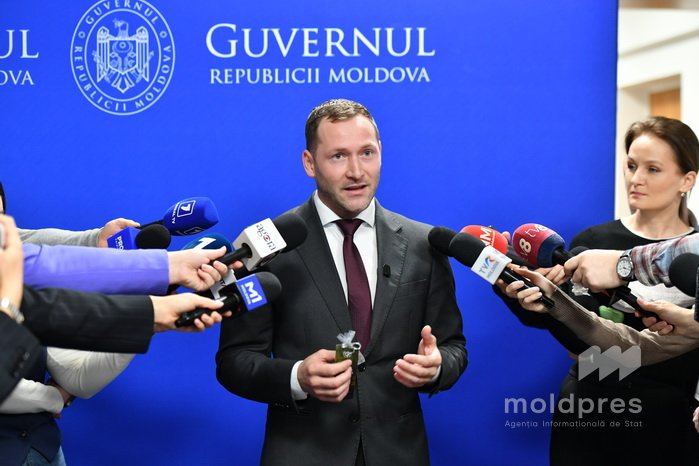
A new protective dam will be installed at the Cusernita water intake station on the Dniester River, in order to limit the effects of oil pollution caused by the attack on the Novodnestrovsk hydroelectric complex in Ukraine. In the next 24 hours, the authorities will also install additional barriers at the Dubasari reservoir and will examine alternative water sources for the population. Environment Minister Gheorghe Hajder announced measures to this effect at the end of a government meeting.

The environment minister said that oil substances continued to spill into the Dniester River and that the volume of oil may be higher than the initially estimated quantity of approximately 1.5 tons.

"What we are seeing today is not a natural accident, but the direct consequence of the war at our border. The destruction of Ukrainian infrastructure and Russia’s aggression have consequences that affect us directly, including the pollution of our water resources," the minister said.

First substances detected three days after the attack

According to the Environment Ministry, the attack on Ukraine’s energy infrastructure took place on March 7 and the first traces of pollution were detected on March 10.

"Immediately after the detection of oil substances, the reference laboratory of the Environment Agency collected samples to assess risks to the population. At the same time, the Moldovan authorities requested official information from the Ukrainian side and started setting the first protective barriers on the Dniester. On March 11, rescuers installed the first anti-pollution filter in the area of the village of Cusernita, Soroca district, to prevent the movement of oil substances toward the water intake stations that supply more localities in the north of the country."

Anti-pollution dams and continuous monitoring

On the following days, territorial teams of the Environmental Protection Inspectorate continuously monitored the evolution of pollution along the Dniester, in order to identify areas where additional interventions were needed.

On March 12, the supply of drinking water was stopped in the Naslavcea area and the authorities installed additional dams to limit the spread of pollutants. The alert level in the area was also raised to yellow.

Support on behalf of Romania

Romania is increasing its support for managing the pollution of the Dniester River: 4,000 kg of absorbent material and 800 m of boom have been brought to Moldova.

Hajder specified that the Romanian authorities had provided technical and logistical support for managing the situation.

"In less than eight hours from the request, the Romanian government sent equipment and experts specialized in pollution response. At present, 13 Romanian specialists are working in the field alongside teams from Moldova, using modern equipment to contain the pollution. Among the materials sent, there are hundreds of meters of absorbent booms, absorbent rolls, tons of absorbent material and other specialized equipment. Protective dams have been installed at more points, including in the localities of Arionesti and Cosauti, to protect water intake stations."

Restrictions on the use of Dniester water

The environment minister noted that, on March 14, the authorities had halted the intake of drinking water at the Cosauti station, which supplies more districts in the north of the country. Restrictions were also imposed on the use of water from the Dniester for settlements located on the segment between Rezina and Dubasari.

"Residents in the affected areas are urged not to use river water for domestic consumption or for watering animals for the next 48 hours."

Environmental alert for 15 days

Given the persistent risks, the government of Moldova has declared an environmental alert for the Dniester basin for a period of 15 days. The measure allows rapid mobilization of additional resources and the adoption of urgent interventions to limit pollution and protect water sources.

In the next 24 hours, the authorities will install additional barriers at the Dubasari reservoir and will check alternative water sources for the population. Citizens are urged to follow only official information and are assured that the situation is being continuously monitored.

The Dniester River has been affected by contamination with oil substances following the attack on a Ukrainian hydropower plant by Russian forces. The pollutant was discharged into the watercourse and started moving toward the territory of Moldova, endangering aquatic ecosystems and water sources for riverside communities.

Romania has provided technical and logistical support, helping to reinforce barriers and filtration systems, as well as to monitor water quality on transboundary watercourses. Prime Minister Alexandru Munteanu requested, through the Interior Ministry, the activation of the European Union Civil Protection Mechanism, and the Defence Ministry intervened with military personnel, equipment and technical units, in order to support operations to protect the river and riparian areas.
 Facebook
 Instagram
 X/Twitter
 Telegram
Drone attack near Moldova border: two dead and two injured
Moldovan government proposes for public consultation rules allowing amalgamated localities to use infrastructure projects' incentives
VIDEO // 49-year-old man detained in Moldova for allegedly collecting information for Russian intelligence services
Novodnestrovsk Reservoir level falls to 111.5 meters
VIDEO // PISA 2025 results show progress in science, stagnation in mathematics and reading, with wide gaps between urban and rural schools
Packages ordered from abroad to be subject to 12-lei fee
DOC // Moldova bringing drone regulations into line with European standards
Over 90,000 citizens participate in voluntary amalgamation process; Moldovan government's deputy secretary general explains what comes next
Educational institutions from all over Moldova to hold Decade of National Values
Moldova's social insurances budget for 2026 increases by 1.37 billion lei
Positions of deputy headmasters in schools to be filled through contest in Moldova; first contracts end on September 7
Hydrological situation on Dniester, Prut stays worrying; water levels in Novodnestrovsk, Stanca-Costesti reservoirs continue to drop
Special measures taken at Chisinau Airport during transit of Hasidic pilgrims
All schools of Moldova to switch to electronic gradebooks
Speaker: Elections in Gagauzia must be fair
Moldovan troops participate in Strong Griffin 2026 exercise in Lithuania
Moldovan Railways prepares new investments to strengthen railway connection to Giurgiulesti Port
Draft Fiscal Policy for 2027 presented in Parliament
 National Bank of Moldova
Prime Minister discusses fiscal-budgetary priorities and economic reforms with IMF Resident Representative
Prime Minister attends opening of Meeting of Romanian National Theatres
Moldovan PM announces concept for deregulation, simplification of inspections
New ways to advance Moldova-Bulgaria relations on agenda of discussions between Moldovan foreign affairs minister and Bulgarian MPs
Moldovan PM has phone conversation with Dutch counterpart

Warning for Moldovans seeking work in Greece: some offers may conceal illegal activities
Moldovan lawmakers held minute of silence in memory of victims of 11 September 2001 attacks
Moldova to extradite person to India for first time; man accused of murder and drug trafficking
Moldovan Speaker to visit Budapest to persuade Hungarian authorities to support opening of EU negotiation clusters
Euronews: Chișinău advanced faster than Brussels’ assessment capacity, prompting European Commission to redirect resources to Moldova
Speaker on Local Public Administration Reform: Moldova’s new administrative map to have fewer than 10 regions
DOC // Moldova prepares national aviation sector for implementation of Single European Sky requirements
DOC // Law on Road Safety Assessment published in Official Journal
Deputy Prime Minister in Sofia: Bulgaria - reliable partner of Moldova and supporter of European path
Speaker on PAS participation in Gagauzia elections: For now, we have no decision
Authorities issue clarifications following Norwegian prime minister's statement about Ukrainian President's plane
Meeting of Romanian National Theatres opens in Chișinău
Speaker on Russia’s attack on Starokazacie, near Moldova’s border: It was deliberate. Civilian location was attacked
Moldovan foreign affairs minister has meeting with President of Bulgaria
VIDEO // Changes made to leadership of parliamentary commissions of Moldova
Moldovan PM announces simplified procedures for entrepreneurs, reform of inspections; about 80 permits might be eliminated or simplified
Receive the latest news directly to your email

Receive the latest news directly to your email