
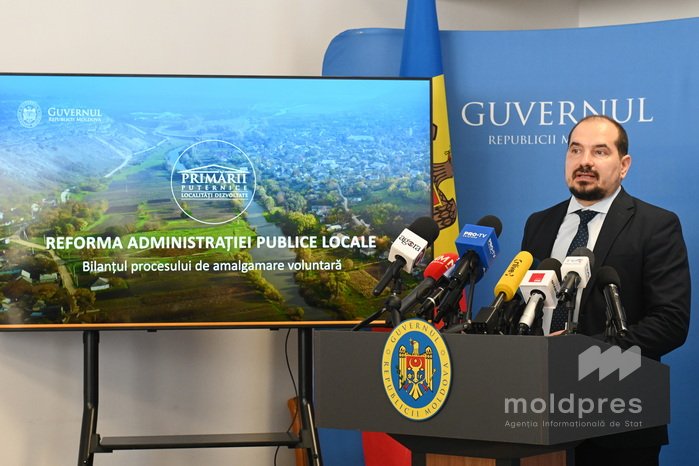
Local Public Administration Reform // From 890 to 292 town halls and 4.5 billion lei in funding starting in 2027
More than 60% of town halls in the Republic of Moldova have completed the voluntary merger process, and about 150 town halls reached final decisions in August. The results of the first stage of the local public administration reform were presented on 2 September by Secretary General of the Government Alexei Buzu, who described the involvement of local representatives as a clear sign that the reform is accepted at the local level.

According to Buzu, 561 town halls—representing 63% of all town halls in the country—have adopted final decisions regarding voluntary mergers. For town halls with fewer than 3,000 residents, the percentage is even higher—65%.

“I think this is a good result. In August, we had about 150 town halls that managed to negotiate and reach a final decision. We are very pleased that this month we worked hard, resolved certain issues, and achieved this result,” said Alexei Buzu.

He also outlined the scope of the consultation and decision-making process. According to him, a total of 1,226 decisions on voluntary amalgamation were adopted, approved by 788 local councils, representing 89% of all town halls.

The decisions concerned 836 town halls, or 94% of the total number of town halls in the Republic of Moldova. At the same time, 85% of town halls initiated the voluntary amalgamation process.

“The fact that 63% of town halls have completed this process clearly shows that voluntary amalgamation has been and continues to be accepted by local representatives across the country,” said Buzu.

The government justifies the reform by citing the need to strengthen the administrative and financial capacity of local communities. According to the data presented, of the 890 town halls eligible for consolidation, 776 have fewer than 3,000 residents.

At the same time, local administrations’ own revenues account for, on average, only about 11% of their financial needs, which limits the ability of many town halls to carry out infrastructure projects and improve public services.

“The real goal of this reform is to be able to provide citizens with decent living conditions. Citizens expect simple things: running water from the tap, sanitation, passable roads, and street lighting,” Buzu emphasized.

He stressed that the reform should not be viewed merely as a change to the administrative map, but as a tool for community development.

To support town halls that choose to merge, the government has set up a 4.5 billion lei incentive fund.

The package includes resources to prepare for the transition, as well as development funds. Starting in January 2027, the new merged communities will be eligible to receive 3,000 lei per resident, funds earmarked for investments.

Resources are also earmarked for post-merger support, which will be allocated directly to the budgets of the new town halls.

Early results already point to significant investment potential. In the Ungheni region, 10 town halls have merged and are set to receive investments estimated at 157 million lei. In the Călărași district, the merger of 14 town halls will make it possible to attract approximately 116 million lei, while in Rezina and Râșcani, investments of about 85 million lei and 72 million lei, respectively, are planned, according to Buzu.

Town halls that have not completed the voluntary process will move on to the next stage of the reform. This involves 254 town halls, for which the authorities are preparing the regulatory merger phase.

“In September, we will submit the legislative package related to the statutory merger for public consultation, and it will subsequently be submitted to Parliament for adoption this fall,” Buzu announced.

Town halls with a population of more than 3,000 residents are not required to participate in the process; in their case, the merger is optional.

The reform also covers the autonomous territorial unit of Gagauzia. Of its 26 town halls, 15 have fewer than 3,000 residents.

Buzu emphasized that the results obtained so far indicate a relatively balanced distribution of the process across the regions.

According to the authorities’ plan, the new administrative structure is set to take effect after the 2027 local elections, when the Republic of Moldova is expected to operate with 292 town halls.

The government said that stronger local administrations will have greater capacity to attract investment, access European pre-accession funds, and provide public services.

Buzu says that the success of the reform now depends on how the central authorities will implement the decisions already made by local representatives.

“I want to thank them once again. It is very important to appreciate this gesture. And this makes us even more accountable for ensuring that this reform is a success,” he concluded.

The local public administration reform was launched by the government in early 2026 and aims to strengthen the administrative capacity of city halls and improve public services.
 Facebook
 Instagram
 X/Twitter
 Telegram
Prime Minister at opening of Great National Dictation: If you live here, it’s natural to learn Romanian
VIDEO // Thousands of people wrote together in Romanian at Great National Dictation
Romanian Language Day celebrated in Chișinău through Great National Dictation and cultural events
Moldova's airspace unauthorisedly overflown following Russian attacks on Ukraine
PHOTO // Dedication Day with guests of honor in Ungheni
Moldovan National Social Insurance House funds first installment of pensions, social benefits for next September
Moldova's Nicolae Testemitanu State University of Medicine and Pharmacy to hold welcome ceremony for first-year students
Vice-president of Shor political party, unofficial member of formation to be tried for party's illegal financing
Dniester Commission rules to maintain river flow at 60 m³/s for next two weeks
Minister Claudiu Năsui responds to criticism after appointment to Moldovan Government: Some shared problems also have shared solutions
Head of State conveys message of condolences following death of King Harald V of Norway
Old Calendar Christians celebrate Dormition of the Mother of God
VIDEO // Moldovan parliament building illuminated in tricolor colors on Independence Day
Ukrainian president conveys message in Romanian in Chisinau: “Ukraine loves Moldova! We respect its people and its independence”
Head of state, at 35th anniversary of National Army's establishment, says peaceful Moldova needs Moldova capable of defending its peace
Moldova's foreign affairs minister to visit Lithuania: meetings' agenda
Import of cereal, oilseed crops to be temporarily licensed in Moldova
Moldovan president, at international online safety conference, says each child must grow up healthy, free, safe in world where physical, digital realities intersect
Searches conducted in more settlements of Moldova in case concerning illegal financing of parties through cryptocurrencies
Electronic monitoring of domestic abusers to be strengthened: Moldova's National Probation Inspectorate to receive 200 new bracelets, 2027 budget to be doubled
Moldovan parliament speaker, on National Army Day, says National Army symbol of defending peace
 National Bank of Moldova
Head of state, at 35th anniversary of National Army's establishment, says peaceful Moldova needs Moldova capable of defending its peace
Moldovan president’s speech at event on online safety, digital determinants of children’s, adolescents’ mental health, emotional well-being
Deputy PM for reintegration has meeting with new Head of OSCE Mission to Moldova
As many as 561 mayor's offices adopt final decisions on voluntary amalgamation; government's secretary-general says real stake of reform to provide citizens with decent living conditions
Government approves amendment to state social insurance budget for 2026

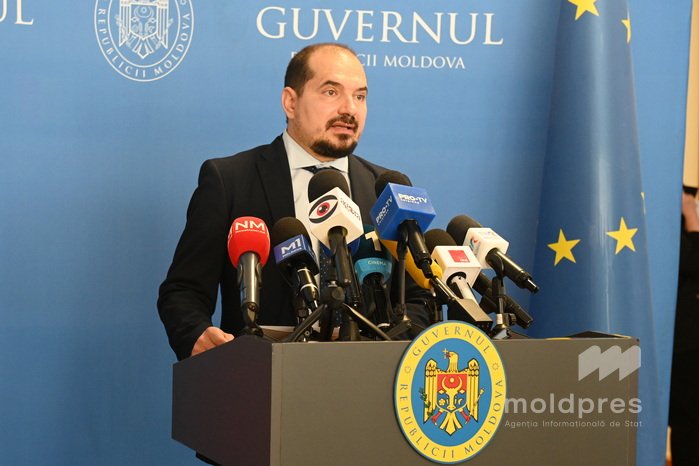
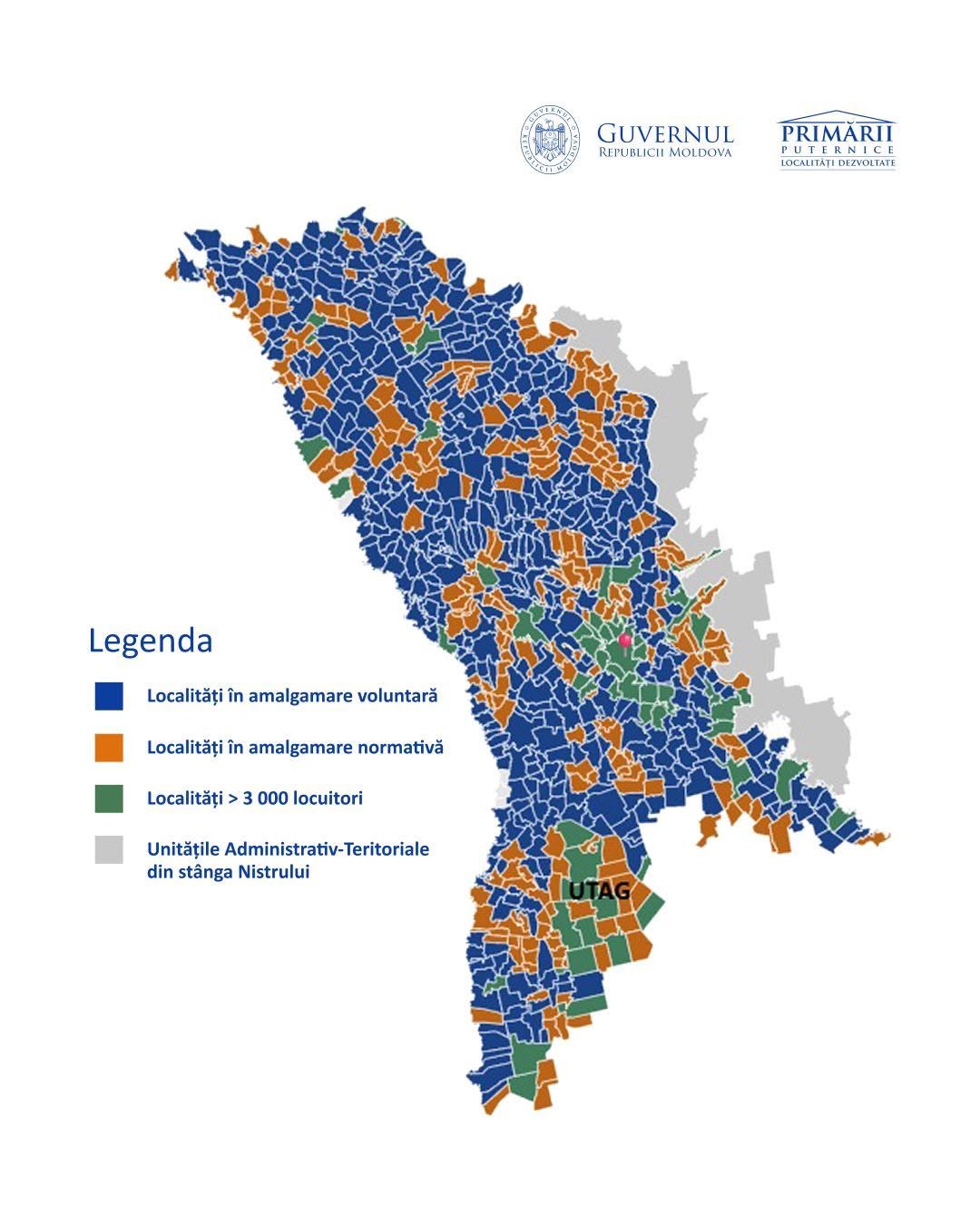
PHOTO // Well-known Romanian actor, three memorable roles to be screened at Romanian Film Days
VIDEO // PM announces urgent measures following tragic case in central Moldova village
Moldova's Doctoral School in Medical Sciences holds admission competition for doctoral studies; applications may be submitted till September 4
Moldovan Central Electoral Commission says electoral period for elections of Gagauzia's governor starts in Moldova
VIDEO // Moldova's National Army marks 35 years since establishment; Defence minister: “Our mission stays the same – to protect peace”
How can we protect children in digital environment? Moldovan president, Romania’s First Lady attend international conference in Chisinau
Moldovan foreign affairs minister has meeting with regional director of United Nations Population Fund
Moldovan deputy PM for reintegration says harmonization of tax regime to continue, despite Tiraspol's reaction
BTA: Bulgarian Funding to Improve Kindergarten Yard in Moldova's Cairaclia
Moldovan Central Electoral Commission approves electoral calendar for organizing elections for office of Gagauzia's governor
Deputy PM for reintegration has meeting with new Head of OSCE Mission to Moldova
Railway of Moldova state enterprise transports over 46,000 tons of export, transit goods in last August
Moldovan foreign affairs minister rejects claims by Russia’s Ambassador-Designate
Energocom company of Moldova says natural gas price continue to rise on European exchange
ARMENPRESS: EU Council backs temporary trade-liberalization measures for Armenian products
Moldova to send Russia protest note over unauthorized opening of polling stations for elections; Moldovan foreign affairs minister says it represents unfriendly act
Receive the latest news directly to your email

Receive the latest news directly to your email