
Dniester Commission rules to maintain river flow at 60 m³/s for next two weeks
Moldova and Ukraine have reached a compromise regarding the water flow of the Dniester River, after the Ukrainian side initially proposed reducing it to 50 cubic meters per second. Over the next two weeks, the flow will be maintained at 60 m³/s, as agreed by the authorities during a meeting of the Dniester Commission.

The issue was also discussed at meetings between the authorities of Moldova and the Ukrainian delegation led by President Volodymyr Zelensky on August 27.

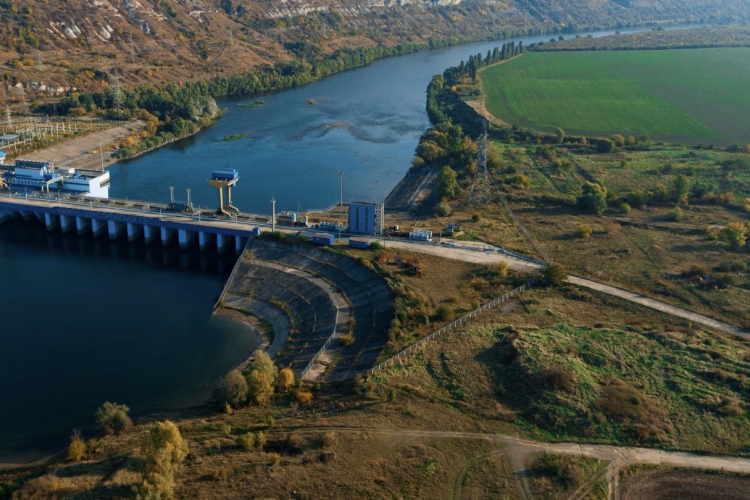
The Dniester’s flow is essential for supplying water to the Chisinau municipality and more other localities of Moldova. The hydrological situation is also difficult for Ukraine, amid drought and lack of precipitation. The water level in the Novodnistrovsk reservoir, which is usually around the 123-meter mark, is approaching 112 meters, considered a critical level, according to a government’s press release.

“In the last ten days, the average inflow of water into the reservoir was only 23 m³/s, while the outflow discharged into the Dniester was 75 m³/s. This difference puts pressure on water reserves and creates risks for supplying some cities in Ukraine, as well as for the operation of the Novodnistrovsk power plant. The problem also has an energy component for Moldova. In recent days, approximately 10–20 per cent of the country’s electricity needs have been covered by imports from Ukraine, depending on demand and the prices available on regional markets,” said the government’s spokesperson, Dumitru Ciorici.

According to the Moldovan authorities, Ukrainian President Volodymyr Zelensky assured that Ukraine would seek solutions so that the population of Moldova is not affected by the hydrological situation.

“This is a situation in which both countries face real constraints. That is precisely why our relationship with Ukraine matters: we can talk openly about problems, we can take into account each side’s needs, and we can find balanced solutions that protect people in both countries as much as possible,” Ciorici stated.

The sides agreed to maintain permanent contact and to monitor the evolution of hydrological and meteorological conditions. Depending on the development of water reserves and weather conditions, new decisions on the Dniester’s flow will be taken later.

On August 26, the government extended the state of alert in the energy sector and in the hydrological field by 30 days. The measure is necessary, in order to continue managing risks in the energy sector and the effects of hydrological drought.
 Facebook
 Instagram
 X/Twitter
 Telegram
All drone flights banned in Chisinau on August 27; warnings of Moldova's Civil Aviation Authority
“The Independence That Unites Us. Moldova-35.” Metropolitans Antonie, Vladimir open to dialogue between two Orthodox Churches of Moldova
VIDEO // Prime Minister invited citizens to attend events on Independence Day
VIDEO // Prime Minister requested review of rules for authorizing dental clinics
VIDEO // Solemn meeting at Moldova's Presidency: 35 years of Independence, between memory of past and responsibility of present
UPDATE // Heavy traffic in Sculeni eased
Restricted access to Eugen Doga International Airport on August 27-31
Over 22,000 students admitted to universities in Moldova: up by 5.2 per cent compared to last year
Voted by parliament: Moldova to be able to automatically exchange police data with EU member states
Evaluation Commission challenges decision of Superior Council of Magistracy on judge at Supreme Court of Justice of Moldova
PHOTO // Environment Ministry of Moldova warns water reserves in Novodnistrovsk lake dropping alarmingly
Moldova to be able to exchange DNA data with other states for investigation of serious crimes
Yellow Code for heavy rain in Moldova, in force for most of country on August 26
UPDATE // Mirnoe-Tabachi border customs post resumes operations
VIDEO // Over 300 companies from Moldova take part in Local Product 2026 exhibition; Moldovan MP says government to be ally of entrepreneurs who have courage to produce at home
Moldovan president awards state distinctions on Independence Day
DOC // Tax regime applied to goods imported by economic operators from Transnistrian region to be standardized
Minister Claudiu Năsui responds to criticism after appointment to Moldovan Government: Some shared problems also have shared solutions
 National Bank of Moldova
Moldovan PM attends opening of Local Product national exhibition
Moldovan president awards state distinctions on Independence Day
Ministers Claudiu Năsui and Eugen Osmochescu sworn in today
New Ministers of Agriculture and Food Industry and of Economic Development and Digitalization sworn in today
Moldovan president's statements at joint news conference with presidents of Ukraine, Romania

Minister Eugeniu Osmochescu announces mandate priorities: EU accession and smart agriculture
Turkish Ambassador to Chișinău awarded by Foreign Minister at end of term
Prime Minister’s message to Năsui and Osmochescu: They have difficult but very important mandates
Parliament to begin second 2026 session on 1 September
Head of State conveys message of condolences following death of King Harald V of Norway
VIDEO // New Ministers Claudiu Năsui and Eugeniu Osmochescu took oath of office
CEC: Electoral period begins for elections to People’s Assembly of Gagauzia
PHOTO GALLERY // Thousands celebrate Independence of the Republic of Moldova in Great National Assembly Square
Old Calendar Christians celebrate Dormition of the Mother of God
Moldovan PM makes statements after discussions with presidents of Romania, Ukraine
VIDEO // Moldovan parliament building illuminated in tricolor colors on Independence Day
Ukrainian president conveys message in Romanian in Chisinau: “Ukraine loves Moldova! We respect its people and its independence”
Moldovan president speaks before citizens on Great National Assembly Square
Romania supports European path of Moldova; Romanian president: “It is an example for all candidate states”
Moldovan president says Moldova not to be intimidated
VIDEO // Presidents of Moldova, Romania, Ukraine present at concert in centre of Chisinau dedicated to Independence Day; messages addressed to citizens
Receive the latest news directly to your email

Receive the latest news directly to your email