
Moldova strengthens national security risk analysis and management capacities
The Republic of Moldova is strengthening its national capacities for integrated analysis and management of risks to national security by establishing a unified mechanism for identifying, analyzing, assessing, monitoring, reviewing, and reporting risks. This is stipulated in the National Risk Assessment Methodology for National Security, which was approved today by the Government.

The methodology aims to consolidate national capacities for integrated risk analysis and management by integrating all types of risks into a common, unified, coherent, and coordinated system of governance, planning, and action.

Its specific objectives include ensuring coherence and interoperability of risk management processes among all public authorities and institutions; integrating measures to reduce vulnerabilities and strengthen resilience into national policies and strategies; developing response and recovery capacities through coordinated response mechanisms in the event that a risk materializes; and aligning the national framework with international standards.

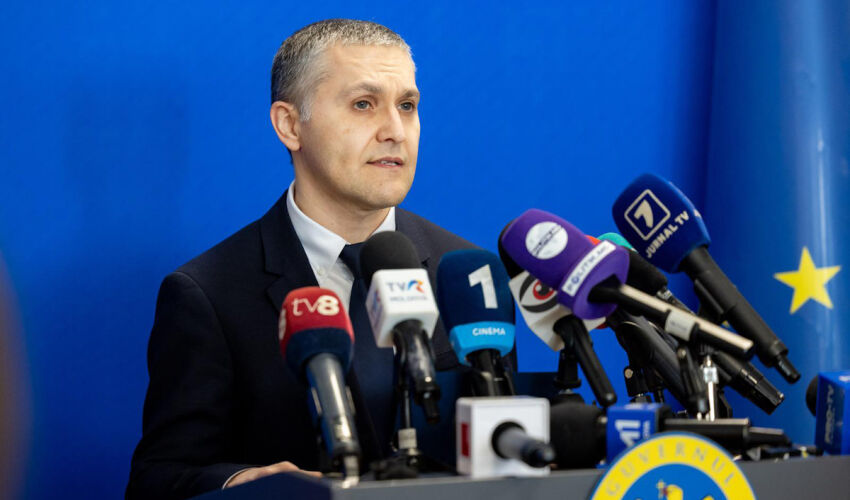
Director of the National Crisis Management Center (NCMC) Serghei Diaconu said that through this project, the authorities are, for the first time, proposing a single national methodology for the identification, analysis, assessment, and prioritization of risks.

"Until now, each authority has assessed risks using its own methods, depending on its area of competence. This makes it difficult to compare risks, set priorities, and establish a shared national picture. The methodology brings order to this process by introducing common rules and tools for all authorities; it establishes a single risk assessment cycle, creates an extended list and a priority list of risks, establishes the national risk registry, and uses standardized forms and a single assessment matrix. Thus, all institutions will speak the same language when analyzing risks and will use the same assessment criteria. As a result, the Government will have an integrated picture of risks to national security, which will allow for prioritizing measures and directing investments toward the areas with the greatest impact on the population, the economy, and essential services," said NCMC Director Serghei Diaconu at the Government meeting.

The proposed solution consists in establishing a cyclical and continuous process of integrated risk analysis, which includes the identification and classification of risks, drawing up the extended and priority risk lists, preparing risk sheets, creating and updating the National Risk Registry, as well as periodically preparing the National Risk Assessment Report. Clear responsibilities are assigned to the National Crisis Management Center, the Secretariat of the National Security Council, national and local public authorities and institutions, economic operators, as well as civil society and the academic community.

According to the project’s explanatory note, the development of the Methodology was necessary because, at present, there is no unified, coherent, and integrated national framework for identifying, analyzing, and assessing risks to national security. This leads to fragmented and uncoordinated approaches and to difficulties in prioritizing prevention, preparedness, response, and recovery measures. In the absence of a single methodological framework, sectoral risk assessments are carried out using different approaches and tools, which limits the comparability of results, their integration into a shared national picture, and the grounding of strategic decision-making at the level of the Government and the National Security Council.

By establishing a unified methodological framework, the project will improve the quality of public policy decisions in the field of national security and crisis management, ensuring that these decisions are based on coherent, comparable, and interinstitutionally validated risk assessments, the project’s authors emphasize.

The implementation of the project does not involve setting up new structures or the immediate allocation of additional financial resources from the state budget. The activities provided for in the methodology are to be carried out within the approved staffing levels and resources of the authorities and institutions involved.
 Facebook
 Instagram
 X/Twitter
 Telegram
NAC officers raid ANSA unit at Giurgiulesti customs post
PHOTO GALLERY // Chisinau City Day: capital celebrating, captured through lens of MOLDPRES
VIDEO // Schools, hospitals, roads of Chisinau modernized with government's support
PHOTO // Old Chisinau: lesser-known stories, traditions of Moldova's capital
Moldovan parliament speaker calls for strengthening local administrations
PM, on capital's City Day, says almost five billion lei allocated to Chisinau in 2026
Moldovan president conveys message on Chisinau’s City Day
PHOTO // General Carabineer Inspectorate provided with 16 vehicles and modern equipment with EU support
STISC warns of spear-phishing campaign targeting Government institutions
PHOTO // First monument commemorating Roma victims of Holocaust to be erected in Cosăuți, Soroca
Seven hospitals to receive new equipment for storing blood products
One in four pupils involved in bullying or physical aggression situations; Moldovan authorities develop action plan to prevent, manage violence cases in schools
Moldovan parliament speaker says young people must study in modern conditions, be able to build future at home
Investments in training specialists; PM says well-learned trades bring better salaries in Moldova
New details emerge about crashed, exploded drone in field in north Moldova district
Spain’s National Day celebrated in Chisinau: “Moldova is a future partner with whom we wish to share the European project”
PHOTO // Metropolitan of Bessarabia reaffirms support for Moldova’s European integration at meeting with EU ambassador
VIDEO // Moldovan parliament speaker says once again convinced that Moldova has necessary support on path toward great European family
Moldovan PM visits Chisinau Electrical Substation, in final preparation stage
Moldovan Foreign Affairs Ministry condemns repeated violation of national airspace
Moldovan PM, Ambassador of State of Qatar discuss investments, expanding bilateral economic cooperation
 National Bank of Moldova
Moldovan PM visits Chisinau Electrical Substation, in final preparation stage
Moldovan PM, Ambassador of State of Qatar discuss investments, expanding bilateral economic cooperation
Moldovan parliament speaker in Rome has meetings with counterparts from Norway, Lithuania, Armenia
Moldovan parliament's secretary general participates in meeting of secretaries general of parliaments of Council of Europe member states
Speaker held talks with counterparts from Italy, France and Türkiye

Moldovan Central Electoral Commission approves ballot paper designs for regional elections due on November 15
Moldova to include analysis of gender gaps in access to agricultural resources in report to United Nations for the first time
UPDATE // Unmanned aircraft crashes, explodes in field in northern district of Moldova
ARMENPRESS: Armenia demonstrates its potential by hosting COP17, says FAO official
PHOTO // Third contingent of Moldova's National Army deployed to peacekeeping operation in Bosnia & Herzegovina
PHOTO // Students participating in Moldova Model United Nations project visit Foreign Affairs Ministry
VIDEO // Moldova explores opportunities to import liquefied natural gas from United States
Moldovan government denies “manipulations” regarding plans to establish drone factory in Chisinau
PHOTO // Railway of Moldova enterprise tests new Chisinau–Revaca–Sangera railway route
Moldovan parliament speaker in Rome has meetings with counterparts from Norway, Lithuania, Armenia
Moldova, Armenia to strengthen parliamentary cooperation
Air Operations Center of National Army: number of airspace violations reaches 100 in Moldova
VIDEO // Shepherds' family of Moldova sets national record with 30.7-kilogram cheese
Moldovan parliament's secretary general participates in meeting of secretaries general of parliaments of Council of Europe member states
PHOTO GALLERY // 30.7-kilogram cheese set national record at Moldexpo
PHOTO // Moldovan Radu Budan finishes second in 5,000-kilometer ultramarathon in New York
Receive the latest news directly to your email

Receive the latest news directly to your email