
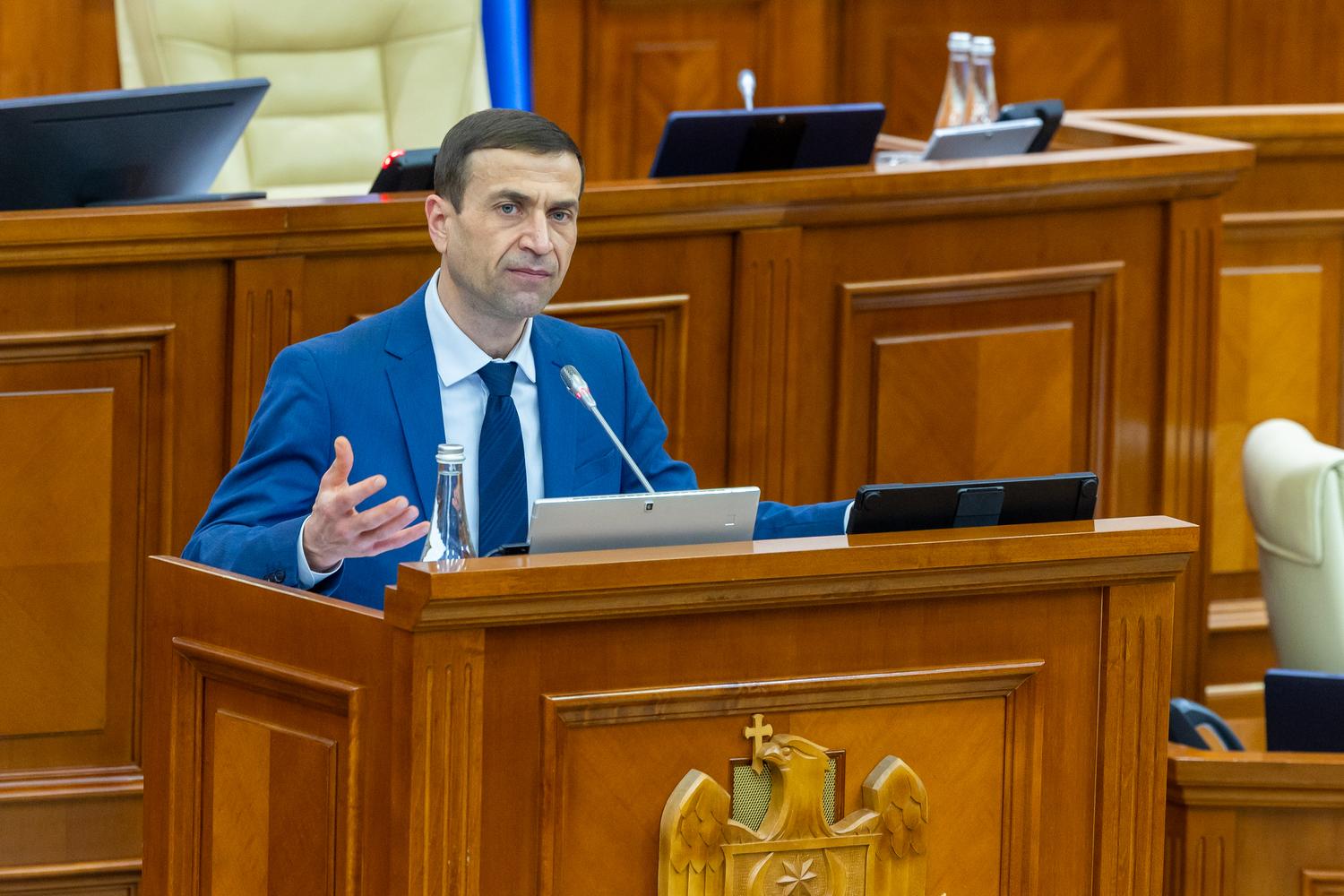
Moldovan parliament passes in first reading draft law on threats against judges to be punished with up to eight years in prison
Threatening or assaulting judges might become a criminal offense punishable by up to eight years in prison. The parliament has passed a draft law providing for harsher penalties in the first reading.

The legislative initiative was developed by a group of MPs on behalf of the Action and Solidarity Party’s (PAS) faction and aims to strengthen the security of judges, after in recent years more magistrates have been assaulted, followed and subjected to threats.

According to the draft, the Criminal Code will be supplemented with a new article that criminalizes threatening a judge or their relatives with bodily harm, death, or destruction of property. Such acts will be punishable by a fine of up to 70,000 lei, unpaid community service of up to 190 hours, or imprisonment for up to three years.

If the actions are accompanied by violence or cause material damage on a large scale, the sanctions become more severe, with imprisonment from five to eight years being provided.

The draft also provides for amendments to the Contravention Code. Insulting (outraging) a judge will be punishable by a fine of up to 5,000 lei or unpaid community service. Violating order in the courtroom will be punishable by a fine of up to 4,000 lei, while hooligan behavior or disturbing court hearings may result in fines of up to 6,000 lei or contravention arrest for up to 10 days. At the same time, video recording in the courtroom without consent will be punishable by a fine of up to 5,000 lei.

In the past year, more magistrates from the courts of Chisinau, Causeni and Balti have been targeted in such cases.

The Superior Council of Magistracy (SCM) welcomed the passing of the draft law, stressing that the document represents “a natural evolution” of efforts to strengthen the security of judges. The institution recalled that it had previously notified the parliament’s legal commission about the systemic risks of aggression against magistrates and requested urgent legislative interventions for the explicit sanctioning of outrage, threats and harassment.

The Council expressed its support for the priority adoption of the draft and reiterated that the independence, impartiality and security of judges are essential for the proper work of justice and for maintaining public confidence in the judicial system.

The draft law is to be subjected to public consultations and then considered in the second reading. After adoption, the amendments will enter into force on the date of their publication in the Official Journal (Monitorul Oficial).
 Facebook
 Instagram
 X/Twitter
 Telegram
Parliamentary hearings in Moldova: interior minister to present report on combating use, trafficking of drugs
PHOTO GALLERY // First flakes and hasty steps
Position of director of Moldovan National Energy Regulatory Agency open to competition: applicants may submit files until March 23
Moldova connects to European Union’s secure communication network - TESTA
MD-ALERT system to be operational in 2027
Nisporeni hospital ward with violations of sanitary and hygiene norms to be renovated
Employees to be able to receive holiday vouchers
Prime Minister orders mobilization of relevant institutions amid bad weather
UPDATE 10.10 // Truck traffic temporarily restricted at entry into country through Leușeni and Sculeni border crossing points
PHOTO // National Army servicemen attend multinational exercise Defence Cyber Marvel 2026
Moldova Post Office warns of possible delays for shipments to Italy during Milano–Cortina 2026 Olympic and Paralympic Winter Games
Students in several localities holding online classes today
Free Romanian language courses: MEC opened registration
Warning for drivers: restricted access for vehicles at border with Ukraine
Moldovan PM says Constitutional Court stays pillar of democratic balance, of European path of Moldova
MOLDPRES INTERVIEW // Vice President of Romanian Academy says academic, research environment of Moldova advanced, can be efficiently integrated into European, international structures
DOC // New lists of banned or restricted air carriers in Moldova published in Official Journal
Constitutional Court President at opening of 2026 Judicial Year: As long as constitutional review functions freely and independently, democratic balance in country remains protected
PHOTO // Made in Moldova space inaugurated at Eugen Doga International Airport – Chișinău: travelers can buy local products before flight
Danish MPs to visit Chisinau Parliament early next week
VIDEO // Authorities provide details on joint Moldova–Ukraine operation
 National Bank of Moldova
Moldovan PM says Constitutional Court stays pillar of democratic balance, of European path of Moldova
President issues warning about scams: Only thieves ask for money, passwords or promise quick gains by phone or online
Moldovan PM visits industrial area in commune from Chisinau municipality
Moldovan PM visits kindergarten in commune of Chisinau municipality
Revocation of Moldovan president's Decree No. 418-IX from April 11, 2022, on granting of pardon

PM welcomes EU’s intention to demand Russia withdraw troops from Transnistrian region as part of possible peace deal in Ukraine
Secretary-General of Government explains how government wants to keep people in villages: services, jobs and stronger town halls
Moldovan parliament passes in first reading draft law on threats against judges to be punished with up to eight years in prison
VIDEO // Alarm raised as more Moldovans fall victim to scammers
President issues warning about scams: Only thieves ask for money, passwords or promise quick gains by phone or online
Higher salaries for public sector employees as of September
Moldovan PM to present report in parliament
Simple motion against Moldova's energy minister fails
BTA: Ambassadors of Bulgaria, EU to Moldova Discuss EU Integration and Regional Development During Visit to Taraclia
Moldovan PM visits industrial area in commune from Chisinau municipality
PHOTO // Moldovan electoral authorities discuss process of organizing parliamentary elections
Moldovan PM visits kindergarten in commune of Chisinau municipality
Moldovan parliament speaker says reform of local public administration must be carried out in next autumn, there is no time to wait
Revocation of Moldovan president's Decree No. 418-IX from April 11, 2022, on granting of pardon
Moldovan energy minister in parliament says country reaches stage of maturity, after years in which energy system was fragile, dependent, vulnerable to political blackmail
Mayors of Moldova directly Involved in EU accession: launch of Local Ambassadors Network
Receive the latest news directly to your email

Receive the latest news directly to your email