
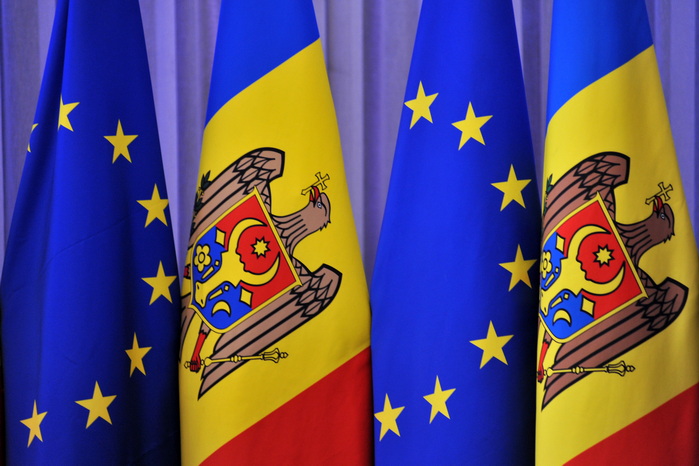
Euronews: Chișinău advanced faster than Brussels’ assessment capacity, prompting European Commission to redirect resources to Moldova
The European Commission is reallocating its internal resources in order to keep pace with the accelerated reforms carried out by the Republic of Moldova in its European Union accession process, as Chișinău has advanced faster than the European institution’s technical capacity to assess its progress, Euronews reports. At the same time, the Republic of Moldova’s European path remains politically linked to that of Ukraine, whose accession process has once again been slowed down by Hungary.

According to European officials cited by Euronews, Chișinău authorities implemented the requested reforms at such a rapid pace that the European Commission was forced to adjust its working methods and redirect resources toward monitoring the Republic of Moldova’s accession process.

The European Commission department responsible for the Union’s enlargement is already facing increased pressure as a result of the simultaneous progress made by several candidate countries. In this context, the European institution is concentrating its expertise and resources on the countries advancing most rapidly with the implementation of reforms.


„The impressive results of the Republic of Moldova in terms of reforms for EU accession are paying off,” European Commissioner for Enlargement Marta Kos wrote on the X platform on Tuesday. The European official said she had discussed the next steps on the Republic of Moldova’s path to European Union accession with new prime minister Vasile Tofan.


Chișinău accelerates reforms

The Republic of Moldova boosted the reform and rapprochement process with the European Union after Maia Sandu was elected president in 2020. Subsequently, a pro-European political majority consolidated its position in government, supporting the reforms necessary to advance accession negotiations.

Deputy Prime Minister for European Integration Cristina Gherasimov recently said that the scale of the reforms carried out over the past five years was „unprecedented.”


„Our formula for ensuring that these reforms succeed is the political will and determination of our people to work hard in favor of this window of opportunity that exists within the European Union,” Gherasimov said, as quoted by Euronews.


The accession process, however, involves not only the adoption of reforms by candidate countries, but also their verification by European institutions. The European Commission must assess whether legislative and institutional changes comply with EU standards, which requires experts and resources to be allocated to each area under review.

In the case of the Republic of Moldova, the pace of reforms has become one of the factors putting pressure on the European Commission’s administrative capacity to process and rapidly assess the progress made.

Ukraine is advancing, but war continues to affect accession process

At the same time, Ukraine is also continuing its reform agenda. The process gained new momentum after Serhii Koretskyi took office as prime minister in July. However, the war launched by Russia and pressure on Ukraine’s budget continue to affect the country’s path toward the European Union.

Euronews notes that the International Monetary Fund recently published an analysis of the potential economic benefits of EU membership for the Western Balkan countries and the Republic of Moldova. Ukraine was not included in this analysis, given its much larger size and the ongoing military conflict.

While the Republic of Moldova continues to advance from a technical perspective, its European path is influenced by a political reality within the EU Council: the accession processes of the Republic of Moldova and Ukraine continue to be treated jointly at certain stages.

Why the accession processes of the Republic of Moldova and Ukraine are linked

The so-called „coupling” of accession processes is an informal political practice through which the paths of two countries are kept together.

Such an approach can be particularly useful during the final stages of accession, when the member states must ratify the accession treaties. In the past, the processes of certain countries were managed in parallel, including in the case of Romania and Bulgaria, which joined the EU in 2007.

The Republic of Moldova and Ukraine began their accession path together in 2022, shortly after the launch of Russia’s full-scale invasion of Ukraine. In December 2023, EU leaders decided to simultaneously open accession negotiations for the two countries.

Subsequently, however, Ukraine’s process was blocked for approximately two years by the veto of Hungary, which was led at the time by Viktor Orbán. Budapest’s position was linked to bilateral disputes with Kyiv, including the situation of the Hungarian minority in Ukraine’s Transcarpathia region.

According to Euronews, the situation changed after the Tisza party, led by Péter Magyar, came to power and ousted Orbán in April. Budapest and Kyiv subsequently began negotiations to resolve their bilateral disputes, and in June Hungary lifted its veto on the first cluster of negotiating chapters.

The second of the six clusters of chapters was opened in July. The process was slowed down again in September, however, after Hungary resorted to further obstruction of Ukraine’s path.

The Republic of Moldova is caught up in the political deadlock over Ukraine

Although the disputes between Hungary and Ukraine are a bilateral matter, keeping the two accession processes within a common framework also has consequences for the Republic of Moldova.

According to Euronews, the „coupling” of the two paths has strong geopolitical motivations. The Republic of Moldova is in a sensitive security situation, as Russia maintains troops in the Transnistrian region. After the outbreak of the war in Ukraine, Chișinău found itself in the immediate vicinity of a large-scale military conflict.

For Ukraine, the prospect of joining the European Union is also of major strategic importance, as it strengthens the country’s orientation toward European structures and moves it further away from the prospect of returning to Russia’s sphere of influence.

In this context, the main supporters of EU enlargement toward Ukraine, including the Baltic states, have advocated keeping Ukraine’s and the Republic of Moldova’s paths together throughout the stage of opening the negotiating clusters.

Nevertheless, the technical side of the accession process—namely, the adoption and implementation of reforms—can continue even when the political component is blocked or slowed down.

What comes next for the Republic of Moldova

European officials cited by Euronews estimate that the political link between the accession processes of the Republic of Moldova and Ukraine is expected to remain in place until all the remaining negotiating clusters are opened.

After this stage, the situation could change quickly, especially if the Republic of Moldova maintains its current pace of reforms.

Chișinău has already set an ambitious objective regarding the completion of accession negotiations.


„We have the ambitious goal of being ready to conclude the negotiations by early 2028,” Gherasimov said.


Thus, according to the Euronews analysis, the Republic of Moldova is in a particular situation: on the one hand, the pace of domestic reforms allows Chișinău to advance rapidly on the technical dimension of accession, while on the other hand, its political path is influenced by developments in Ukraine’s process and by the decisions of EU member states.

For the European Commission, this development means that it must adapt its resources and administrative capacity in order to assess the Republic of Moldova’s progress at a pace closer to that at which the reforms are being carried out.
 Facebook
 Instagram
 X/Twitter
 Telegram
Speaker after European Parliament vote on Report on the Republic of Moldova: Moldova moves forward. Step by step, ever closer to European Union
European Parliament calls for opening all negotiation clusters with Moldova: report backed by large majority
VIDEO // European Commissioner calls for opening all negotiation chapters on Moldova’s EU accession
Moldova to present position to European Union on External Relations Cluster
Speaker attends conference of speakers of EU candidate countries
VIDEO // Cristina Gherasimov visits Berlin: European integration and cooperation with Germany on agenda
EU–Moldova Summit // European leaders reaffirm Moldova's future in European Union: “Reforms open the door to accession”
European Council President says European Union to support Moldova every step of way towards EU accession
EU–Moldova Summit // Deputy Prime Minister: We are discussing how we can advance more quickly based on our own merits
Moldovan, Polish officials discussed next steps for Moldova on path to EU accession
VIDEO // Justice, anti-corruption and strong institutions priorities in negotiations with EU
Moldova took part in EU debates on European Democracy Shield
VIDEO // Deputy Prime Minister for European Integration presented programme of Intergovernmental Conference Moldova–EU
EU opens first negotiation cluster with Moldova and Ukraine
Euronews: Chișinău advanced faster than Brussels’ assessment capacity, prompting European Commission to redirect resources to Moldova
Speaker on Local Public Administration Reform: Moldova’s new administrative map to have fewer than 10 regions
DOC // Moldova prepares national aviation sector for implementation of Single European Sky requirements
DOC // Law on Road Safety Assessment published in Official Journal
Deputy Prime Minister in Sofia: Bulgaria - reliable partner of Moldova and supporter of European path
Speaker on PAS participation in Gagauzia elections: For now, we have no decision
Authorities issue clarifications following Norwegian prime minister's statement about Ukrainian President's plane
 National Bank of Moldova
Moldovan PM announces concept for deregulation, simplification of inspections
New ways to advance Moldova-Bulgaria relations on agenda of discussions between Moldovan foreign affairs minister and Bulgarian MPs
Moldovan PM has phone conversation with Dutch counterpart
Moldovan PM visits Superior Council of Magistracy
Speaker: Moldova must become relevant security provider in Europe

VIDEO // Changes made to leadership of parliamentary commissions of Moldova
Moldovan PM announces simplified procedures for entrepreneurs, reform of inspections; about 80 permits might be eliminated or simplified
Moldovan PM announces concept for deregulation, simplification of inspections
Moldovan MPs to convene at plenary meeting on September 10; agenda includes budget, energy security, EU legislation
New ways to advance Moldova-Bulgaria relations on agenda of discussions between Moldovan foreign affairs minister and Bulgarian MPs
Deputy parliament speaker says women of Moldova earn, on average, 2,615 lei less than men
Moldova, Israel strengthen cooperation in tourism
European Commissioner for Equality to pay first official visit to Moldova
Moldovan PM has phone conversation with Dutch counterpart
Local authorities from 11 districts of Moldova learn to manage sanitation services, beekeeping activities more effectively in EcoContact programme
New ARBOM project in Taraclia: modern, safe playground for children of “Plămîce” Center
Cross-border partnership for children: 177 specialists of Moldova, Romania join professional network
Moldovan authorities announce special measures at border amid transit of Hasidic pilgrims
Moldova withdraws Commonwealth of Independent States Agreement on combating human trafficking
ARMENPRESS: Economy Minister, Emirati logistics company discuss Armenia’s role as regional logistics hub
Moldovan PM visits Superior Council of Magistracy
Receive the latest news directly to your email

Receive the latest news directly to your email