
Stronger city halls, three regions and new municipality: Government presents concept for reorganizing second-tier local public administration
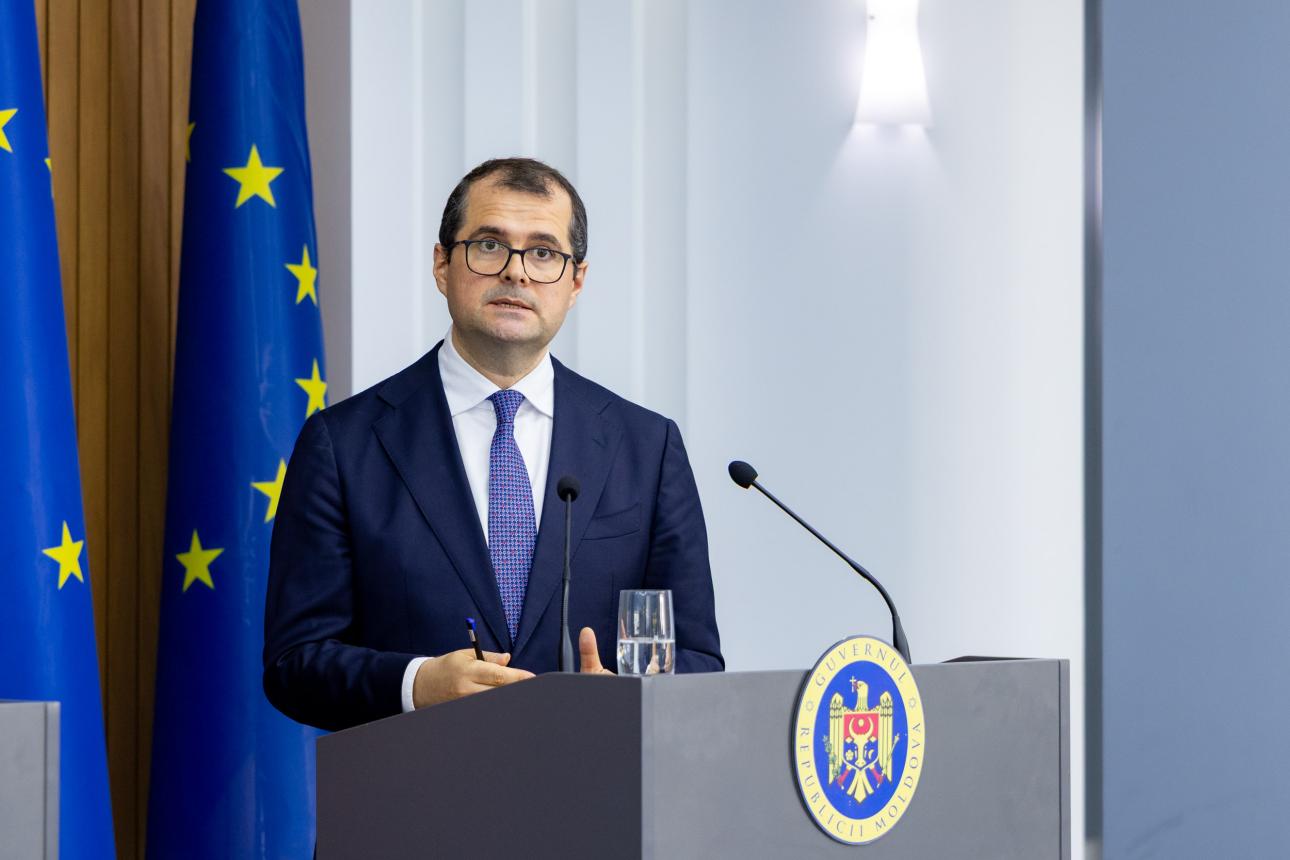
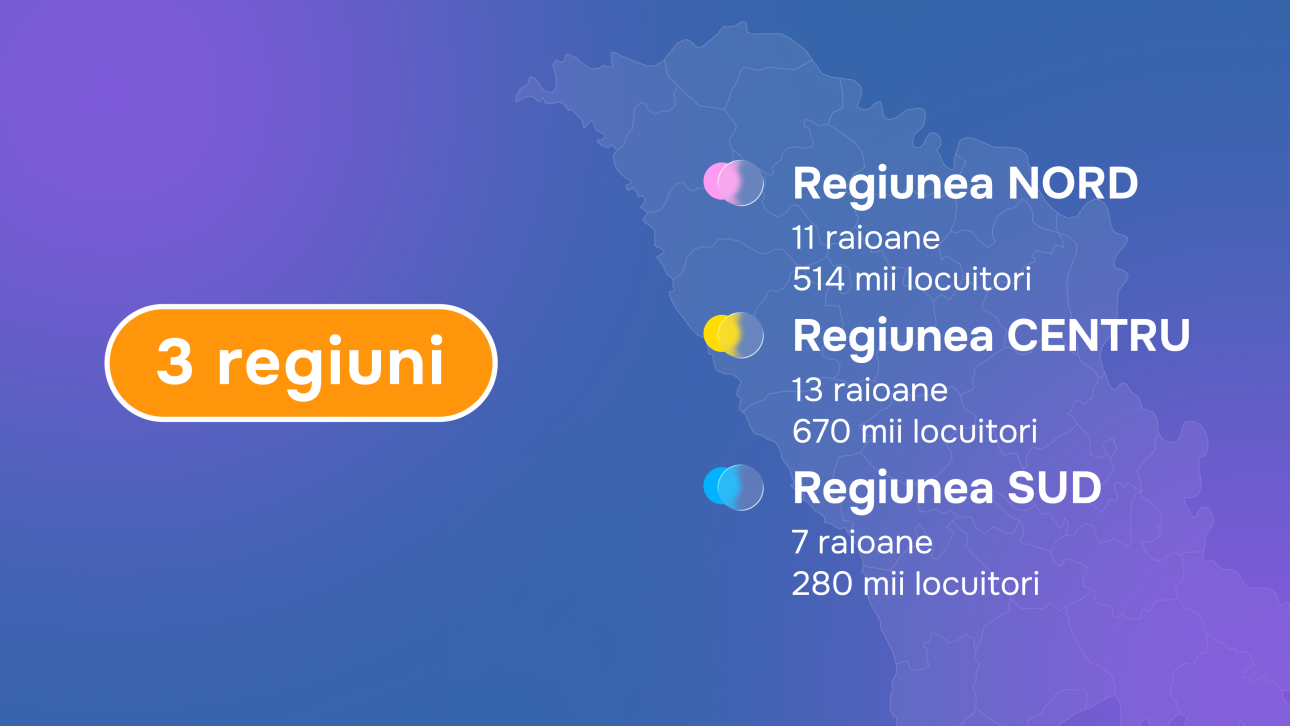
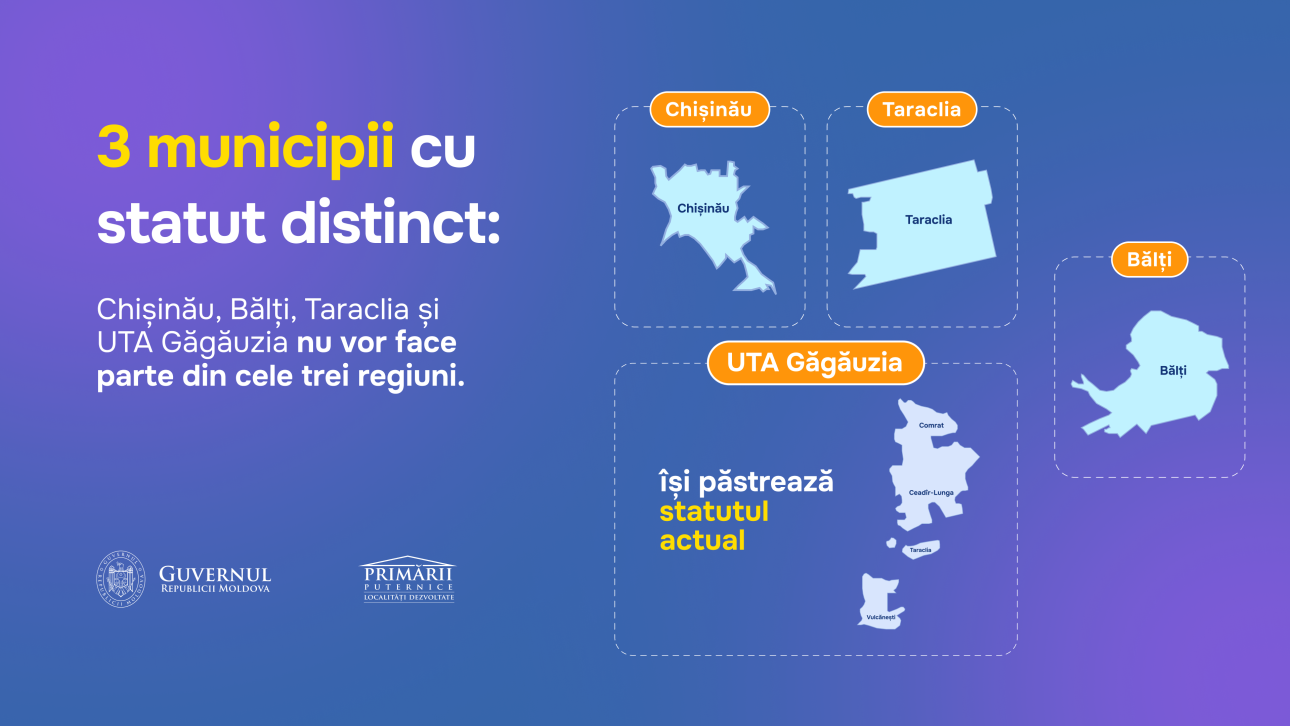
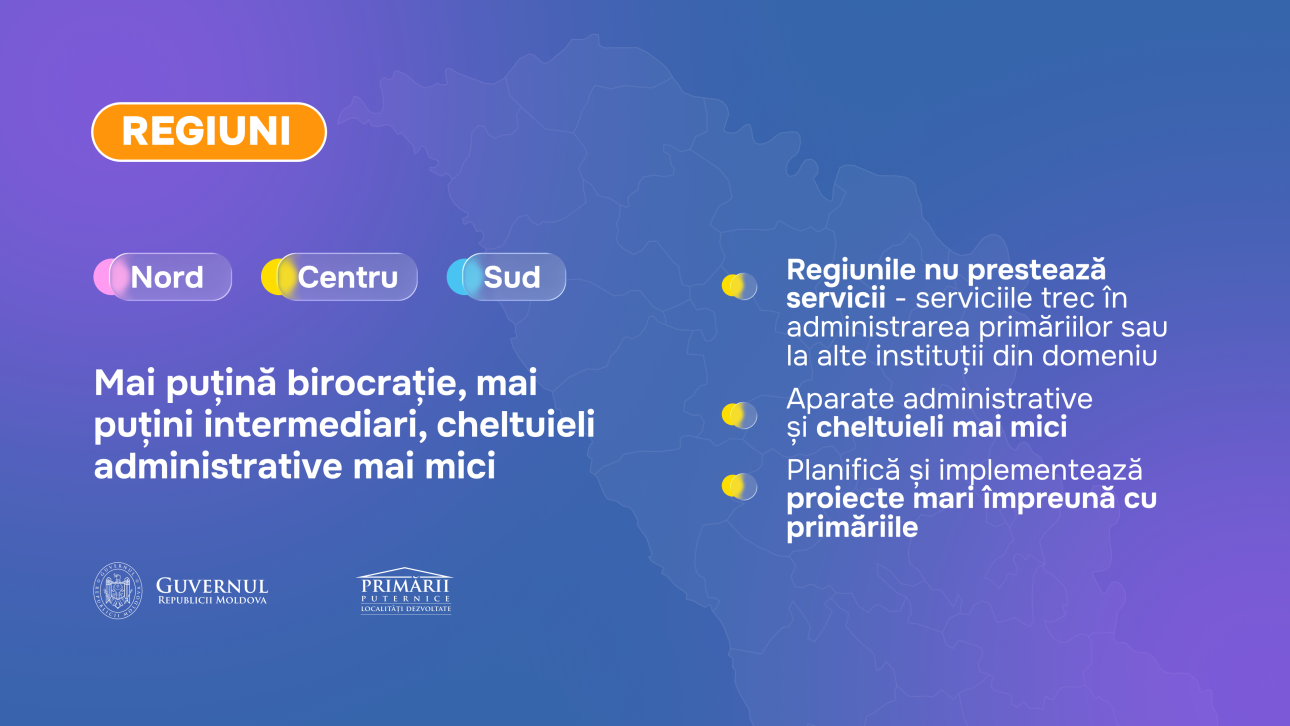
The current 32 districts will be reorganized into 3 regions – North, Centre and South – and the municipality of Taraclia. The municipalities of Chișinău and Bălți will retain their current status, while Gagauzia will retain its special status. The Concept for the Reorganization of Second-Tier Local Public Administration was presented today by Prime Minister Vasile Tofan and Secretary-General of the Government Alexei Buzu.

“If I were to reduce the essence of the reform to a single sentence, it is, above all, about building stronger city halls. Local power must be as close to people as possible, in their own communities. The mayor and team know best whether a community needs water, roads, a kindergarten or transport, and how to provide these services. We want city halls with greater capacity, more resources and more real power to solve community problems,” said Prime Minister Vasile Tofan.

The North Region will bring together 11 districts and will be headquartered in Bălți, the Centre Region will comprise 13 districts and will be headquartered in Chișinău, while the South Region - 7 districts and will be headquartered in Cahul. The current Taraclia District will become the municipality of Taraclia, a second-tier administrative-territorial unit.

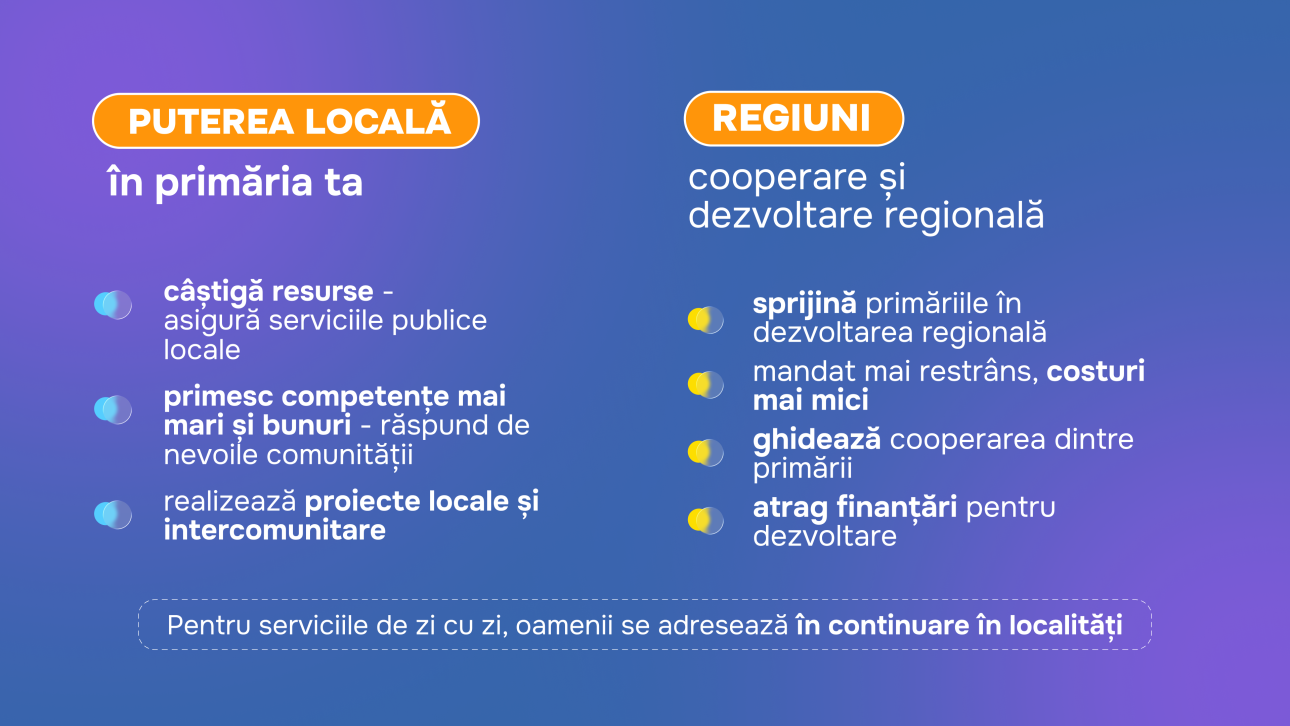
The role of the regions will differ from that of the current districts. They will have fewer responsibilities and will focus primarily on regional development, coordination and projects involving several communities. The regions will support city halls in preparing joint projects, attracting funding and implementing investments that exceed the capacity of a single community.

“The region is not here to run the city hall. The region must help the city hall do the things it could not accomplish on its own,” the Prime Minister emphasized.

Secretary-General of the Government Alexei Buzu noted that one of the important roles of the regions would be to prepare major development projects and make use of the funding available to the Republic of Moldova.

“If we want to bring water, waste management services, good roads and investors, we need to have these projects prepared. This will be an important role of the regions,” said Alexei Buzu.

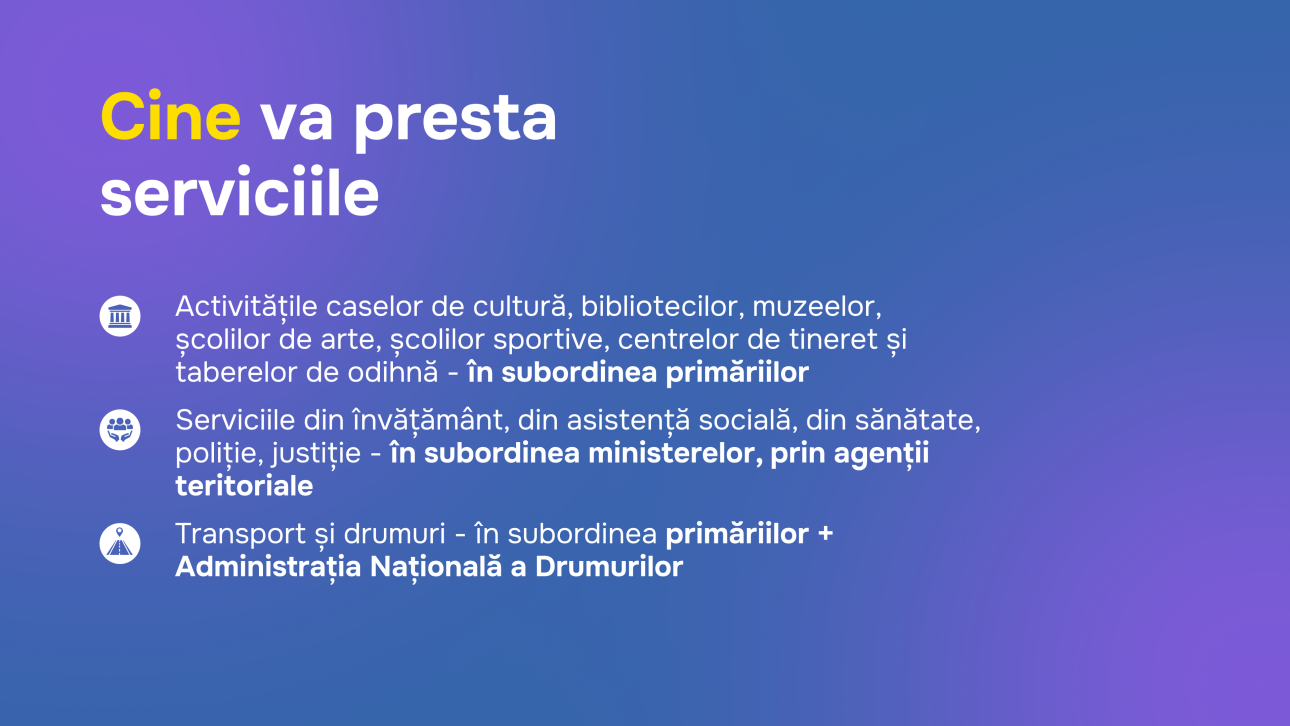
An essential rule of the reform is that services will remain close to people. Citizens will not have to travel to the regional headquarters for services they currently access in their own communities. The regions will not provide public services directly to citizens – these will be delivered by city halls, territorial structures of the central public administration and competent operators.

“We will change the administrators and who is responsible, but citizens should not feel this change,” said Secretary-General of the Government Alexei Buzu.

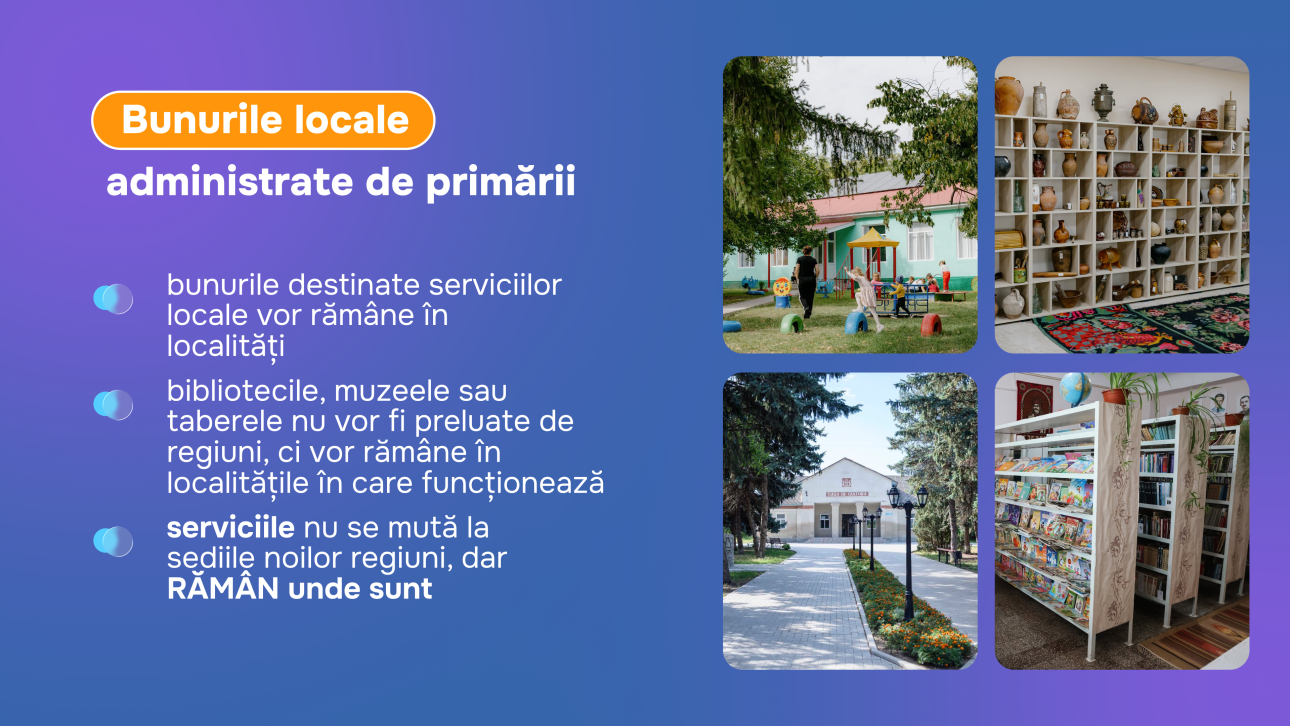
Institutions and assets intended for local services – libraries, museums, cultural centres, arts and sports schools, youth centres, holiday camps and other facilities – will remain in the communities where they operate. Those currently administered by the districts will, where appropriate, be transferred to the administration of city halls.

The reorganization also involves a more compact administrative structure at the second tier. The three regions will have smaller teams made up of specialists focused on regional development, coordination and projects.

In 2025, the budgets of the 32 districts amounted to approximately 9 billion lei, of which around 77% represented education funding. These resources will not disappear and do not constitute savings; they will follow the services to the institutions that take over the respective functions. Savings will result from reducing the administrative apparatus and eliminating overlapping structures.

The presented concept was developed following an extensive dialogue with local authorities. Since the beginning of the year, the State Chancellery has conducted more than 1,000 consultations at the level of city halls and districts. Consultations will continue, including in preparation for the legislative package and the transition plan.

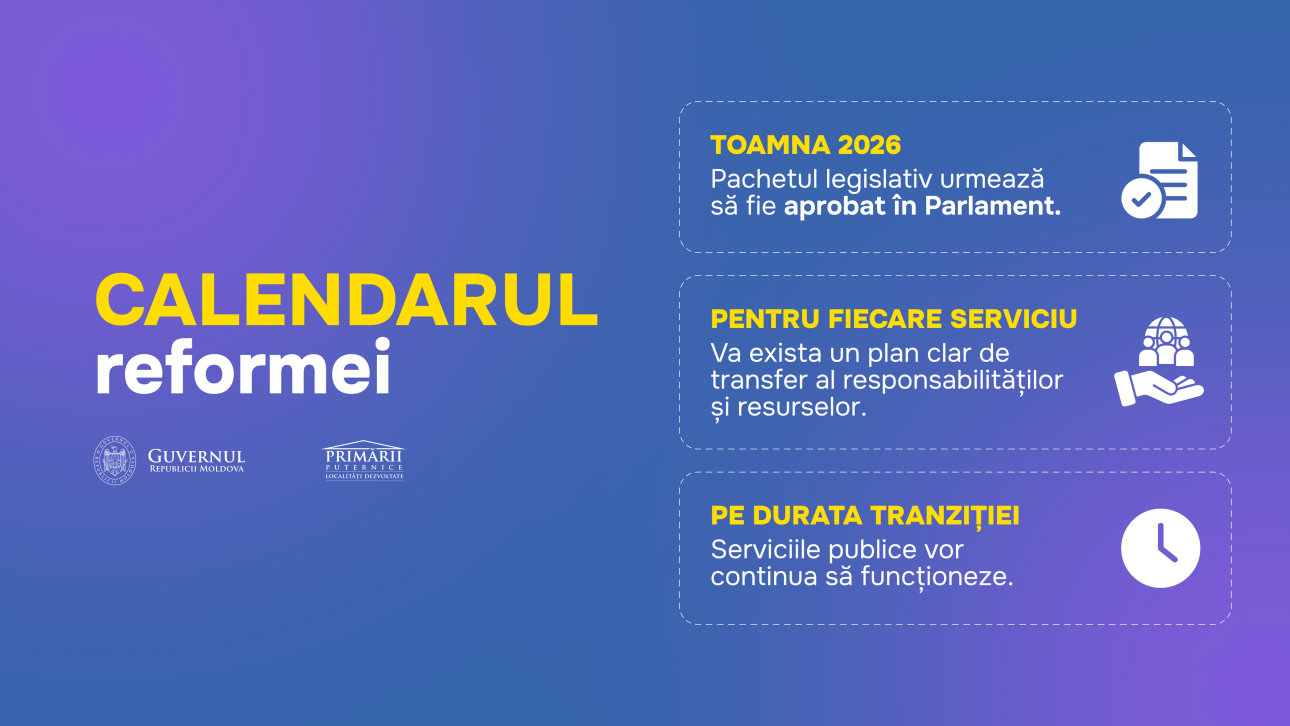
The legislative package required to implement the reform is due to be submitted to Parliament in autumn 2026.

The Concept for the Reorganization of Second-Tier Local Public Administration can be followed HERE.
 Facebook
 Instagram
 X/Twitter
 Telegram
Prime Minister holds talks with World Bank Group representatives
More efficient, transparent controls for business environment in Moldova
Deputy PM for reintegration has meeting with first resident Ambassador of Estonia to Moldova
Prime Minister urges Moldovan companies to prepare for and harness economic opportunities generated by Ukraine’s reconstruction
Prime Minister and Norway’s Ambassador approach strengthening Moldovan-Norwegian relations, continuing joint projects
Moldovan deputy PM says reintegration must be based on gradual rapprochement of two banks of Dniester
Deputy Premier: Reintegration must be based on gradual rapprochement of two banks of Dniester
European expertise for modernizing professional training in public administration
Solutions to maintain water supply discussed at Prime Minister’s meeting with relevant authorities
More than 1,000 people participated in activities dedicated to parliamentary openness in September
Moldovan PM has dialogue with Romanian investors
Moldovan PM, SITA company's representatives discuss investment opportunities in Moldova
Moldovan PM has phone conversation with Austrian chancellor
Deputy PM for reintegration has meeting with Ambassador of Kingdom of Netherlands to Moldova
Moldovan president, European commissioner discuss EU's support for Moldova's economic development
Ministry of Labour nominates winners of 2026 National Award for Seniors
MOLDPRES INTERVIEW // Ambassador Zhihua Dong: Moldova's European integration opens up new opportunities for cooperation. China promoting direct freight route
VIDEO // Government proposes replacing 32 districts with three regions: north, center and south
Foreign Ministry summons Russia’s Ambassador after several drones violated Moldova’s airspace
CEC: 15 candidates enter race for mayoral positions in November local elections
Prime Minister: Financial stability must be transformed into investment and economic growth
 National Bank of Moldova
Moldovan president, European commissioner discuss EU's support for Moldova's economic development
New working session of special commission on reintegration policies of Moldova
Moldovan Parliament to host 109th Rose-Roth Seminar of NATO Parliamentary Assembly
Prime Minister: Financial stability must be transformed into investment and economic growth
Parliamentary activity in September: five plenary sessions held and 30 laws and decisions adopted

European Commissioner begins visit to Moldova with meeting with President
Parliamentary activity in September: five plenary sessions held and 30 laws and decisions adopted
Speaker after drone explosion in Ivancea: We categorically condemn and will continue to condemn every illegal overflight of our airspace
Moldovans who worked in Slovakia to be able to combine pension insurance periods
Former Victoriabank vice-president to stand trial for complicity in fraud and money laundering
Police complete investigation at site of drone explosion in Ivancea
People’s Republic of China celebrates National Day
BNM launches commemorative coin dedicated to 80th anniversary of Moldova State University
ARMENPRESS // Armenia and US take practical steps to implement minerals memorandum
Moldovan PM meets Ambassador of Kingdom of Saudi Arabia
Moldovan PM has meeting with U.S. Ambassador
Moldovan president awards Order of Honour to honorary consuls of Moldova in Denmark, Brazil
Moldovan president receives accreditation letters on behalf of new ambassadors of United States, Turkey, Canada, Saudi Arabia, Algeria
Moldovan parliament’s standing bureau approves agenda for plenary meeting scheduled for October 2
Moldovan president receives letters of accreditation on behalf of new ambassadors of United States, Turkey, Canada, Saudi Arabia, Algeria
Deputy PM for reintegration has courtesy meeting with Ambassador of Lithuania to Moldova
Receive the latest news directly to your email

Receive the latest news directly to your email