
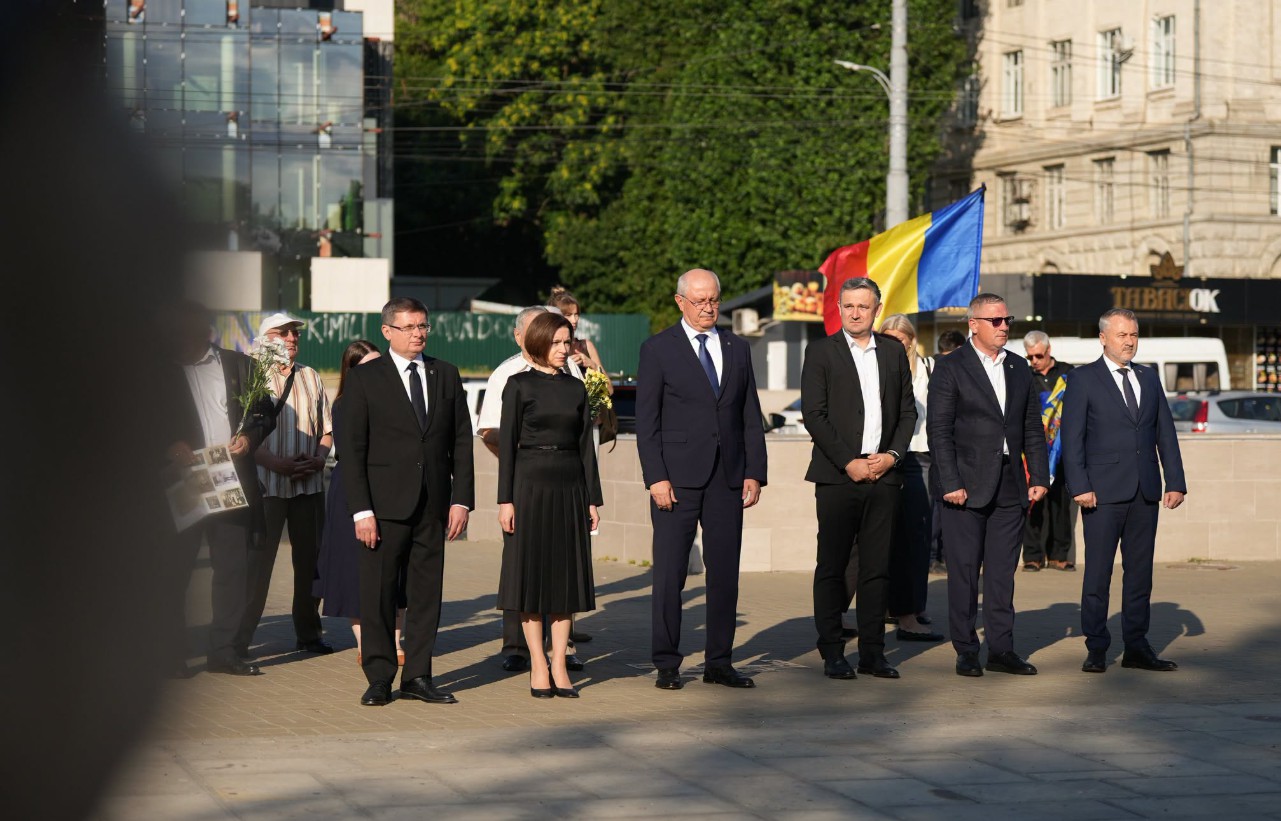
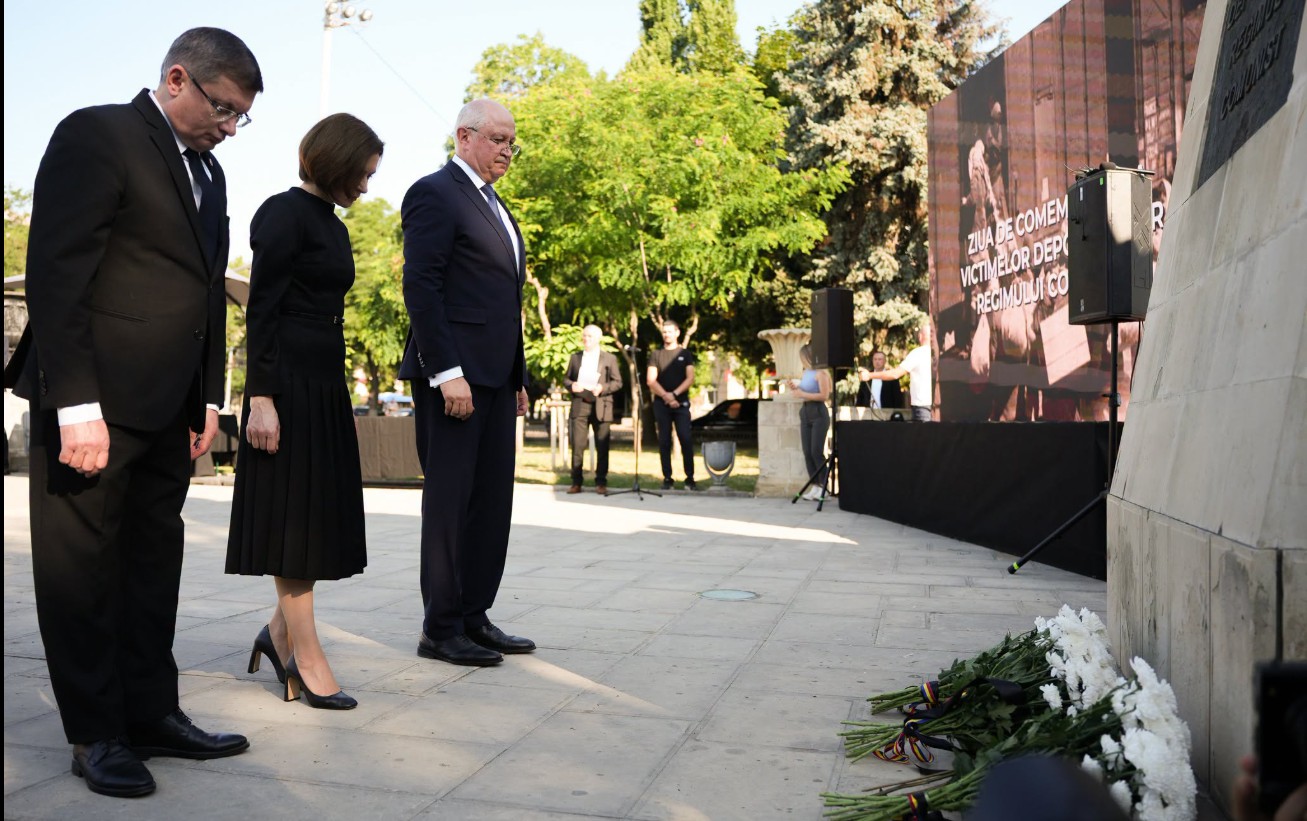
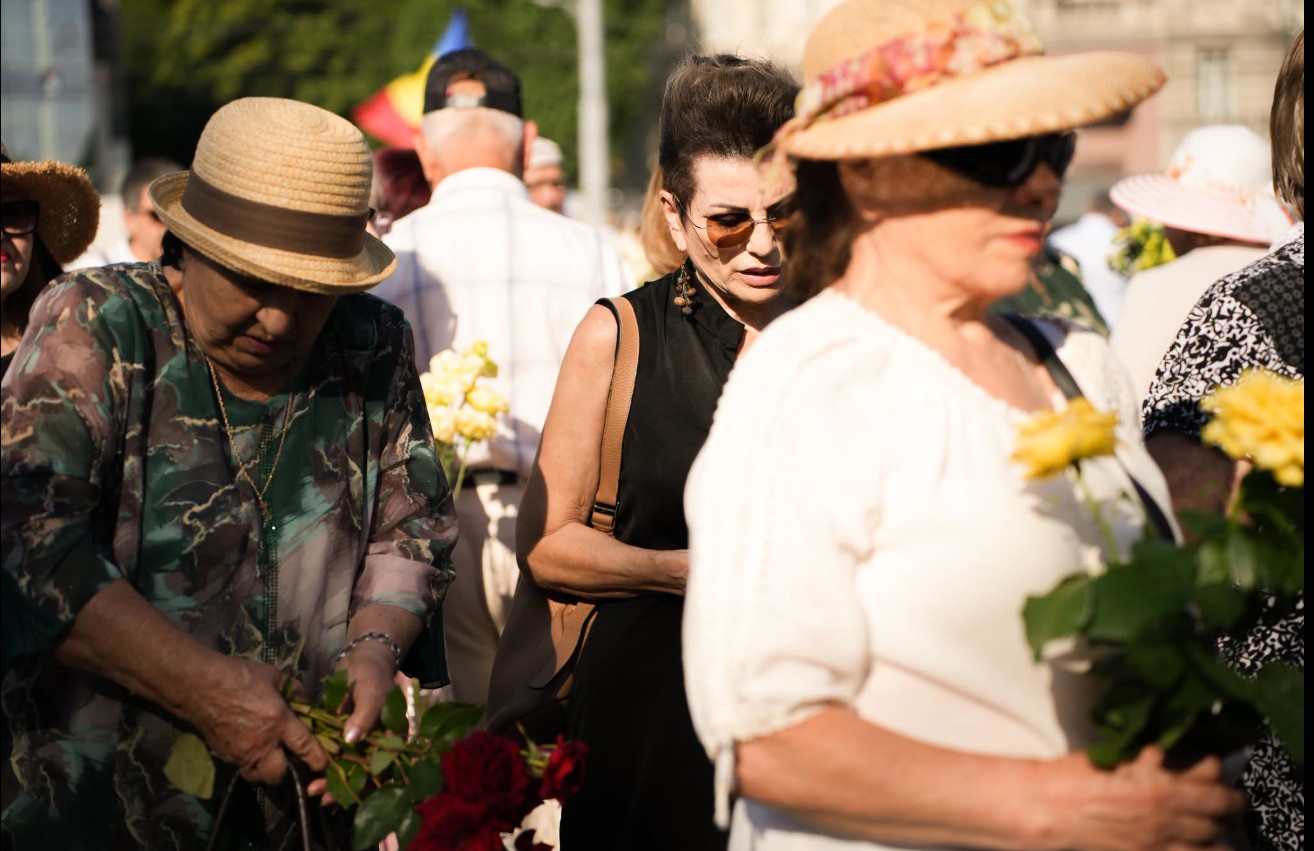
PHOTO // Speaker: Deportations part of chain of crimes committed by Stalinist regime against our people and other peoples
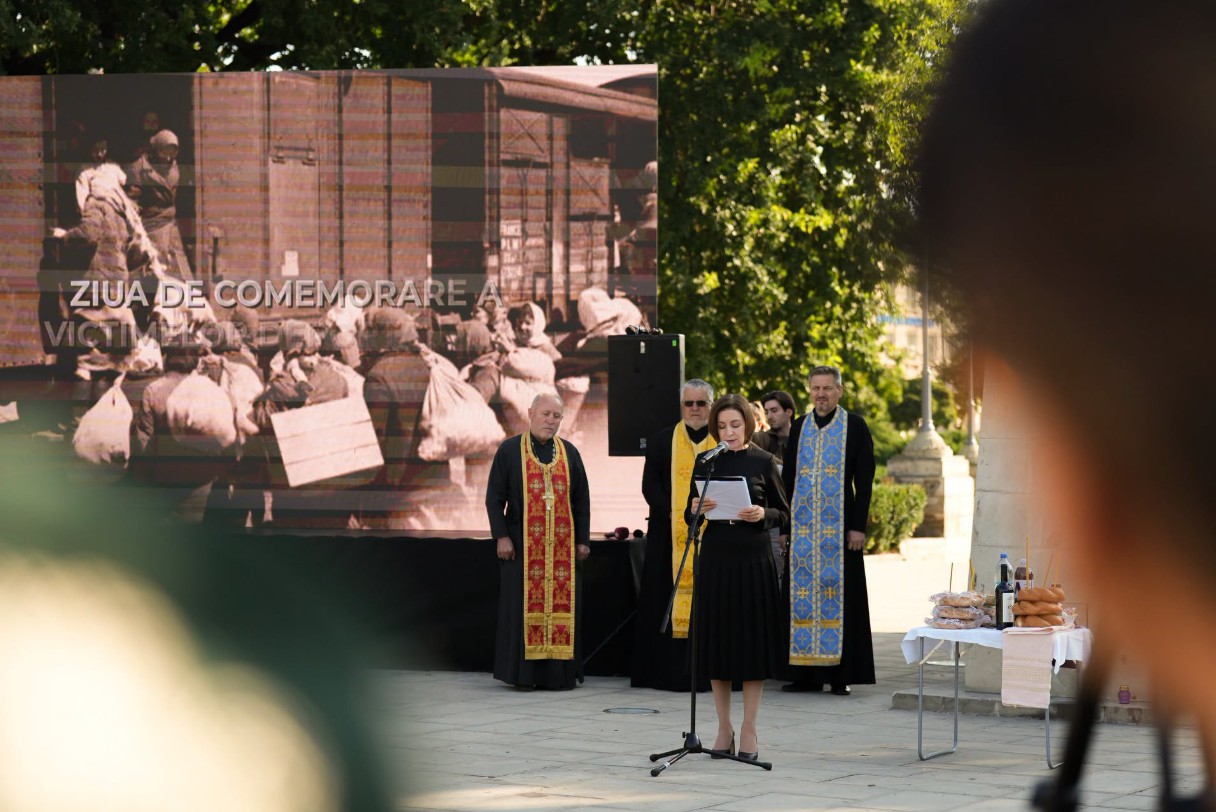
The top leadership of the Republic of Moldova, together with dozens of citizens, commemorated today the victims of the second wave of Stalinist deportations from Bessarabia. In this context, Speaker Igor Grosu condemned the crimes of the Stalinist regime.
“Today we mark the Day of the Victims of the Stalinist Deportations of 1949, the largest operation of this kind on the territory of our country – over 35,000 people, of whom 12,000 were children, were deported. These people were torn, perhaps forever, from their homes and their land, only to ultimately die in the wagons of terror or be condemned to years of inhuman labor,” Igor Grosu declared.
The Speaker stressed that the deportations were part of a chain of crimes committed by the Stalinist regime against the population, including famine, poverty, denationalization, religious persecution, political purges, and the suppression of fundamental freedoms.
“We have a sacred duty – not to forget, not to repeat!” Igor Grosu further stated.
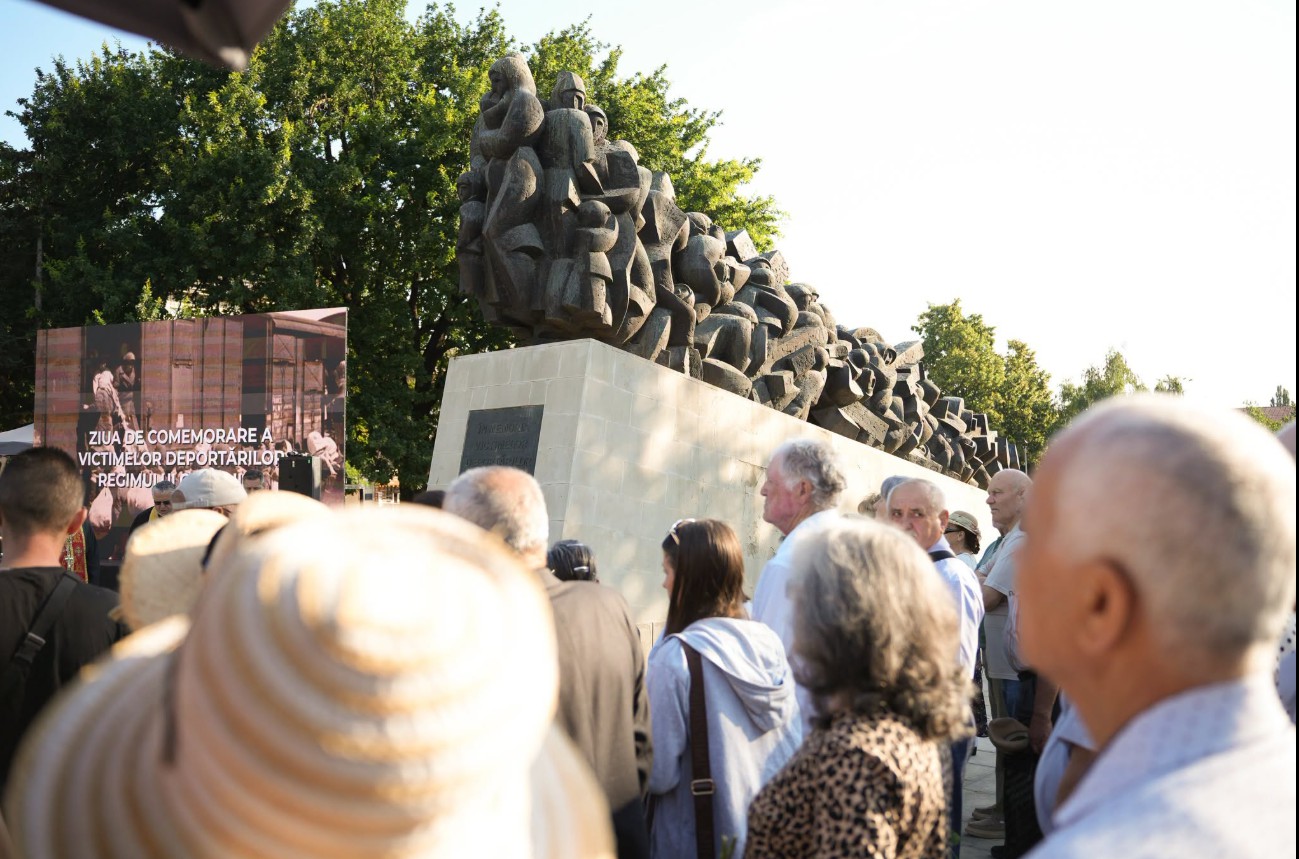
The Republic of Moldova is commemorating today 77 years since the second deportation operation.The commemorative program began at 07:45 at the Monument in Memory of the Victims of the Communist Regime Deportations on the Railway Station Alley in Chișinău. Also today, within the Film and History Festival in Mereni, two events will be organized at the “Ion Creangă” State Pedagogical University. At 13:15, the debate “Unity through Memory: the Integration of the Republic of Moldova into the EU” will take place, and at 15:45 the film “The New Year That Never Was” will be screened.
In the evening, starting at 20:00, in the Great National Assembly Square, in front of the exhibition “State Terror in Soviet Moldova: Scale, Victims and Perpetrators,” a requiem concert will be held by Select Quartet, dedicated to the victims of the totalitarian communist regime.
According to the organizers, the events aim to bring back to the public’s attention the repressions committed by the communist regime on the territory of today’s Republic of Moldova between 1917 and 1989, including the mass deportations organized by the Soviet authorities.
The commemorative program evokes both the deportation during the night of 12 to 13 June 1941, when over 18,000 people were deported as part of the “cleansing” operations of the territories occupied by the Soviet Union following the Ribbentrop–Molotov Pact, and the deportations of 6–9 July 1949, considered the largest operation of this kind carried out on the current territory of the Republic of Moldova.
As a result of the July 1949 deportations, over 11,000 families – a total of 35,796 people – were rounded up and forcibly deported to remote regions of the Soviet Union. Among them were 11,889 children, 14,033 women and 9,864 men.
At the same time, this year marks 80 years since the onset of the organized famine of 1946–1947, one of the most dramatic consequences of the Soviet repressive policies. The commemoration aims to keep alive the memory of the victims and to contribute to strengthening the culture of historical memory.
 Facebook
 Instagram
 X/Twitter
 Telegram
Speaker after Prime Minister’s resignation: We will launch discussions on necessary key reforms and carefully analyze society’s expectations
President announced start of consultations with parliamentary factions to nominate candidate for Prime Minister
VIDEO // President announces steps to be taken after Prime Minister’s resignation
Prime Minister resigns. What follows under Constitution of the Republic of Moldova
Moldova presented artificial intelligence priorities at parliamentary meeting of Black Sea Region states
Parliamentary Committee on Economy, Budget and Finance has new chair
Breaking news
Prime Minister announces resignation
Parliament creates inquiry commission for state-owned enterprises: hiring, salaries and management of public funds to be reviewed
Phone scams tackled by law: Providers to block suspicious calls, with fines of up to 75,000 lei
MOLDPRES INTERVIEW // Ambassador Petru Frunze: Boosting domestic exports to Chinese market - one of Moldova’s priorities
New law for whistleblowers: Protection against retaliation and mandatory reporting channels
Speaker promises solutions for farmers
State-owned enterprises to be audited
Republic of Moldova moves toward EU standards: Parliament adopts new Arbitration Law in first reading
Speaker at rally commemorating victims of Stalinist deportations: We have sacred duty – not to forget, not to repeat!
PHOTO // Speaker: Deportations part of chain of crimes committed by Stalinist regime against our people and other peoples
Travel advisory from Foreign Ministry: Increased border controls in Russia, measures mainly target men aged 18 to 60
President at requiem rally dedicated to victims of Communist deportations
Moldelectrica completes first testing stage of new 400 kV bay at Vulcănești substation
Acting Prime Minister: I will continue my duty until new Government is sworn in
Speaker on prime minister’s office: We are discussing within party. This week we will present our candidate
 National Bank of Moldova
Speaker at rally commemorating victims of Stalinist deportations: We have sacred duty – not to forget, not to repeat!
President at requiem rally dedicated to victims of Communist deportations
Deputy Prime Minister for Reintegration in dialogue with European Union Special Representative for Transnistrian settlement
President to hold press conference today, July 3
Social benefits totaling 76.3 million lei provided to citizens of Moldova residing in Transnistrian region in first half of 2026

Moldova promotes tourism potential in China
Homeland and Diaspora Days to be marked in August in over 100 localities across country
President congratulated U.S. on Independence Day
Diplomatic relations between Moldova and China on rise: high-potential development areas on authorities’ agenda
PHOTO // Two more apartment courtyards in capital modernized under European Courtyard Program
MOLDPRES REPORT // From stone quarry to medals: China forges its own path in wine world, while recognizing excellence of Moldovan production
VIDEO // Voluntary amalgamation in Cahul: Three localities merge into single city hall, with 16 million lei incentive from Government
Bronze medal for Moldova at U23 World Championships: canoeist Mihai Chihaia steps onto podium
United States of America marks Independence Day
PHOTO // Parliament and Triumphal Arch illuminated in colors of US flag on 250th anniversary of adoption of Declaration of Independence
Moldova and Ukraine advance in EU accession process
PHOTO // Parliament hosts exhibition dedicated to civil society
Elections to People’s Assembly of Gagauzia set for 15 November
PHOTO // Moldovan products promoted through economic diplomacy
OPINION // Expert Andrei Curăraru: Government’s resignation reflects failure to manage tax reform and public communication
MP Valentin Gaidarji elected President of People’s Assembly of Gagauzia
Receive the latest news directly to your email

Receive the latest news directly to your email