
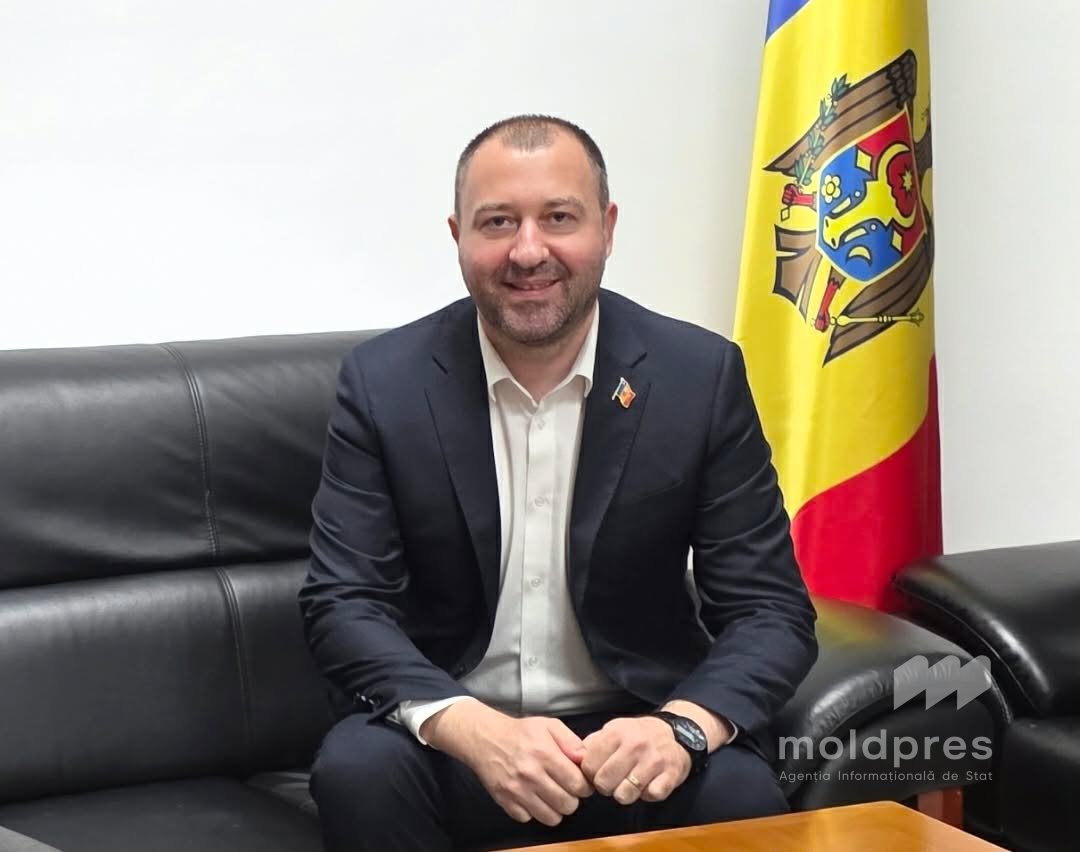
MOLDPRES INTERVIEW // Ambassador Petru Frunze: Boosting domestic exports to Chinese market - one of Moldova’s priorities
Moldova is reconfiguring its economic priorities in relation to Beijing, betting on access to one of the largest consumer markets in the world. Although the current trade balance tilts heavily in China’s favor, Chișinău sees in this asymmetry a huge opportunity that has remained underused during the 34 years of diplomatic relations.

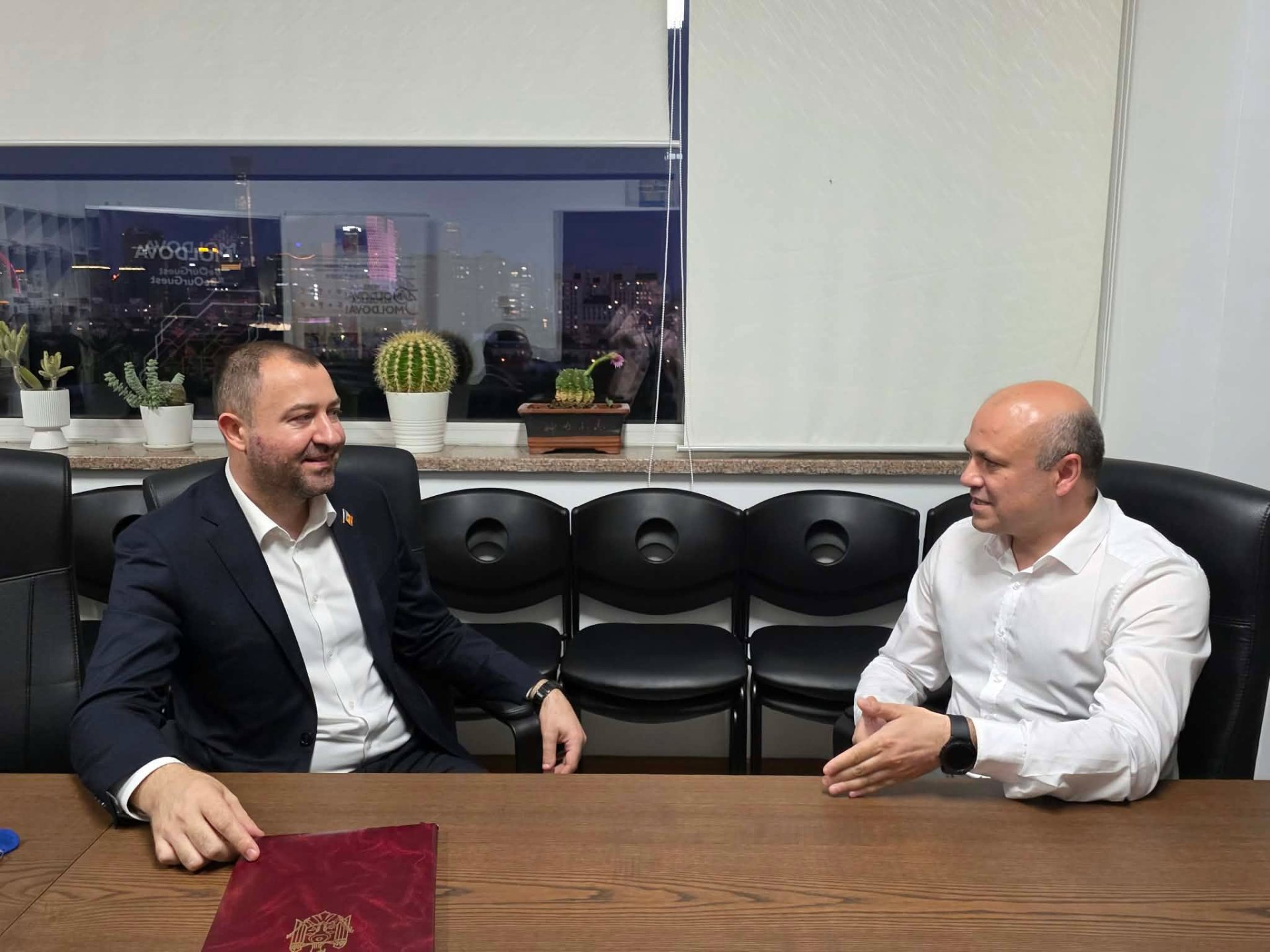
In an exclusive interview with MOLDPRES State News Agency, new Ambassador of the Republic of Moldova to China Petru Frunze details Chișinău’s strategies for facilitating Moldovan exports, attracting Chinese investments that will generate new jobs, and turning our country into an attractive destination for tourists and businesspeople from China.

Mr. Ambassador, to begin with, a curiosity about the transition to this new chapter of your career: how were your first months in Beijing, how did you adapt to the local specifics and, especially, to the demands of this great power?

The position of Ambassador of the Republic of Moldova to the People’s Republic of China is for me a great honor, but also a great responsibility.

While in my previous positions – as lawyer, mayor and member of the Parliament of the Republic of Moldova – I represented the interests of local communities, citizens and the Republic of Moldova, as ambassador I have the mission to promote and defend the interests of the Republic of Moldova in a much broader context, at the bilateral level between two states.

At the same time, I individually and collectively represent the interests of citizens and economic agents who interact with the private and public sectors in China.

The experience I have accumulated during my professional and political activity, including as mayor for two terms, member of the Parliament of the Republic of Moldova for two terms, president of the parliamentary Friendship Group with Romania and co-chair of the Joint Commission for European Integration between the Parliament of the Republic of Moldova and the Parliament of Romania, provides me with a solid base of knowledge and skills needed to carry out my diplomatic mandate.

At the same time, China was not an unknown country to me. Before being appointed ambassador, I had the opportunity to visit this state several times as part of parliamentary and institutional activities. Thus, I was already familiar with China’s realities, its administrative and political system, its impressive economic development and the specifics of Chinese culture. I have also always appreciated the hospitality and openness of the Chinese people.

Approximately three months have passed since I started my activity in Beijing, and the adaptation process was easier than I expected. If a few years ago I would not have imagined that I would live and work in a country other than the Republic of Moldova or Romania, today I can say with certainty that I have integrated very well into this environment. An important role in this adaptation was played by the professional team of the Embassy of the Republic of Moldova in Beijing, as well as by the support and openness of the Chinese people.

Your Excellency, now that you already have a clear perspective on the bilateral agenda, how would you define the current relationship between Beijing and Chișinău?

Over the 34 years since the establishment of diplomatic relations between the Republic of Moldova and the People’s Republic of China, our countries have maintained a stable, constructive and results-oriented political dialogue.

Bilateral relations have steadily developed on the basis of the principles of mutual respect, sovereignty and territorial integrity. Today, the relationship between Chișinău and Beijing can be characterized as one of friendship and pragmatic cooperation, with significant development potential in multiple areas. China is one of the most important economic partners of the Republic of Moldova in the Asian region, and the dialogue between the institutions of our states takes place in an atmosphere of respect and openness.

There is mutual interest in deepening cooperation in areas such as trade, investment, agriculture, infrastructure, education, culture, tourism and people-to-people exchanges.

There are important opportunities to further strengthen bilateral relations. Our objective is to harness this potential for the benefit of citizens and the business environment in both countries, thus contributing to the development of sustainable and mutually beneficial cooperation.

At present, trade flows between our countries are clearly in Beijing’s favor – a negative trade balance of over 1.24 billion dollars in 2025; almost 14% of Moldova’s imports last year came from China. Previously, you underlined that boosting Moldovan exports is an important objective for the diplomatic mission you lead. In practical terms, how do you plan to reduce this trade deficit and on which categories of domestic products should we focus our attention in order to win over the Chinese consumer?

Increasing domestic exports to China is one of the Republic of Moldova’s priorities. It is true that at present the trade balance is significantly in China’s favor, but we must also view this situation through the lens of the opportunities offered by one of the largest consumer markets in the world.

The Chinese market is extremely vast and is also one of the most competitive and regulated markets globally. Actually, we are focusing on concrete measures intended to facilitate access for Moldovan products to the Chinese market and to diversify the range of exported products.

In the agri-food sector, one of the main lines of action is obtaining the necessary authorizations for new product categories. At present, the embassy, together with the competent authorities in the Republic of Moldova and China, is making efforts to authorize the export of honey and cherries.

Negotiations are also underway for the export of plums, sunflower seed oil and cereal products. These products have already proved to be competitive on international markets, including the European Union market, and Chinese consumers are increasingly appreciating high-quality, safe and natural food products.

At the same time, we pay special attention to promoting Moldovan wines. Wine is one of the emblematic products of the Republic of Moldova and has considerable potential on the Chinese market. In this regard, we constantly request support from the Chinese authorities and partners to enable local producers to participate in exhibitions, international fairs and promotional events. Although in recent years wine exports to China have decreased, we believe there are real premises for a revival of this sector.

Deputy Prime Minister, Minister of Foreign Affairs Mihai Popșoi paid an official visit to China in May this year, the first at such a level in the last eight years. What are the most important agreements reached in Beijing and how does the diplomatic mission you lead plan to turn these understandings into tangible results for the Republic of Moldova?

The official visit to the People’s Republic of China by the Deputy Prime Minister and Minister of Foreign Affairs of the Republic of Moldova, Mr. Mihai Popșoi, carried out in May, was an important moment for relaunching high-level political dialogue between the two states and for deepening bilateral cooperation in areas of mutual interest.

During the meetings held in Beijing and Shanghai, a series of priority topics for the Republic of Moldova were discussed, including expanding access for Moldovan products to the Chinese market, increasing exports, facilitating bilateral trade, attracting Chinese investments and strengthening cooperation in the field of tourism.

Among the objectives promoted by the Moldovan side are examining the possibility of abolishing import duties on wine, authorizing the import into the Chinese market of a larger number of agri-food products, including the Republic of Moldova on the list of recommended destinations for Chinese tourists, as well as presenting the investment opportunities our country offers.

These initiatives aim to support the business environment, diversify export markets for Moldovan producers and attract investments that will contribute to the economic development of the Republic of Moldova.

As regards the practical implementation of these objectives, the Embassy of the Republic of Moldova in China is continuing active dialogue with the relevant Chinese state institutions, with local authorities and with representatives of the business community. We are in the process of turning political discussions into concrete results by advancing technical negotiations, facilitating contacts between companies and promoting agreements that respond to the economic interests of the Republic of Moldova.

The Chinese Foreign Minister told Deputy Prime Minister Mihai Popșoi that China respects the sovereignty of the Republic of Moldova and its choice to join the European Union. How does Chișinău calibrate its position in dialogue with the People’s Republic of China, given that European integration is our priority, while Beijing follows its own geopolitical dynamics in relation to the West?

The Republic of Moldova has democratically chosen its European path, and accession to the European Union is the country’s fundamental strategic objective. This objective enjoys broad support from citizens and state institutions and remains the Republic of Moldova’s main priority.

At the same time, the Republic of Moldova promotes constructive and pragmatic relations with all its international partners, including China, based on the principles of mutual respect, equality and non-interference in internal affairs.

We appreciate the fact that the Chinese side respects the Republic of Moldova’s choice of a European path. The process of European integration and the development of bilateral relations with China are not contradictory objectives. On the contrary, there are numerous opportunities for cooperation in areas such as trade, investment, agriculture, tourism, education and people-to-people exchanges, to the benefit of both states.

Therefore, the Republic of Moldova will continue to advance firmly on the path of European integration, while developing an open dialogue and pragmatic cooperation with China, in accordance with our national interests and with our commitments in the EU accession process.

The agenda of Popșoi’s official visit also included discussions with the Ministry of Culture and Tourism in Beijing on attracting flows of Chinese tourists, who are globally known for their strong interest in cultural tourism. What concrete measures – logistical, visa facilitation or promotional – does the embassy envisage so that the Republic of Moldova becomes an attractive and visible destination for major travel agencies in China?

Attracting Chinese tourists to the Republic of Moldova is one of the embassy’s priorities. During the visit of the Deputy Prime Minister and Minister of Foreign Affairs, Mr. Mihai Popșoi, we discussed with representatives of China’s Ministry of Culture and Tourism about possibilities to strengthen cooperation in this field.

An important objective is including the Republic of Moldova on the list of recommended destinations for Chinese tourists, which would facilitate the promotion of our country through major travel agencies and specialized platforms in China.

The embassy is developing an active dialogue with tour operators and companies in the sector to promote the Republic of Moldova as an authentic destination with rich cultural heritage, unique traditions, renowned wineries and hospitable people.

We aim to present tourist offers tailored to the interests of Chinese visitors, focusing on cultural, gastronomic and wine tourism. We are also analyzing possibilities to promote integrated tour packages and to organize information visits for representatives of travel agencies from China so that they can directly discover the tourism potential of the Republic of Moldova.

We are convinced that, through close cooperation between state institutions, the business community and partners in China, the Republic of Moldova can become an increasingly visible and attractive destination for Chinese tourists, thus contributing to economic development and to strengthening ties between the citizens of the two countries.

China is known worldwide, among other things, for gigantic infrastructure projects, for its ultra-modern metropolises, and for being the largest producer and exporter of goods on the planet. What do you think the Republic of Moldova has to learn first of all from China, and conversely – what examples could Chișinău offer to Beijing?

China is one of the most relevant examples of economic development and structural transformation in recent decades. Through massive investments in industry, innovation and infrastructure, China has managed to create an environment conducive to economic development and to raising living standards.

For the Republic of Moldova, one of the most important lessons is the need to support investments in the productive sector and to develop an economy based on added value. Attracting investments in manufacturing generates jobs, stimulates exports and creates premises for increased investments in infrastructure, education and public services. In this regard, the Government of the Republic of Moldova is implementing measures to improve the investment climate and provide more consistent support to the business environment.

At the same time, we must recognize that the Russian Federation’s war of aggression against Ukraine continues to affect investors’ perception of the entire region. However, we are confident that, once peace and stability are restored, the Republic of Moldova will become even more attractive for foreign investment.

Another area where we can learn from China’s experience is urban development and infrastructure. Exchanges of experience between specialists in urban planning, design, territorial planning and construction regulations would be particularly useful in order to adopt best practices for the sustainable development of localities and the implementation of modern and efficient infrastructure projects. Likewise, Chinese technology in agriculture, construction and industry can be taken over for the economic development of the Republic of Moldova.

At the same time, I believe that the Republic of Moldova also has valuable experiences to share with China. Our country is appreciated for its agricultural and wine-making traditions and for the quality of its agri-food products. Dialogue and mutual exchange of experience are the basis of a modern partnership that benefits both states.

Your Excellency, what can you tell us about our diaspora in China?

I have had the opportunity to meet and talk with citizens of the Republic of Moldova settled in different regions of China. We have organized meetings and joint events with diaspora members in Beijing and I also had the chance to get to know the Moldovan community in Shanghai.

I was pleased to note that our citizens represent the Republic of Moldova with dignity and pride, being active in several fields, in business, culture and science. Through their professionalism and involvement, they contribute to promoting a positive image of our country in China.

For the Embassy of the Republic of Moldova in China, the relationship with the diaspora is a priority. We will continue to maintain an open and constant dialogue with Moldovan communities throughout the country, in order to be closer to their concerns and needs, but also to involve them in promoting national culture, traditions and values.

Our diaspora is a true bridge between the Republic of Moldova and China, and its contribution to the development of relations between the two states is an important one.

Mr. Frunze, at the time of your appointment there were certain public debates, some people arguing that you do not come from the ranks of career diplomats, others mentioning certain language barriers. How do you respond to these reservations, and to what extent can your managerial expertise in the public sector compensate for the lack of diplomatic experience that has been publicly reproached to you?

In a democratic society, it is natural for appointments to public office to be analyzed and discussed in the public space. Citizens have the right to expect that those appointed to such positions will exercise their mandate with professionalism, integrity and in the interest of the Republic of Moldova.

The position of ambassador involves responsibilities and requires a set of skills: the capacity for representation, managerial experience, negotiation abilities, understanding of the competences of state institutions, as well as the aptitude to build trust-based relationships with external partners.

Throughout my public activity I have gained relevant experience in these fields. During my two mandates as mayor and two as member of parliament, I managed important public budgets, coordinated the implementation of development projects financed from national and external sources, led numerous official delegations and cooperated with partners from various states for the development of joint projects and the strengthening of bilateral relations.

I have also represented the Republic of Moldova in several European meetings and structures, an experience that provided me with a good understanding of international cooperation mechanisms. This administrative and political experience is very useful to me in my work as ambassador – both in dialogue with Chinese authorities and the business community, and in promoting the interests of the Republic of Moldova.

I have been to China several times during my two mandates as a member of parliament; I have studied international trade, the functioning of state institutions, and China’s diplomatic relations with other states, so I have knowledge about China. As for the challenges related to adapting to a new diplomatic and cultural environment, I see them as a professional responsibility. I am constantly improving myself, benefiting from the support of a professional team at the Embassy of the Republic of Moldova in Beijing, of the Ministry of Foreign Affairs and of the authorities in the Republic of Moldova. Diplomacy is, above all, about goals, efforts, results, seriousness and ability to build bridges of cooperation.

I am convinced that the work carried out and the results achieved will be the best confirmation of the trust that has been placed in me. My objective remains to promote the interests of the Republic of Moldova, strengthen Moldovan-Chinese relations and make the most of cooperation opportunities for the benefit of our citizens and business community.

If we were to project ourselves to the end of your mission, what would be the three major achievements that would lead you to report that your diplomatic mission to the People’s Republic of China has been a success for the Republic of Moldova?

If I were to anticipate things from the end of my mandate, I would consider this mission a success if we manage to obtain concrete results in several essential areas. First, supporting the Republic of Moldova’s exports to the Chinese market. China represents a market with enormous potential, and our goal is to facilitate access for Moldovan products, identify new trade opportunities and strengthen the presence of our companies on this market.

Second, strengthening economic cooperation by supporting the business environment and attracting Chinese investments to the Republic of Moldova. We want to develop sustainable partnerships that will generate jobs, technology transfer and economic development.

Third, promoting the Republic of Moldova as a tourist and business destination for Chinese citizens. A better knowledge of our country can contribute both to increasing tourist flows and to developing economic, cultural and people-to-people relations.

Another objective of mine is to establish cooperation relations between local public authorities, with a view to exchanging experience in the sustainable development of communities.

The development of bilateral relations between the Republic of Moldova and the People’s Republic of China remains a priority. At the same time, I would like us to make progress in fields such as agriculture, education, health and culture, so that the relationship between the two states becomes stronger, more diversified and more beneficial for the citizens of both countries.

Ambassador Petru Frunze, thank you for the interview!

Interview by Vitalie HADEI
 Facebook
 Instagram
 X/Twitter
 Telegram
MOLDPRES INTERVIEW // ANSC Director: We make sure that path of public money to hospitals, schools or infrastructure fair and transparent
MOLDPRES INTERVIEW // Vice President of Romanian Academy says academic, research environment of Moldova advanced, can be efficiently integrated into European, international structures
MOLDPRES INTERVIEW // Rector of University from Romanian city says if someone overturns your history, national identity, it means you don’t have enough knowledge
MOLDPRES INTERVIEW // Director of South Regional Development Agency says Agency creating better living conditions, easier life for thousands of residents
MOLDPRES INTERVIEW // Lithuanian Ambassador about prospects of Moldova’s EU accession: If you make things real, they will become achievable
MOLDPRES INTERVIEW // Moldovan finance minister says government aims to modernize financial system for benefit of businesses, citizens
MOLDPRES INTERVIEW // Ambassador of State of Qatar to Moldova: We are working to improve ways of attracting Qatari investors to Moldovan market
MOLDPRES INTERVIEW // President of Moldova's Chamber of Commerce and Industry says country must use opportunities provided by European integration to attract investments, become competitive
MOLDPRES Interview // Minister of Internal Affairs: Interior Ministry applies European security standards and is ready to advance in EU accession process
MOLDPRES INTERVIEW // Moldovan energy minister says foremost interest citizens to have secure energy at affordable prices
Moldovan justice minister says, according to European Commission’s Report, Moldova made greatest progress among EU candidate states, including in justice field
INTERVIEW MOLDPRES // Moldovan defense minister says Russia's war in Ukraine highlighted vulnerability of defense sector, need of building strong, prepared, resilient army to current challenges
INTERVIEW WITH MOLDPRES // Deputy PM says wants Moldova where a child from any village has same opportunities as a child from Chisinau
INTERVIEW MOLDPRES // Deputy Prime Minister on Ukraine Peace Agreement: No discussion about Moldova can take place without Chișinău's participation
PHOTO // Garden of 100 roots inaugurated in Nisporeni on eve of National House centenary
Deputy Prime Minister to visit Cyprus for discussions on European integration and cooperation
Cyberattack on digital public services: authorities block about 11 million access requests
PHOTO // Austria’s National Day marked in Chisinau
 National Bank of Moldova
Moldovan President meets with Hungarian President and Prime Minister
President attends commemoration in Budapest marking 70th anniversary of 1956 anti-communist revolution
Moldovan PM meets young people who won three medals for Moldova at World Robotics Championship
Moldovan PM, vice-president of European Investment Bank discuss accelerating development projects in Moldova
Moldovan deputy PM for reintegration participates in marking 30 years of work of theoretical lyceum from Grigoriopol

President attends commemoration in Budapest marking 70th anniversary of 1956 anti-communist revolution
Violence can escalate to femicide: How to recognize warning signs and where victims can seek help
PHOTO GALLERY // Romanian Armed Forces Day celebrated in Chișinău with exhibition dedicated to international military missions during interwar period
PHOTO // President honors courage of Hungarian people, 70 years after 1956 anti-communist Revolution
Ukraine condemns violation of Moldova’s airspace
Moldovan president condemns incident in Telenesti district: “Russia’s war continues to endanger citizens’ lives”
Staff member of Russia's Embassy in Moldova to be declared persona non grata after explosive-laden drone crashed in Telenesti district
Moldovan PM meets young people who won three medals for Moldova at World Robotics Championship
Facilitated access to EU market: European Investment Bank provides 150 million euros to modernize agri-food sector through Moldova's Orchard II programme
Moldovan PM, vice-president of European Investment Bank discuss accelerating development projects in Moldova
Two cases of national airspace violations recorded in Moldova in past week; Defence Ministry reiterates need to strengthen air defense capabilities
Moldovan deputy PM for reintegration participates in marking 30 years of work of theoretical lyceum from Grigoriopol
Drone falls in central Moldova village; police secure area
First at November 1, 2026 elections in Moldova: voters to be able to vote using digital ID from EVO app
National Bank of Moldova simplifies foreign exchange rules: transfers, investments of up to 100,000 euros without authorization
PHOTO, VIDEO // Moldovan head of state president welcomed by Hungarian president at Sándor Palace in Budapest
Receive the latest news directly to your email

Receive the latest news directly to your email