
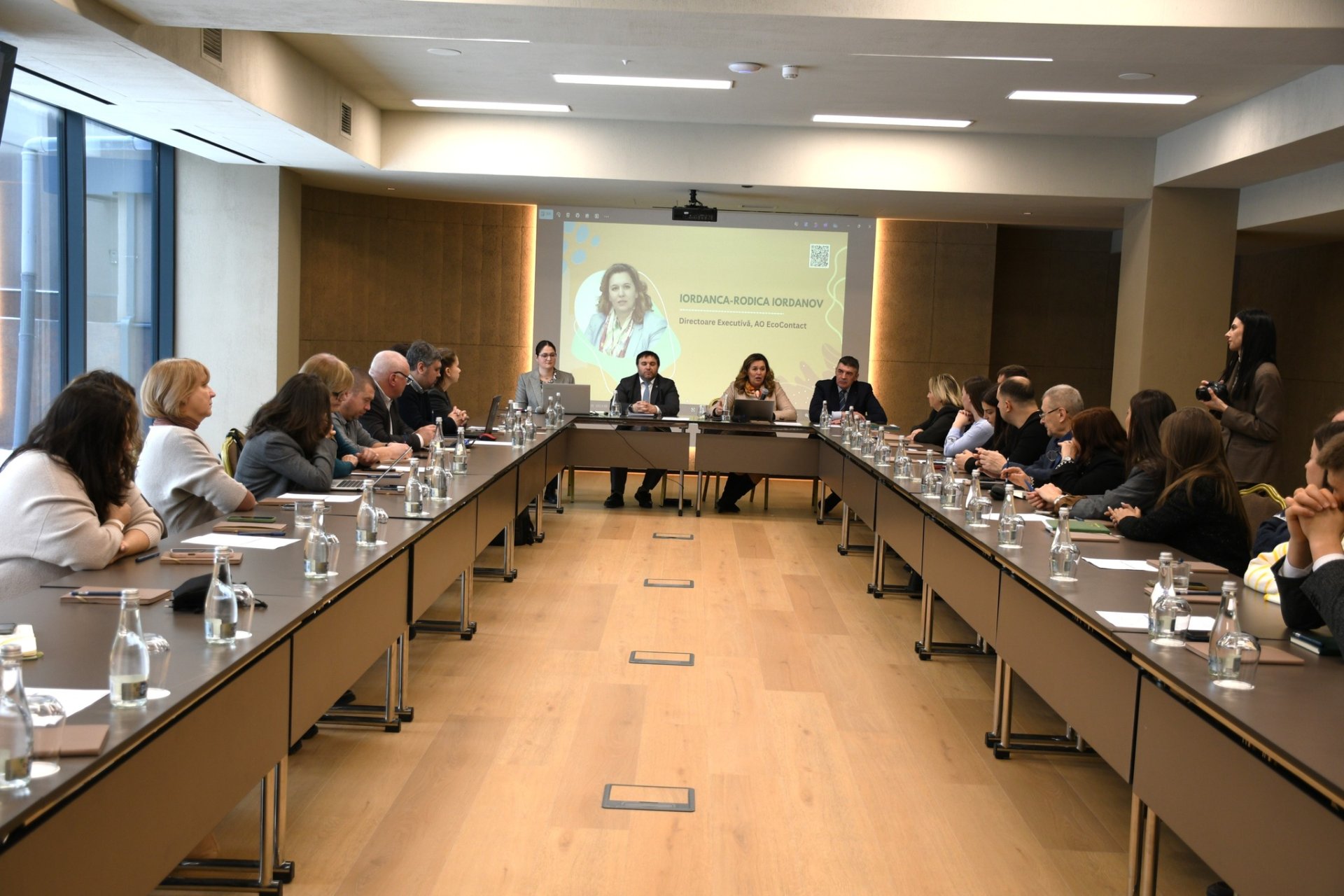
Moldova starts drafting UNCCD Report 2026
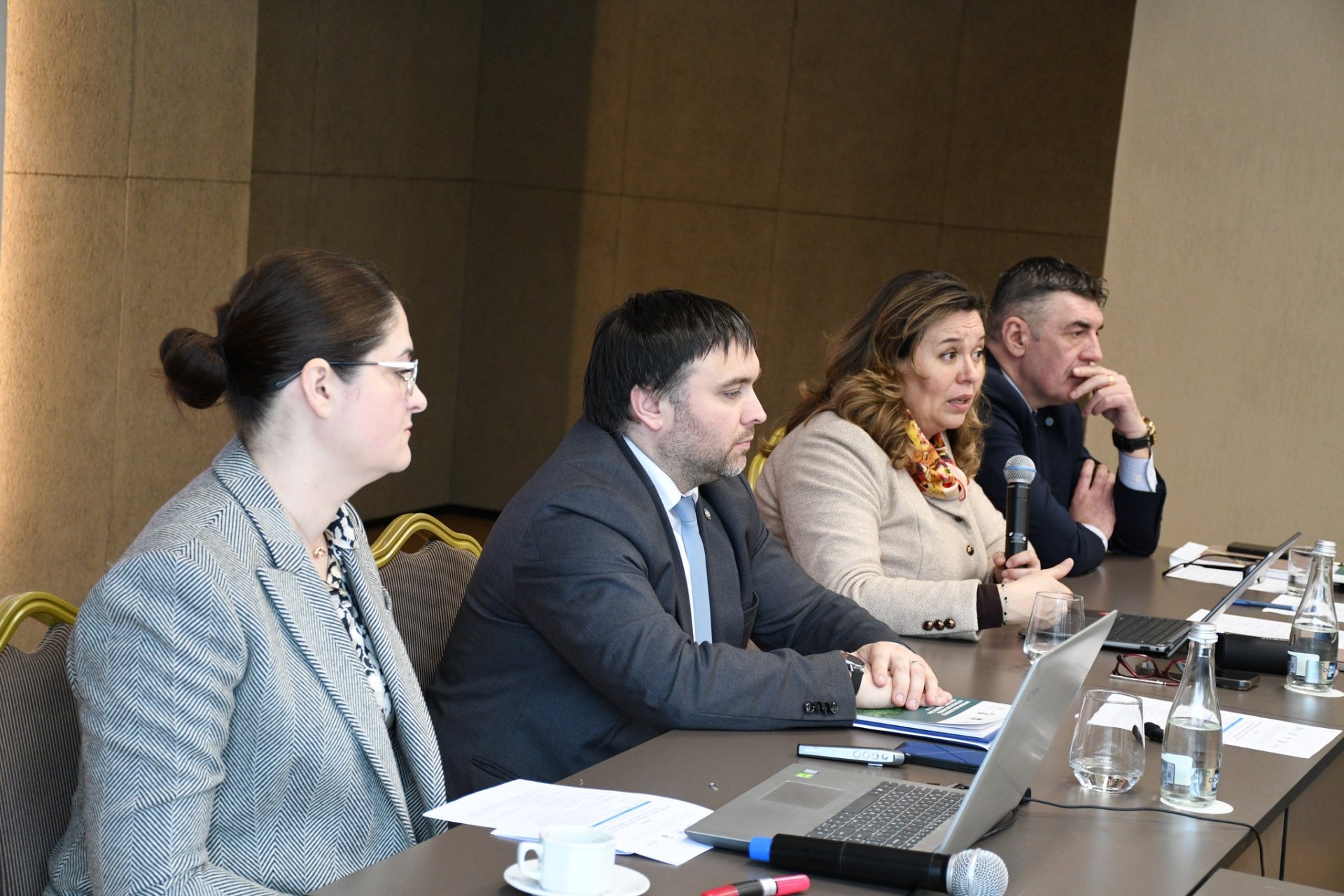
The fertile soils of the Republic of Moldova are a strategic resource for sustainable development, and their monitoring and restoration must remain national priorities, says Iordanca-Rodica Iordanov, Executive Director of NGO EcoContact, in the context of launching the process of preparing the National Report to the UN Convention to Combat Desertification (UNCCD 2026).

The Republic of Moldova has officially launched the preparation of the international report through which it will present updated indicators on soil condition, the effects of drought, and the evolution of land degradation. The process was launched during a working meeting organized by the State Hydrometeorological Service, the national focal point of the Convention, in partnership with EcoContact.

According to Iordanca-Rodica Iordanov, the document has an importance that goes beyond the strictly environmental sphere.

“We are not talking only about nature protection. We are talking about agriculture, about farmers, about food security and the economic stability of villages. Protecting soil means protecting the rural economy and, ultimately, each of us,” emphasized the Executive Director of EcoContact.

She noted that the Republic of Moldova is among the European countries most exposed to land degradation and drought, and without constant monitoring and coherent policies, economic losses can become significant.

“Drought, erosion, and soil degradation are no longer theoretical risks. They are already affecting agricultural productivity. That is why soil fertility must be treated as a security issue – food, economic and social,” Iordanov pointed out.

The UNCCD 2026 report will include systematized data on soil quality and condition; the frequency and impact of drought; the link between drought and agriculture; and land degradation processes.

The indicators will be reported through the international PRAIS platform, in line with the Convention’s strategic framework for 2018–2030. A central element is the monitoring of Land Degradation Neutrality – an objective undertaken by all member states.

“Reporting is not a bureaucratic exercise. It is the basis for public policies. Without accurate data, you cannot build effective measures for adapting to climate change,” explained Iordanov.

The process involves correlating data from several fields – agriculture, environment, hydrometeorology and rural development – in order to ensure international comparability. Coordination will be carried out by the UNCCD Working Group, which is to be renewed by order of the Minister of Environment. In the next stage, the institutions involved will collect, validate and submit the data sets that will be integrated into the report and presented to the Secretariat of the UN Convention. At the same time, the National Programme to combat desertification and land degradation for the period 2026–2030 is being finalized. The document provides for the restoration of degraded land; measures to prevent desertification; interventions for areas affected by drought and floods; and monitoring of UNCCD implementation through disaggregated indicators, including from a gender perspective.

“If we lose fertile soil, we lose our main agricultural advantage. Restoring land is not only an international obligation, but an investment in the country’s future,” concluded Iordanca-Rodica Iordanov.

The activity is carried out under the project “GEF support for the UNCCD 2026 national reporting process – Republic of Moldova”, financed by the Global Environment Facility and implemented through the UN Environment Programme.
 Facebook
 Instagram
 X/Twitter
 Telegram
Moldovan Prosecutors' Evaluation Commission resumes hearings; Victor Cazacu, first prosecutor heard in June
Another prosecutor passed external evaluation
Protests and violent incidents in Northern Ireland
Voted by Parliament. Geographical indications and designations of origin to be regulated by new law aligned with EU standards
MPs urged to take part in blood donation campaign
Around 180 families affected by floods in recent weeks received humanitarian aid
CIS Agreement on Interstate Humanitarian Fund denounced
DOC // Citizens of the Republic of Moldova working in Slovakia to be eligible for pensions
Modern equipment for pupils from central Moldova settlement, through project supported by World Bank
Moldovan PM conveys message to border police on 34th anniversary of institution's foundation
MOLDOVA IS ME // From Denmark, through China, back home; story of Moldovan woman who opened in Chisinau first restaurant with Japanese Omakase concept
Moldova withdraws from cultural agreement signed within Commonwealth of Independent States
USMF "Nicolae Testemițanu" to hold oath-taking ceremony for doctors and pharmacists
VIDEO // Civil Society Gala held in Chișinău
EU member states approve opening of first negotiation cluster; deputy PM for European integration says decision confirms recognition of progress achieved by Moldova
PHOTO // Moldovan Energy Ministry, UNDP strengthen strategic partnership for modernization, transformation of energy sector
Moldovan president expresses condolences after traffic accident in Hungary
Electricity prices not increasing in Moldova; National Energy Regulatory Agency makes clarifications
Moldova gets right to export Hatching eggs to Ukraine
New details about accident in Hungary: Moldova's Foreign Affairs Ministry says Moldovan, Romanian passports found at the scene
ARCHIVE Chronicle // Story of more than 1,000 Bessarabians saved from exile
 National Bank of Moldova
Deputy PM for reintegration on working visit to north Moldova district
Meeting of Monitoring Committee of Interreg NEXT Black Sea Basin Programme held in Moldovan capital
Second Voluntary National Report on implementation of 2030 Agenda presented at Moldova's government
My Village – Our Town Hall: Over 790 city halls involved in voluntary amalgamation process
President on 85 years after first wave of Stalinist deportations: Commemorating deportations is about memory of past and the democratic future we are building together

Moldova gets right to export Hatching eggs to Ukraine
PHOTO GALLERY // Over 150 stops painted in Mosaic inserted in book signed by Stefan Susai
New details about accident in Hungary: Moldova's Foreign Affairs Ministry says Moldovan, Romanian passports found at the scene
ARCHIVE Chronicle // Story of more than 1,000 Bessarabians saved from exile
PHOTO // Faster interventions, safer medical services in Moldova; UN Population Fund donates 1,800 blood pressure monitors to emergency medical teams
MOLDOVA IS ME // Story of Moldovan woman who survived deportation
My Village – Our Town Hall: Over 790 city halls involved in voluntary amalgamation process
President on 85 years after first wave of Stalinist deportations: Commemorating deportations is about memory of past and the democratic future we are building together
First in Moldova's energy sector: Moldelectrica enterprise activates balancing services provided by photovoltaic plants equipped with storage systems
PHOTO GALLERY // Documents and testimonies about deportations and famine presented at exhibition “State Terror in Soviet Moldova: Scale, Victims and Perpetrators
Prime Minister: Memory of deported obliges us to build society in which such tragedies never again possible
Exhibition “State Terror in Soviet Moldova: Scale, Victims and Perpetrators” inaugurated in Great National Assembly Square
Head of State’s message on 85 years since deportations
Investment opportunities and economic reforms presented at Moldova – Benelux Forum
DOC // Official public competition opened for position of TRM director general
Ambassador of Moldova to China: Cooperation with Guangdong Province can open new economic and investment opportunities
Receive the latest news directly to your email

Receive the latest news directly to your email