
Moldova, Ukraine strengthen connections through new border crossing point
Moldova and Ukraine will establish the road border crossing point Cosauti–Yampil. It will have international status, facilitate citizens’ mobility, support trade exchanges and improve direct connections between settlements of the two countries.

The initiative is based on the Protocol signed this week between the government of  Moldova and the cabinet of ministers of Ukraine in Kyiv. The document provides for the establishment of a new road border crossing point and the construction of a cross-border road bridge over the Dniester River.

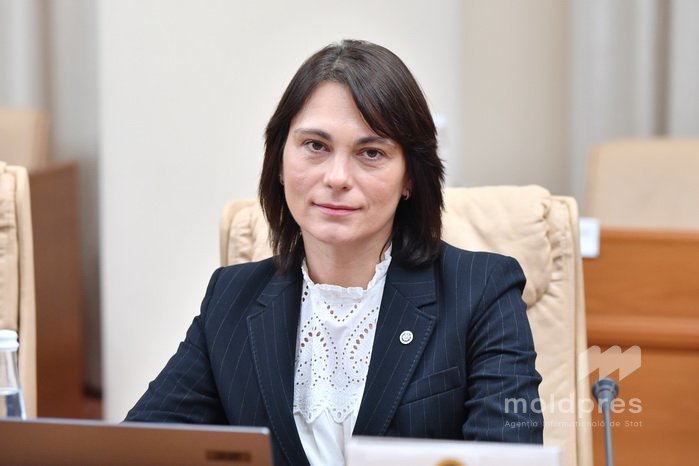
Interior Minister Daniella Misail-Nichitin has told MOLDPRES that the protocol sets the legal framework for the establishment of the road border crossing point.

“It will be opened after the necessary infrastructure is completed, facilitating international traffic and the mobility of citizens. The new point will strengthen the development of cooperation between Ukraine and Moldova. It will also bring benefits for citizens and economic operators, by reducing waiting times at border crossing points, improving the flow of people and goods and facilitating cross-border mobility, thus contributing to deeper economic and social integration between the two states,” said Daniella Misail-Nichitin.

The official also underlined that, at present, on the Moldovan-Ukrainian border, joint control was legally regulated at nine border crossing points, of which seven are operational. The other two points remain suspended because of the war in Ukraine.

“For the government, the mobility of citizens and freight transport are clear priorities, set out in the National Plan for EU Accession. Wherever there is mobility, there is also business and this directly contributes to improving citizens’ quality of life, which is what we want for our country. Thus, we are in the process of expanding and strengthening joint control with Ukraine, in order to accelerate the safe and efficient movement of people and goods,” noted Daniella Misail-Nichitin.

In addition to establishing new crossing points and expanding joint controls, the authorities are implementing more measures to streamline cross-border traffic.

“They include the digitalization of control procedures, increasing frontline staff, opening additional lanes where infrastructure allows, applying the ‘Reverse’ procedure when necessary, and maintaining ongoing cooperation with the Customs Service and neighboring border authorities. As for infrastructure, the Border Police is implementing the Government’s Growth Plan by acquiring special equipment, including IT systems for biometric controls and surveillance, as well as for modernizing existing points and building new border crossing points. Thus, for 2026, the completion of the construction of the Otaci Border Police Sector headquarters and the start of works on the Northern Regional Directorate headquarters are planned. All these measures aim to ensure faster, safer and more predictable cross-border traffic, while protecting citizens’ security and facilitating trade and the mobility of people between countries,” emphasized Daniella Misail-Nichitin.

The construction of the new cross-border road bridge over the Dniester and the establishment of the Cosauti–Yampil border crossing point will ease traffic in the northern area of the country and ensure the connection of the road network through the eastern part of Moldova to the trans-European transport network (TEN-T). This infrastructure will facilitate trade on both domestic and international markets.
 Facebook
 Instagram
 X/Twitter
 Telegram
Drone attack near Moldova border: two dead and two injured
Moldovan government proposes for public consultation rules allowing amalgamated localities to use infrastructure projects' incentives
VIDEO // 49-year-old man detained in Moldova for allegedly collecting information for Russian intelligence services
Novodnestrovsk Reservoir level falls to 111.5 meters
VIDEO // PISA 2025 results show progress in science, stagnation in mathematics and reading, with wide gaps between urban and rural schools
Packages ordered from abroad to be subject to 12-lei fee
DOC // Moldova bringing drone regulations into line with European standards
Over 90,000 citizens participate in voluntary amalgamation process; Moldovan government's deputy secretary general explains what comes next
Educational institutions from all over Moldova to hold Decade of National Values
Moldova's social insurances budget for 2026 increases by 1.37 billion lei
Positions of deputy headmasters in schools to be filled through contest in Moldova; first contracts end on September 7
Hydrological situation on Dniester, Prut stays worrying; water levels in Novodnestrovsk, Stanca-Costesti reservoirs continue to drop
Special measures taken at Chisinau Airport during transit of Hasidic pilgrims
All schools of Moldova to switch to electronic gradebooks
Prime Minister discusses fiscal-budgetary priorities and economic reforms with IMF Resident Representative
Iași–Ungheni railway line to be rehabilitated and electrified
Speaker: Elections in Gagauzia must be fair
Moldovan troops participate in Strong Griffin 2026 exercise in Lithuania
 National Bank of Moldova
Marcel Spatari takes over as chair of Economy, Budget and Finance Committee, while Adrian Băluțel as chair of European Integration Committee
Changes to nominal composition of parliamentary delegations to international organizations and friendship groups
Procedure for nominating candidates for position of Constitutional Court judge more transparent
Parliament approves draft law on expanding access to cadastral information and regulating land readjustment
Clearer rules on when horticultural plantations begin bearing

Speaker: Elections in Gagauzia must be fair
Moldovan troops participate in Strong Griffin 2026 exercise in Lithuania
Moldovan Railways prepares new investments to strengthen railway connection to Giurgiulesti Port
Draft Fiscal Policy for 2027 presented in Parliament
PHOTO // Polish cyclist Radosław Frątczak wins first stage of Tour of Romania, held for first time in Moldova
Energocom purchased natural gas for August at €57.80/MWh
Prime Minister attends opening of Meeting of Romanian National Theatres
Warning for Moldovans seeking work in Greece: some offers may conceal illegal activities
Moldovan lawmakers held minute of silence in memory of victims of 11 September 2001 attacks
Moldova to extradite person to India for first time; man accused of murder and drug trafficking
Moldovan Speaker to visit Budapest to persuade Hungarian authorities to support opening of EU negotiation clusters
Euronews: Chișinău advanced faster than Brussels’ assessment capacity, prompting European Commission to redirect resources to Moldova
Speaker on Local Public Administration Reform: Moldova’s new administrative map to have fewer than 10 regions
DOC // Moldova prepares national aviation sector for implementation of Single European Sky requirements
DOC // Law on Road Safety Assessment published in Official Journal
Deputy Prime Minister in Sofia: Bulgaria - reliable partner of Moldova and supporter of European path
Receive the latest news directly to your email

Receive the latest news directly to your email