
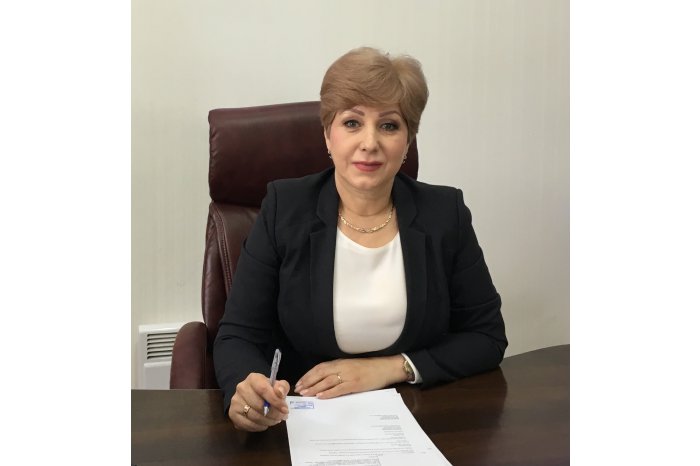
Director of South Regional Development Agency says local advancement implies economic growth, so to focus on priority efforts in Moldova
The interview given exclusively for the State Information Agency (AIS) Moldpres by Director of the South Regional Development Agency (ADRS), Maria Culesov.
Moldpres: The year of 2018 remains in history as a period of major reforms and important projects. Can you also say it in the context of the region you manage? What extent did you succeed in achieving your plans to at the beginning of 2018?
Maria Culesov: The year 2018 was an important year for us both in terms of the results obtained and challenges we encountered. The total value of investments made in the South Development Region (RDS) amounted to MDL 104.21 million, of which MDL 40.215 million were allocated from the National Fund for Regional Development (FNDR) and 64 million – from external sources.
With this money, the ADR Sud made in 2018 several regional development projects included in the Single Programming Document 2017 – 2020, approved for funding by the National Coordination Council for Regional Development (CNCDR), as well as projects funded by external partners – the Governments of Germany, Switzerland, Romania, EU – throughout the International Cooperation Agency of Germany (GIZ).
During the reference period, the institution implemented 13 investment projects, including six financed from the FNDR, and started seven other projects financed by EU that will continue to be carried out in the following years by means of project: The modernising local public services in Moldova, implemented by the International Cooperation Agency of Germany (GIZ).
One of the large – scale projects implemented by the ADR Sud in 2018 is the Leova – Iargara magistrate aqueduct, which construction started in January 2018 and was carried out with the support of the Federal Government of Germany and the FNDR and with the involvement of the Council of Leova district. Within the given project, with a total cost of about MDL 61 million, it was built an aqueduct network with a length of 22.9 km, two pumping stations and a repumping station. It also modernised the existing treatment plant, rehabilitated two underground water reservoirs of concrete, 700 m3 each, and built two new overground tanks in metallic panels of 800 m3 each.
The new water supply pipeline is expected to supply 28 localities in Leova district, the aqueduct being connected at the first stage with locality Iargara and Leova city, and the second stage – villages Filipeni, Romanovca and Cupcui. The connection of all localities is planned for the end of 2020.
Also, with the contribution of the ADR Sud, it was built a road of 3.86 km in project: The construction of the inter-communal road L509 Festelita – Marianca de Jos – Stefan Voda and connection with the R30 Chisinau – Causeni – Bordi national road with Ukraine, amounting to MDL 19.15 million. Within another project: The developing business infrastructure by connecting localities and local roads on the 20 – RD South Corridor, R34 Sarma – Tomai – Sarateni – Hartop to the national road network – R3, it was rehabilitated a section of 2.5 km long road L579 located in village Hartop, Cimislia district, and it is the final stage of construction of another 3.1 km of road.
The building of the Cantemir District Hospital was thermally rehabilitated, with measures being taken to renovate the roof and to install the solar collectors, to change the carpentry and to insulate the facade. Due to it, today, the patients of the respective sanitary institution, which benefited from an investment of MDL 12.6 million from the state budget, have hot water non – stop and a higher degree of comfort in terms of conditions hospitalisation and medical assistance.
Another project on which its efforts in 2018 focused on the ADR Sud team is the one concerning the construction of the sewerage system in the Traian valley sector and the modernisation of the sewage treatment plant in Causeni. For the time being, it was completed 8.9 km of sewerage system construction, it was spent the amount of MDL 8.39 million, including MDL 1.5 million from the Causeni district budget. And in 2019 there will be launched the modernisation works of the sewage treatment plant in Causeni, which estimated cost is MDL 54.0 million.
With regard to the achievements made by the ADR Sudin 2018, I would add that we have managed, along with our Italian partners, to include 35 bakers and bakeries in training courses, giving them qualification certificates and the opportunity to stay at home, near their families, and to initiate or expand a business here in Moldova. With the support of GIZ, through project: The modernising of local public services in Moldova, ADR Sud contributed to the elaboration of the Local Energy Efficiency Improvement Programme and the Local Action Plan for Efficiency energy sector of Basarabeasca district for 2019 – 2021.
M.: Please name the three main causes that, in your opinion, hinder reforms and development in the region.
M.C.: Regarding the causes that hamper the reforms and the development of the regions, especially of the South Development Region, I would rethink the question a little and I would refer, above all, to the causes that hinder regional implementation of the regional development policy. One of these causes is, in my opinion, poor inter and regional cooperation to conceptualise, develop and promote projects of interest and have a major impact on the development of the region.
Also, the slow evolution of the regional development process is due to the insufficiency of the financial resources allocated from the FNDR for the implementation of the regional projects. Here I would like to mention that, at the moment, the ADR Sud owns a portfolio of projects worth a total of MDL 2 billion 960 million, out of which MDL 1 billion 317 million are requested from the FNDR. De facto, only 13 projects totalling MDL 437.9 million are likely to be financed in 2019 – 2020.
Another major challenge for implementation of regional development objectives is the reduced capacity of local public authorities to co – finance regional projects.
M.: And, respectively, call three details that make sure that the economic situation in the region is rectified.
M.C.: Regional development implies economic growth and job creation, structural changes to encourage the economy to become as competitive as possible. And the economy, as it is known, develops where it is created or ensured a favourable climate.
An incentive for the economic development of the South Development Region is the development of road infrastructure. And here I would mention that over the past years, with the support of the ADR Sud, there have been implemented several projects for the construction and rehabilitation of the roads of regional interest, such as the Codreni – Sagaidacul Nou road, which provides today access for 27,500 inhabitants out of 13 localities of Cimislia district on the M3 national road, but also the good circulation of goods, creating optimal conditions for the social – economic development of disadvantaged localities in the South Development Region (RDS).
Another road that creates prerequisites for the economic development of the RDS is the regional and local importance, which makes the connection between localities Carahasani and Antonesti in Stefan Voda district. This route, with a length of over 3 km, provides access to the national routes for 6,000 citizens from localities Carahasani, Antonesti and Caplani of Stefan Vodă district. Also, by rehabilitating this road, we also intend to support the producers in the region, because for a prosperous business a sustainable road infrastructure is needed.
A positive impact on the RDS in terms of increasing employment and stimulating economic development, ADR Sud generated through the rehabilitation and modernisation of the Ivan Spirin road from Cahul city. Today, this road brings benefits to around 41,000 inhabitants of Cahul, to national and international cargo carriers crossing the Cahul – Oancea customs crossing on Oancea – ZEL Taraclia and Oancea – ZEL Vulcanesti, to persons crossing the border every day in the direction of the southern districts, as well as 187 thousand citizens, representing the population of Taraclia and Vulcanesti districts.
Another precondition for business development is the existence of a modern utility infrastructure, namely aqueducts and sewer networks, waste water treatment systems. Thus, having one of the priority objectives of its rehabilitation and modernisation of the water supply and sanitation infrastructure, the RDS has implemented and will continue to implement several projects in the field. And here, I should mention the construction of the sewer system, pumping stations and reconstruction of the Ecaterinovca village water supply system in Cimislia district, modernisation of the water supply system and construction of the sewerage system in village Rosu, Cahul district, rehabilitation of the treatment plant, construction of the Leova – Hanasenii Noi – Filipeni – Romanovca aqueduct, the construction of the Leova – Iargara and Cahul – Lebedenco roads, construction of sewer system in Traian valley sector and modernisation of purification plant in Causeni, supply of drinking water in localities Sarma, Tochile – Raducani and Tomai, improvement of the water supply services of Iargara, Filipeni, Romanovca and Cupcui localities, improvement of sewerage services in Leova etc.
Premises for the economic development of a region also create business infrastructure development. In this context, ADR Sud contributes to creating opportunities for investment attractiveness in the RDS's economy through the construction of networks, communications, access roads and landscaping in the Causeni Branch of the Balti Economic Free Zone, within a project funded by the FNDR. Also, through the construction of the Cahul Industrial Park, which is expected to have a direct impact on the economic development and the increase of the industrialisation level of the south of the country.
I should especially like to mention project: The south gate of Moldova open for promoting business and investment, funded by the European Union within the initiative: The mayors for economic growth, and implemented by the Cimislia district Council in partnership with ODIMM and ADR Sud. This project, with a budget of about €300 thousand, aims to increase the attractiveness of the South Development Region by strengthening the four Business Incubators in Cahul, Stefan Voda, Leova and Cimislia districts, creating the Centres for Counseling within the Councils of Causeni, Basarabeasca, Cantemir and Taraclia district, strengthening the capacities of NGOs providing business consultancy services and developing the Southern Development Investment Profile.
M.: Appreciate the strengths and weaknesses of the RDS.
M.C.: I should like to highlight the functioning of the Giurgiulesti International Free Port region, the impact of which on the development of the region is not fully exploited.
I should also mention that the southern region has 14 border crossing points, including two to EU, throughout Romania, it has a diversified infrastructure network: road, railroads, electricity and gas transport buses etc.
Also, the favourable climatic conditions existing in the area for growing grapes, technical varieties of a superior quality for the production of quality wine are dictated the placement, in the territory of the region, of several grape processing and beverage factories with rich traditions in it.
Another advantage of the region is the existence on its territory of several active business support infrastructures, such as the four Business Incubators, three functional Free Economic Zones (ZELs) and four ZEL – based Beleti subsidiaries in the process of creation.
I should point out weaknesses: the weaker diversification of the regional economy, which would mean that the economy of the region is largely based on agriculture and less on manufacturing or other industries that could add value to the economy of the region; reduced capacity to develop value chains by regional specialisation; lack of large cities with development potential and capacity to generate developmental effects for adjacent rural areas; reluctance on the part of producers to cooperate for development; large – scale migration of population, predominantly of the working capacity, outside the country; lack of qualified workforce, which would cover the demands of employers etc.
In conclusion, I should like to emphasise that the review of public policies, including in the area of regional development, is specifically aimed at enabling regions to capitalise on the strengths and reduce the influence of weaknesses in the development of the territory.
M.: What are the priorities that will make the agenda for the RDS in 2019?
M.C.: Year 2019 will be the year of reforms. At central level, it is planned to put the new Regional Development Law (LDR) within development paradigm focused on stimulating economic growth and increasing competitiveness. Also, there is to be launched the implementation of public policy on urban development in Moldova. In this context, it will be launched the development of a new National Regional Development Strategy for period over 2020.
Accordingly, at the level of the RDS, the main objectives for 2019 are the mid – term evaluation of the implementation of the Southern Regional Development Strategy 2016 – 2020 (evaluation period 2016 – 2018); launching the process of developing South Regional Development Strategy over 2020, in line with new approaches in regional development policy of the country but based on regional needs; ensuring continuity of implementation of regional development projects initiated in 2017 – 2018 and new ones to be launched in 2019; constitution of the new South East Regional Development Council; strengthening the capacities of newly elected members of the CRD and many other actions stemming from the objectives set out in the South Regional Development Strategy and ADR Sud Activity Plan for 2019.
As in 2018, the main strategic objectives of the ADR Sud for 2019 remain to be to ensure the access of public to quality public services and utilities, facilitate balanced and sustainable economic growth by promoting the South East Region's social and economic potentials and attracting investments. The institution also aims to strengthen regional governance, to this end intending to engage more closely with local authorities at both levels, the associative sector and business environment in the area.
M.: Thank you for your interview and we wish you a lot of success!
 Facebook
 Instagram
 X/Twitter
 Telegram
Discover Moldova with #MOLDPRES: Take Home from Moldova – authentic presents, memories from Moldova
VIDEO // Roman, early medieval archaeological artifacts to be exhibited at museum in southern Moldova
PHOTO // Tourist destinations from northern Moldova highlighted through Heart of Moldova tour
PHOTO, VIDEO // Discover Moldova with #MOLDPRES: Wine Vernissage 2025 - where tradition, excellence, tourism meet under sign of Moldovan wine
Moldova promoted in Vogue Polska: spectacular appearance putting country on map of inspiring destinations
PHOTO, VIDEO // Discover Moldova with #MOLDPRES: 'Wheel of Time' – a cultural and tasty journey, part of cross-border gastronomic route
PHOTO, VIDEO // Discover Moldova with #MOLDPRES: Gate of the Nation, where traditions come to life
PHOTO, VIDEO // Discover Moldova with #MOLDPRES: Mircești winery – 'Little Tuscany' of Ungheni, bridge between tradition, wine, tourism like in Europe
Discover Moldova with #MOLDPRES: Casa din Luncă - a haven of peace and tradition in heart of Old Orhei
Discover Moldova with #MOLDPRES: “At Tanti Masha's”: tradition, family recipes, tourist experiences and community on Romania-Moldova Gastronomic Route
PHOTO // Moldovan Wines conquer Switzerland at EXPOVINA 2025 in Zürich
Discover Moldova with #MOLDPRES: from vineyards to hospitality. how authentic wine, tourism experiences were promoted at World Wine Tourism Day 2025
Moldova to celebrate World Wine Tourism Day 2025 with professional event at local winery
Discover Moldova with #MOLDPRES: Colors, flavors, traditions in late autumn spectrum
Moldova Presents exhibition inaugurated in Vaslui: Moldovan products promoted in Romania by 60 local companies
Moldovan president conveys message on World Environment Day
Moldovan president attends ceremony on 24th anniversary of foundation of National Anticorruption Centre
Environment Minister announces when fish safety to be checked
Moldova prepares new edition of Red Book
Prime Minister at Moldova Digital Summit 2026: Our ambition is not only to join EU, but to help build Europe’s digital future
Republic of Moldova to receive 250 million dollars from World Bank to advance reforms
 National Bank of Moldova
Moldovan president attends ceremony on 24th anniversary of foundation of National Anticorruption Centre
Prime Minister at Moldova Digital Summit 2026: Our ambition is not only to join EU, but to help build Europe’s digital future
Over 1 billion euros in new investment partnerships, financing announced for Moldova
Topical issues addressed at meeting of Joint Control Commission
Moldovan president, European Commissioner for Enlargement discuss reforms, next steps in accession process

Moldova prepares case against Russia over Dniester pollution
Chișinău and Bratislava discuss next steps in EU accession negotiations
International post-disaster needs assessment mechanism launched in Chișinău following Dniester river pollution crisis
EU Commissioner in talks with Prime Minister and Deputy Prime Ministers
Right to fair trial – most frequently reported problem by Moldovan citizens in 2025: Ombudsman’s report presented in parliament
Moldovan parliament sets up inquiry committee on phone, online scams: damages exceeding 270 million lei
Moldovan parliament speaker describes Russia’s intention to move Russian Center of Culture to Tiraspol as political provocation
PHOTO GALLERY // Major event in Chisinau: EU announces 1 billion euros in investments in Moldova
Stricter rules for taxi platforms: payments to be required to obligatorily go through banks of Moldova
Moldovan parliament speaker says each day of delay of elections in Gagauzia works against autonomy
Digital solutions for schools of Moldova: 140 institutions equipped with 700 interactive boards, computers
Moldova hosts 4th international conference on noncommunicable diseases
Voted in parliament: Moldovan citizens who worked legally in Canada to be able to receive social benefits
Moldovans working in Ukraine to be able to receive pensions, other social benefits
Moldova hosts Kettlebell World Championship
Over 1 billion euros in new investment partnerships, financing announced for Moldova
Receive the latest news directly to your email

Receive the latest news directly to your email