
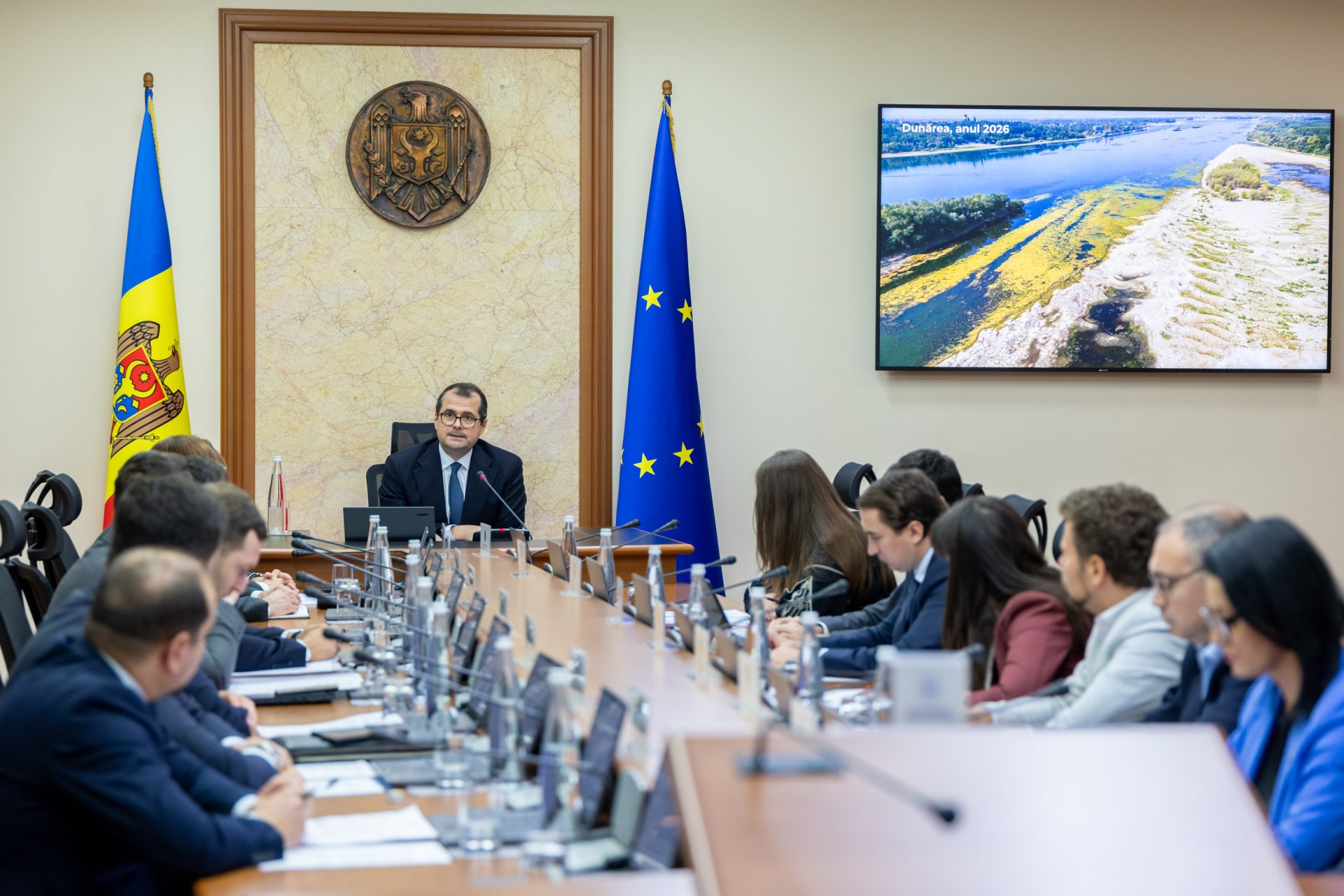
Moldova’s energy strategy for 2026–2050 approved by Government
The Republic of Moldova aims to build a secure, competitive and resilient energy system, integrated into the European energy market and capable of supporting the country’s economic development and its accession to the European Union. This is the objective of the Energy Strategy for 2026–2050, approved today by the Government.

The document sets out a vision of how the Republic of Moldova will produce, transmit and consume energy over the next 25 years, adapting to a context that has changed completely compared with the 2013 Strategy: synchronization with ENTSO-E system, independence from gas supplies from the Russian Federation, and the country’s status as a candidate for European Union membership.

The targets set for 2050 include to reduce the share of imported energy from over 77% to 40%; ensure that at least 85% of local electricity production comes from renewable sources; increasing the share of electricity in final energy consumption from 12% to 65%; and reducing energy intensity from 0.298 to 0.061 toe per €1,000.

The Strategy has seven general objectives: security of supply; competitive markets integrated into the European single market; the principle of “energy efficiency first”; decarbonization and the transition to renewable sources; equitable access to affordable energy; digitalization; and the promotion of research and innovation.

Thus, the Strategy pursues a structural transformation, rather than merely the implementation of sectoral reforms. Its full implementation requires the mobilization of more than €43 billion in investments, which will bring tangible benefits both to the sector and to the country’s economy.

It should be noted that the Strategy was approved by the Government following a complex procedure to obtain the Environmental Opinion, which included consultations with the competent authorities of Moldova and those of Romania and Ukraine, in accordance with the provisions of the Espoo Convention on environmental impact assessment in a transboundary context.
 Facebook
 Instagram
 X/Twitter
 Telegram
Prime Minister to Moldova Business Week 2026 participants: Moldova can win through speed, agility and trust
Moldovan parliamentary delegation to attend PACE autumn session
Nearly 500 children took up President’s reading challenge
Prime Minister meets with UN Secretary-General
Prime Minister at UN: Moldova may never become great power, but it can certainly become great country
Speech by Prime Minister at 81st Session of United Nations General Assembly
Prime Minister discusses European integration and strengthening economic cooperation with Croatian and Slovenian counterparts in New York
“A Night Written in Red” - documentary performance about courage, resistance and freedom staged in Parliament square
Strengthening Moldova’s cooperation with UNDP, UNOPS discussed in New York
Moldova's National Crisis Management Commission approves new measures to ensure energy security, protect water resources
Moldovan PM, U.S. investors, companies discuss potential projects in Moldova
Head of state says Moldovans must build economy where well-educated people can find opportunities at home
Moldova represented at Interparliamentary Conference on Stability, Economic Coordination and Governance in European Union
Public buildings of Moldova to undergo energy renovation with World Bank's support
VIDEO // Prime Minister about situation on Dniester River: We must focus on solutions, not point fingers where cause of problem does not lie
National Army preparing projects for systems capable of intercepting drones and missiles
New actions for competitiveness and modernization of industrial sector
New actions for competitiveness and modernization of industrial sector
Creation of Office for Implementation of Strategic National Infrastructure Projects approved by Government
Moldova’s energy strategy for 2026–2050 approved by Government
Breaking news
New drone flew over airspace of Moldova in Lunga, Dubăsari
 National Bank of Moldova
New actions for competitiveness and modernization of industrial sector
Office for Implementation of Strategic Projects “Moldova Proiect” to accelerate major infrastructure investments
More financing and development opportunities for small and medium-sized enterprises
National legislation on direct taxation to be aligned with European Union rules
Prime Minister holds talks with World Bank Group representatives

Government to seek long-term contracts for gas purchases and prepare higher winter compensation
Moldova strengthens cooperation with Danube states to develop inland waterway transport
New state secretary appointed to Health Ministry
CEC to organize 12 polling stations in seven localities for November by-elections
European Commissioner to visit Chișinău for talks on Growth Plan and economic integration into EU
Speaker after new drone incident: Russia must and will answer for war crimes
Prime Minister holds talks with World Bank Group representatives
VIDEO // Explosion in Hîrbovăț. Drone that flew over airspace of Moldova crashed outside village
Moldovan energy minister, officials from Ireland, Norway, Canada, Lithuania discuss opportunities of cooperation in energy field
More efficient, transparent controls for business environment in Moldova
Deputy PM for reintegration has meeting with first resident Ambassador of Estonia to Moldova
Moldovan economic development minister says ministry to ease administrative burden on entrepreneurs
PHOTO // Moldova included in strategic transport cooperation plan
Norway to provide support for strengthening defense capabilities of Moldova
PHOTO // Moldovan PM, ambassadors of EU member states discuss priorities, reforms for advancing European path
USM students to benefit from internships at Krakow University of Economics
Receive the latest news directly to your email

Receive the latest news directly to your email