
Environment Minister: Residents in country's north to have tap water again, but with restrictions for drinking use
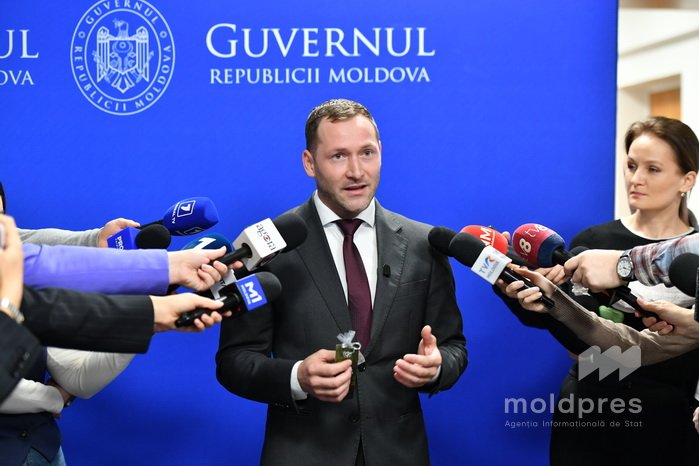
Minister of Environment Gheorghe Hajder told a TV show that residents in the north of the country will have tap water starting tomorrow morning. However, the official recommended that the water be used only for household purposes for a few days and not for drinking.


“Analyses carried out for two consecutive days show that the level of pollution in the Dniester River water falls within acceptable limits, which allows us to resume water supply to Bălți,” Hajder explained.


The official stressed that the water which remained in the system for a longer period is not potable and that the network must be completely cleaned and filtered before it is used for drinking purposes.

The minister also noted that the authorities cannot rule out similar risks in the future and one of the solutions being considered is identifying alternative sources of drinking water supply.


“As long as there is war in the neighboring country and as long as this leak is still active, any scenario is possible. That is why I want to make it very clear that the Ministry of Environment and all the authorities involved continue working to install dams, absorbent filters, and other measures,” the minister said.


Hajder further stated that he has received assurances from the Ukrainian side that oil spills into the Dniester have stopped.


“We had very good discussions with my counterpart in Ukraine, who assured us that this spill has been eliminated and stopped. Between March 11 and 13, analyses indicated the highest level. Once we implemented the measures, the situation began to improve until we brought the tests and laboratory analyses back within the norms,” Hajder said.


The river water was polluted with petroleum products, gasoline, and derivatives. The situation on the Nistru is being continuously monitored, and impact studies are being conducted to understand the medium- and long-term consequences.


“The Nistru has a flow rate of 100–130 tonnes per second, so when the leaks are relatively small, the removal process is complex, and the filters must be replaced and handled properly in order to keep the water parameters within admissible limits, in line with national and international legislation. As for the quantity of pollutants, we estimate it is much higher than the 1.5 tonnes initially reported, although we are constantly monitoring the flows to limit the impact on the population in the north and we are waiting for an official response from Ukraine in order to inform the public,” Hajder explained.


The Minister of Environment assured that measures were taken as soon as the oil slicks were observed on the surface of the Nistru, involving reference laboratories of the Environment Agency and ANISP to monitor the situation and ensure the safety of citizens.

Several localities in the north of the country, including the municipality of Bălți and the districts of Soroca, Sângerei, and Florești, were left without drinking water for several days following the pollution of the Dniester River with petroleum substances. The pollution of the Dniester occurred due to the attack on the Nistrian Hydropower Complex in Ukraine on the night of March 6–7, when the explosions caused discharges of technical oils and petroleum products into the water.
 Facebook
 Instagram
 X/Twitter
 Telegram
Defense Minister: Moldova to have new radar in first half of year
Otilia Dandara has been officially confirmed as rector of USM
Ludmila Vartic case: Director of Hîncești district hospital submits resignation
High-level Conference on Social Rights – European Social Charter to be held on Thursday in Chișinău, bringing together over 50 official delegations
Moldova to implement MD-ALERT system
AUDIO // Căușeni mayor detained for bribe of 89,000 lei
Environment Minister: Oil pollution level in Dniester returned to admissible limits
Prime Minister about situation on Dniester River: Latest data show positive trend. Priority - health of citizens
Shahed drone flew over airspace of Moldova near Palanca border crossing point
Moldovan environment minister, Ukrainian Ambassador discuss Dniester River's pollution crisis
Judges from all over Moldova convene at General Assembly on March 27
PHOTO, VIDEO // Managing water crisis in Balti city: head of National Crisis Management Center inspects distribution points, assures of continuity of assistance
District hospital of Taraclia to have cardiologist, ENT specialist thanks to financial donation provided by ARBOM
General Prosecutor’s Office opened criminal case over pollution of Dniester River
Moldovans working in Ukraine to be able to receive pensions and other social benefits
Water supply in Bălți, Soroca, Sîngerei and Florești restored
Environment Minister: Residents in country's north to have tap water again, but with restrictions for drinking use
PM visits north Moldova settlement
 National Bank of Moldova
Water supply in Bălți, Soroca, Sîngerei and Florești restored
Moldovan government's secretary general participates in European Social Charter Conference
Moldovan deputy PM has meeting with Chargé d’Affaires of United States in Moldova
Moldova's delegation participates in meeting of Joint Control Commission in Bender
Strengthening social cooperation – on agenda of President’s meeting with Italy’s Minister of Labour and Social Policies

Moldovan deputy PM has meeting with Chargé d’Affaires of United States in Moldova
Prosecutors from all over Moldova to meet at General Assembly on March 20: priorities for 2026 on agenda
PHOTO // Moldovan PM, on visit to Balti city, says authorities recommend use of water only for household purposes in next 48 hours
Moldova–NATO cooperation discussed in Chisinau
Moldovan deputy PM in Washington says World Bank's assistance crucial for Moldova's European integration
Moldova's delegation participates in meeting of Joint Control Commission in Bender
Water supply restored in north Moldova today as of 13:00
Holiday vouchers now available also for rural guesthouses of Moldova
Citizens wishing to take out loan can find out total cost
PHOTO GALLERY // Republic of Moldova hosts High-Level Conference on European Social Charter
Strengthening social cooperation – on agenda of President’s meeting with Italy’s Minister of Labour and Social Policies
Czech Republic supports implementation of RESTART reform
Deputy Prime Minister holds meetings at U.S. Department of State: Strengthening foreign policy and advancing strategic priorities on agenda
Head of State attends High-Level Conference on Social Rights – European Social Charter
VIDEO // Environment Ministry installs seven new absorbent dams to stop pollution on Dniester River
Base rate on main monetary policy operations maintained at 5 percent
Receive the latest news directly to your email

Receive the latest news directly to your email