
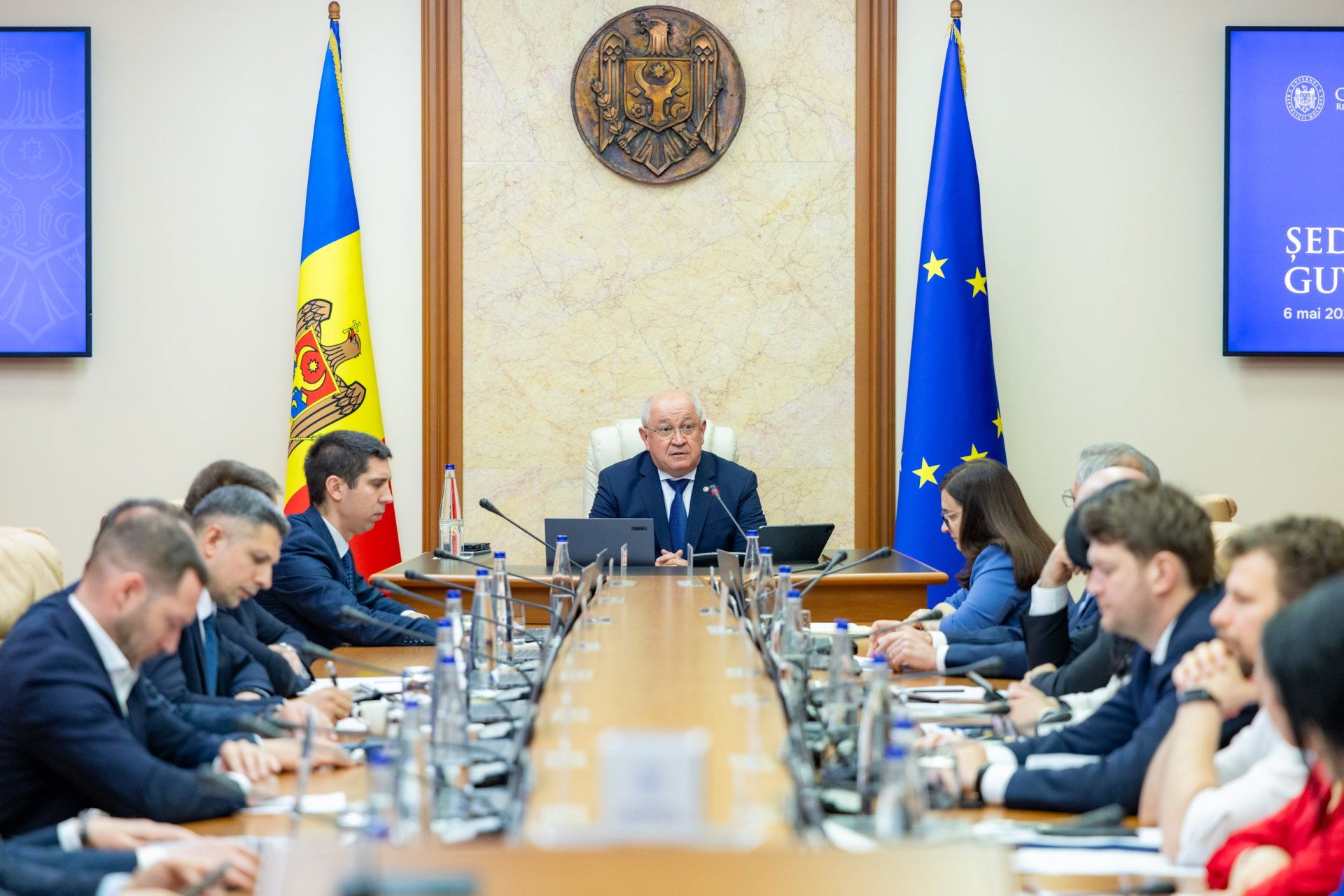
Combating high-level corruption and financial fraud to be carried out more rapidly and efficiently
Cases of corruption, financial crime and organized crime will be investigated more rapidly and efficiently. The Government has approved a draft law that more precisely defines the competences of the General Prosecutor’s Office, the Anticorruption Prosecutor’s Office, the Prosecutor’s Office for Combating Organized Crime and Special Cases, the National Anticorruption Center, as well as the criminal investigation bodies within the Ministry of Internal Affairs, the State Tax Service and the Customs Service.

At present, the competences of investigative bodies can overlap, and some case files end up being transferred from one institution to another. At the same time, specialized resources can be involved in smaller cases instead of being focused on high-level corruption and large-scale fraud. This can lead to delays and to slower investigation of important cases.

To avoid these bottlenecks, the draft law proposes a clear delimitation of competences. Thus, the National Anticorruption Center (CNA) will have an extended role in investigating large-scale financial fraud, including cases of money laundering, fraud involving public funds and serious economic offences. The CNA will also become the main institution responsible for investigating any fraud targeting funds coming from abroad – fraud that affects external funds and resources from the budget of the European Union. The Republic of Moldova must protect and ensure the correct and transparent use of funds coming from external sources, including European funds.

The Anticorruption Prosecutor’s Office (PA) will focus on high-level corruption cases involving high-ranking officials. These include the president, the prime minister, members of parliament, ministers, judges, prosecutors, the leadership of the CNA and of the Intelligence and Security Service. At the same time, the PA will lead the criminal investigations in all cases handled by the CNA.

The Prosecutor’s Office for Combating Organized Crime and Special Cases (PCCOCS) will focus on organized crime, terrorism and cases with a high degree of complexity. In economic-financial and customs-related cases, criminal investigation may be carried out by the State Tax Service and the Customs Service under the leadership of the PCCOCS, since these institutions have the data, tools and expertise required.

Judges’ decisions on preventive measures may also be challenged by the parties at any stage of the trial, thus preventing the unjustified release of suspects on the grounds of procedural flaws.

For complex or large-scale cases, the draft law allows the creation of joint investigation teams consisting of prosecutors and officers from different institutions. In this way, important cases will be investigated in a coordinated manner, with the necessary expertise and without delays caused by the transfer of case files between authorities.
 Facebook
 Instagram
 X/Twitter
 Telegram
Moldovan head of state wishes singer Satoshi success before participation in Eurovision Song Contest 2026
Moldovan head of state says only real chance for Gagauz language to endure profound change of paradigm, mentality
Moldovan president’s message at international conference dedicated to Gagauz language
Strengthening public trust, democratic resilience discussed at international conference in Moldovan capital
Moldovan deputy PM for reintegration has discussions on national reintegration policies within special parliamentary commission
Prime Minister has meeting with President of Romania
Prime Minister at Three Seas Initiative Summit: Moldova ready to contribute to stability and resilience of entire region
Prime Minister in talks with Federal Chancellor of Austria
Prime Minister held meeting in Dubrovnik with U.S. Ambassador to Croatia
Moldovan PM meets representatives of the U.S. International Development Finance Corporation, to discuss new investment opportunities
Moldova, Ukraine align efforts to strengthen resilience, reduce vulnerabilities in critical sectors
Paid internships in public service of Moldova, at new edition: 146 internship positions in 48 public authorities
Moldova, Croatia to cooperate more actively on European, economic, regional agenda
Prime Minister at panel Black Sea and Middle Corridor: Critical infrastructure - essential for regional resilience
Deputy Prime Minister about sugar market situation: We will hold discussions with all stakeholders
Travel alert for Belgium: air traffic to be disrupted due to national strike
Local Public Administration Reform: 435 decisions to launch amalgamation process approved
Government approves new regulation for Environmental Inspectorate
Prosecutors appealed court ruling in case of Vladimir Plahotniuc
All children with disabilities to receive annual allowance of 3,000 lei on 1 June
IMF team of experts coming to Chișinău
 National Bank of Moldova
All children with disabilities to receive annual allowance of 3,000 lei on 1 June
Simplified procedures for development of electronic communications networks in Moldova
Stronger environmental institutions for better management, more effective control, prevention of violations
Working groups for economy on behalf of Chisinau, Tiraspol told meeting in Moldovan capital
Moldovan president participates in meeting of European Coalition Against Drugs at European Political Community's Summit in Yerevan

Giurgiulești–Cahul railway line fully operational
Germany to second expert to office of Deputy Prime Minister for European Integration of Moldova
Republic of Moldova and Poland to cooperate in defense
VIDEO // Children with disabilities to receive annual payment of 3,000 lei
Salary arrears of employees of Moldovan Railways company fully paid off
Prime Minister invited citizens to attend events on Europe Day
Ministry of Finance has new State Secretary
PHOTO // Journalists from several European countries visit Moldova to explore economic potential and cultural values
President congratulates Gagauzia residents on Hederlez holiday
EU–Moldova Parliamentary Association Committee calls for opening accession negotiations on all chapters
IMF team of experts comes to Chisinau during May 7–20
Working groups for economy on behalf of Chisinau, Tiraspol told meeting in Moldovan capital
Discover Moldova with #MOLDPRES // Turbulent history of Pripiceni-Curchi Monastery: more than two-century-old icon, one of its most precious treasures
Moldovan finance minister participates in EU Economic and Financial Dialogue in Brussels
Moldovan parliament speaker in Copenhagen says EU candidate states to create common platform for parliamentary dialogue
Moldovan energy minister in Brussels says energy security no longer political promise, but system under construction
Receive the latest news directly to your email

Receive the latest news directly to your email