
OPINION // Rapid formation of new Government, mandatory signal of stability for external partners of the Republic of Moldova
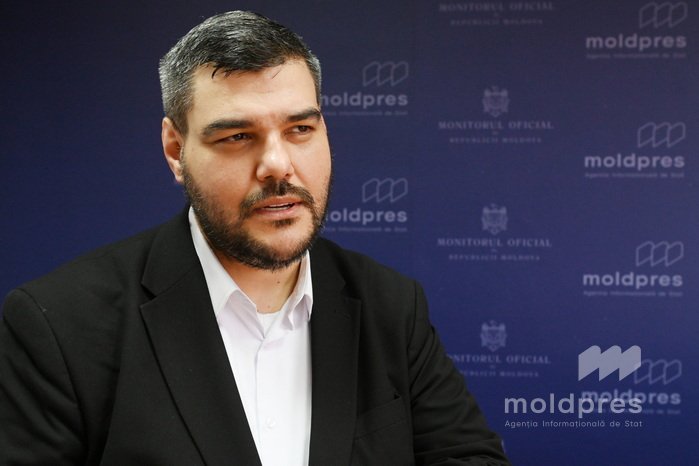
The rapid formation of a new Cabinet is an urgent domestic political necessity and, at the same time, a strong message to external partners regarding the preservation of stability, predictability and the European path of the Republic of Moldova. The opinion was expressed for MOLDPRES by political analyst Mihai Isac, in the context of the resignation of the Government led by Alexandru Munteanu.

According to the analyst, Alexandru Munteanu’s resignation does not leave the country without a government, but officially opens the procedure for forming a new cabinet.


“The first effect is legal and immediate. Once the prime minister resigns, the entire Government automatically resigns. The Constitutional Court has specified that, in the case of a public announcement, the resignation takes effect from the moment of the announcement, and the Government’s resignation operates by law, without Parliament being able to accept or reject it in a political sense,” said Mihai Isac.


Afterwards, the Government remains with limited powers and only performs functions related to the administration of public affairs.


“This means administrative continuity, such as paying salaries, managing public services, taking current decisions, but not a full political mandate for major reforms or far‑reaching decisions,” explained Mihai Isac.


The analyst emphasized the importance of the political consultations with the parliamentary factions announced by President Maia Sandu, after which a candidate for the position of prime minister is to be nominated.


“The head of state has already announced that she will start these consultations next week, and PAS holds the majority in Parliament, which can allow for a quick solution if the majority remains united,” the analyst said.


Under the legal procedures, the nominated candidate will have 15 days to request Parliament’s vote of confidence for the government program and the list of ministers. Parliament grants confidence by the vote of the majority of elected MPs, after which the president appoints the Government, and it effectively takes office on the day the oath is taken.

Mihai Isac stressed that the fastest and most desirable scenario is the swift organization of consultations, the nomination of a new candidate, a vote in Parliament and the swearing in of a new Cabinet.


“A crisis scenario appears only if the parliamentary majority does not agree on a prime minister or if the investiture votes fail. Then we could face political deadlock and, ultimately, early elections,” the analyst pointed out.


Beyond the internal constitutional effects, the resignation of Prime Minister Alexandru Munteanu also has an important external dimension, says Mihai Isac. According to him, for investors, international financial institutions and partner states, this decision sends a signal of political uncertainty, even if it does not automatically amount to a state crisis.

He added that “the Republic of Moldova has functioning institutions and clear procedures for appointing a new prime minister, but the real test is the speed with which these procedures will be followed and the ability of the political class to avoid a prolonged deadlock.”


“For the external image of the Republic of Moldova, the simple fact that a prime minister leaves matters less than the way in which the state manages this departure. An orderly, rapid and transparent process can convey the message that democratic institutions are functioning, that the parliamentary majority remains capable of governing and that strategic priorities are not being abandoned. By contrast, a long interim period, contradictory statements or visible political infighting can fuel the perception of instability, and this perception is costly for a country that needs investment, external financing and diplomatic support,” said the analyst.


Mihai Isac also referred to the impact of this decision in the context of our country’s European path, stressing that it is important for the new Government to maintain the pace of reforms.


“The Republic of Moldova is at a sensitive moment on its European path. On 15 June 2026, the European Union and the Republic of Moldova opened the first negotiation cluster for accession, which includes the rule of law, the functioning of democratic institutions, public administration reform and economic criteria. That is precisely why European partners will be watching whether the new Government maintains the pace of reforms and whether it will have the necessary political authority to deliver results,” the analyst specified.


In this morning, Prime Minister Alexandru Munteanu announced that he is leaving office after eight months in charge. Shortly afterwards, President Maia Sandu held a press conference in which she announced the launch of consultations with the parliamentary factions for the nomination of a candidate for the position of prime minister.
 Facebook
 Instagram
 X/Twitter
 Telegram
US Embassy marks 250 years of United States independence
Parliament convenes in plenary session on Thursday
Moldova continues withdrawal from CIS treaties
State Chancellery to launch comprehensive review of consultancy contracts
State Chancellery to review all consultancy contracts
Prime Minister: We will review how members of state-owned enterprises’ boards of directors are appointed and remunerated
President announces measures to revise criteria for appointing people to leadership positions
VIDEO // President announces “general clean-up” in institutions: Preferential treatment and waste of public money unacceptable
Moldova among Romania’s priorities at NATO Summit in Ankara
Constitutional Court rejects challenges to unconstitutionality filed by three parties and ruled that contested provisions of Law on Political Parties constitutional
Five localities in Florești and Șoldănești decide to merge into single town hall: around 26 million lei provided by Government for development
Beijing proposes expanding cooperation through Four Global Initiatives
Ukraine simplifies citizenship procedure for Moldovans
Consultations in Chișinău: Officials from Moldova and Greece discuss regional security and deepening bilateral cooperation
PHOTO // About 90 graduates of USMF “Nicolae Testemițanu” assigned to labor market
OPINION // Rapid formation of new Government, mandatory signal of stability for external partners of the Republic of Moldova
Secretary General of Government: Reforms must continue, regardless of political changes
Education Minister on disagreements with Prime Minister: I said what I think on fiscal policy
In June, Energocom purchased electricity at price of 131 euros/MWh
President: We are obliged to succeed in bringing Moldova into European Union and developing country
Expert Daniel Vodă: In difficult times, country needs unity, clarity and cohesion
 National Bank of Moldova
Deputy Prime Minister for Reintegration in dialogue with European Union Special Representative for Transnistrian settlement
President to hold press conference today, July 3
Social benefits totaling 76.3 million lei provided to citizens of Moldova residing in Transnistrian region in first half of 2026
Government Program: 85 young people to complete paid internships within public authorities
Prime Minister met with EU Representative for Transnistrian settlement

DOC // Economic resources of individuals targeted by international sanctions frozen by Tax Service
VIDEO // President announces steps to be taken after Prime Minister’s resignation
Prime Minister resigns. What follows under Constitution of the Republic of Moldova
President to hold press conference today, July 3
Moldova presented artificial intelligence priorities at parliamentary meeting of Black Sea Region states
Parliamentary Committee on Economy, Budget and Finance has new chair
Breaking news
Prime Minister announces resignation
PHOTO GALLERY // Exhibition “True Nature” by artist Șerban Savu opened at National Museum of Art of Moldova
Discover Moldova with #MOLDPRES // Wooden church in Palanca, heritage symbol of Călărași for over two centuries
Agriculture Minister announces dismissal of state secretary detained by CNA: I strongly condemn any form of corruption
Parliament creates inquiry commission for state-owned enterprises: hiring, salaries and management of public funds to be reviewed
Phone scams tackled by law: Providers to block suspicious calls, with fines of up to 75,000 lei
Union Motorway takes shape: Contract signed in Bucharest for Iași–Ungheni section during Vladimir Bolea’s visit
Convicted persons trying to evade serving sentence to be subject to stricter legislative measures
Republic of Moldova to gain faster access to electronic evidence in international criminal investigations
PHOTO // Moldova and Romania expand cooperation in transport infrastructure
Receive the latest news directly to your email

Receive the latest news directly to your email