
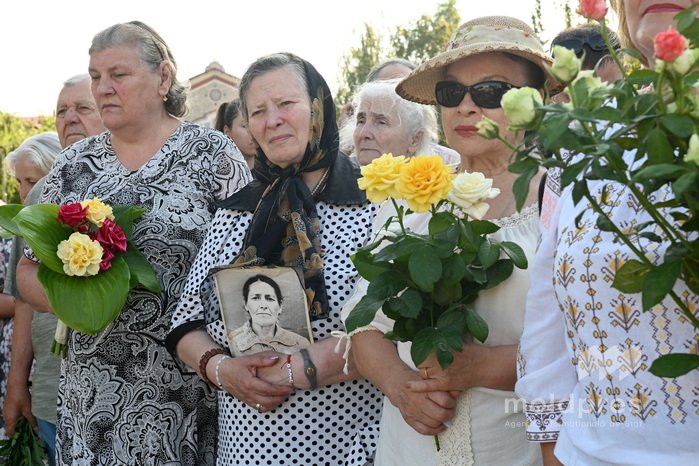
VIDEO // Moldova commemorates 77 years since second wave of deportations
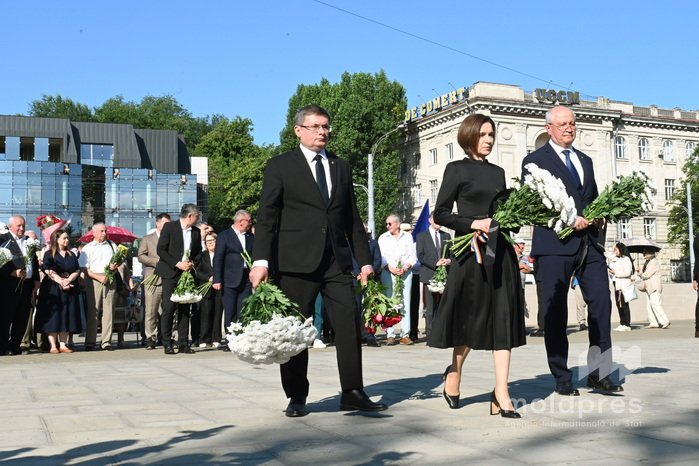
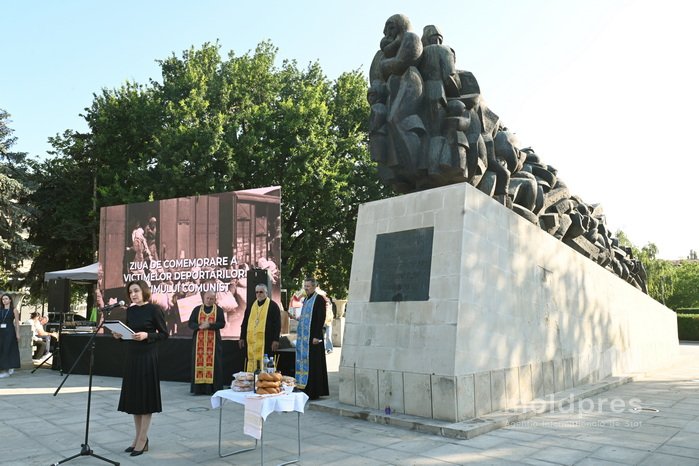
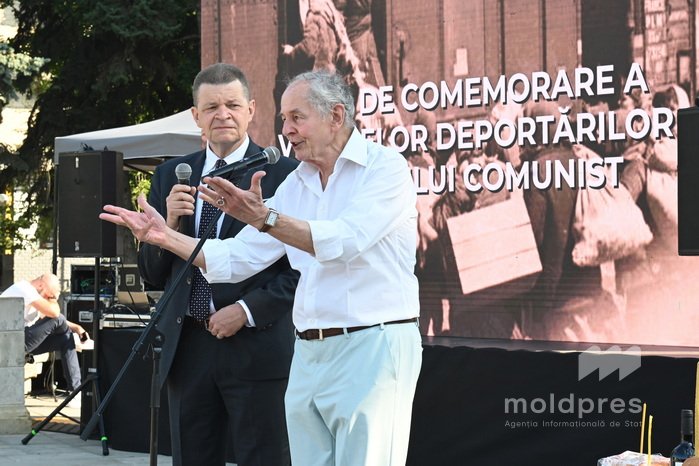
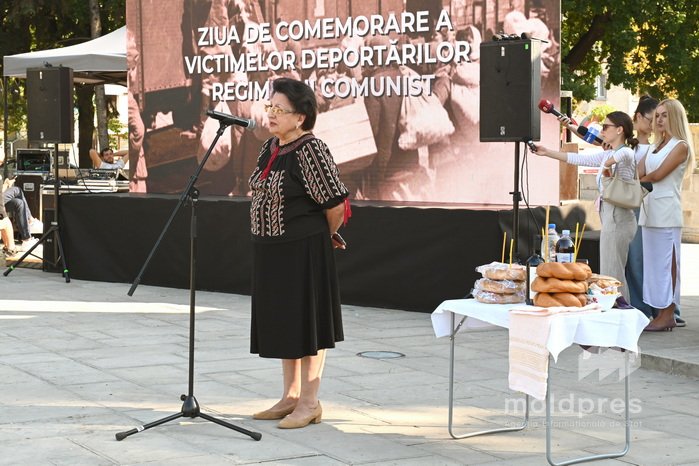
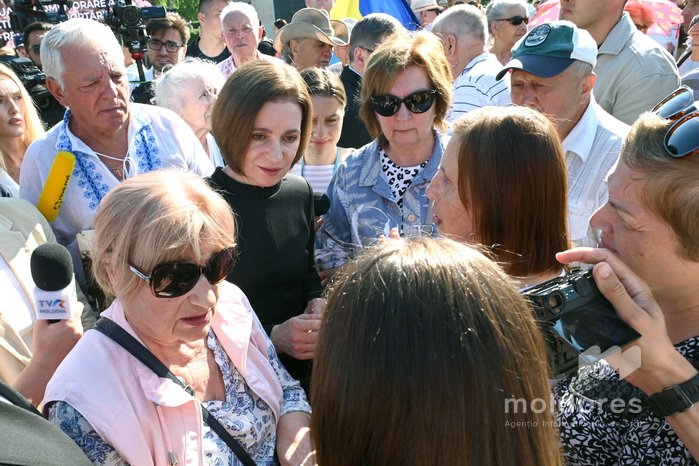
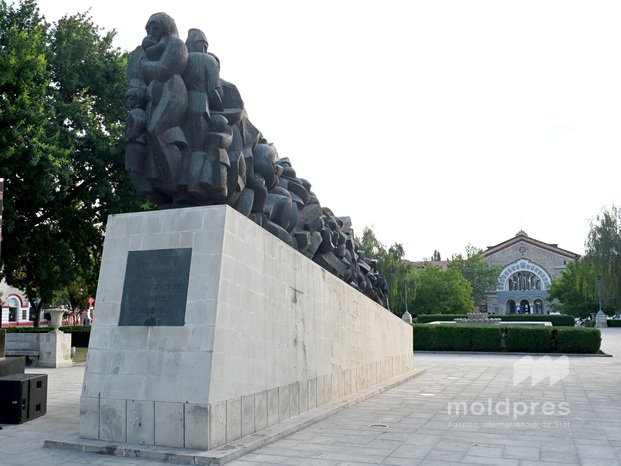
The leadership of the Republic of Moldova, together with survivors of political repression and dozens of citizens, paid tribute today to the victims of the second wave of Stalinist deportations from Bessarabia. The commemoration rally marking 77 years since the tragic events of July 1949 took place in the square of the Railway Station in Chisinau, at the Train of Sorrow monument.

In her speech, the head of state recalled the tragedy experienced by tens of thousands of people.

“The question that torments us year after year, when we commemorate the victims of the deportations, is: why did Moldova go through such undeserved suffering? Did we represent any kind of threat? No. Our grandparents were hardworking people, eager to sing their ballads, celebrate their weddings, and mourn their dead in their own way. It was precisely this upright sense of identity that disturbed the Soviet regime. They wanted everyone on their knees. The Soviet regime could not tolerate the identity of peoples. And the deportation operations were not an accidental episode. They were crimes planned down to the smallest details, with execution schedules and with the goal of destroying any form of resistance,” the head of state declared.

President Sandu emphasized that the integrity and dignity of these people were perceived as a threat by the Soviet regime, and the punishment inflicted was a terrible one.

“We have a historical responsibility not only before our own people, but also before the whole of Europe, to say: this is the true face of the Soviet regime. And history is repeating itself before our eyes. What the Soviet regime once did, Putin’s Russia is doing today to Ukrainians, and will do to any people if it is allowed. There is no other reason. Russia is killing innocent people, deporting and starving them simply because it can. That is precisely why our solidarity is not optional. We must help Ukraine however we can and convince Europe to help Ukraine without ceasing, so that Russia is stopped and can no longer harm any people. Seventy-seven years ago, in the night, small children, elderly people, women, and men were taken from their homes at gunpoint and loaded into cattle wagons. We are the descendants of these people. Their houses were taken away, but they rebuilt homes wherever they arrived, because our grandparents knew that a home must be built with one’s own hands, not stolen in a cowardly way. They wanted to take their names and their memory, shooting them without reason and throwing them into mass graves. But their names proved stronger, and they made sure, throughout their lives, to pass on that memory and those names to their children, who then passed them on to their own children, and today we are here, bearing their memory and their names. They wanted to take their language and identity. But they preserved them through song, through faith, through circle dances, ballads, and laments of sorrow, and today, even though we grieve for the torment they endured, we have a language and we have an identity, and every time an attempt was made to destroy them again, we defended them. They wanted to strip them of their dignity, placing them in inhuman conditions, humiliating them, but the Soviet occupation could not understand that a person who has lived their entire life in dignity may lose their life, but not their dignity. These are the lessons our people have learned. Some, more misguided in our country, have still not learned them and continue to praise the executioner of their ancestors. But today is not about them; it is about our strong families and communities that refused to be broken. We want this people never again to be dragged from their homes at night and deported, not even those who today refuse to honor this memory. Because the freedom and peace we defend today, we defend for everyone, and the dignity of a people is also measured by its ability to protect even those who do not yet understand its history,” Maia Sandu said.

Today, within the Film and History Festival in Mereni, two events will be held at Ion Creangă State Pedagogical University. At 13:15 there will be a debate entitled “Unity Through Memory: The Integration of the Republic of Moldova into the EU,” and at 15:45 the film “The New Year That Never Was” will be screened.

In the evening, starting at 20:00, in the Great National Assembly Square, in front of the exhibition “State Terror in Soviet Moldova: Scope, Victims, and Perpetrators,” a requiem concert will be held by Select Quartet, dedicated to the victims of the totalitarian communist regime.

According to the organizers, the events aim to bring back to the public’s attention the repressions committed by the communist regime on the territory of today’s Republic of Moldova between 1917 and 1989, including the mass deportations organized by the Soviet authorities.

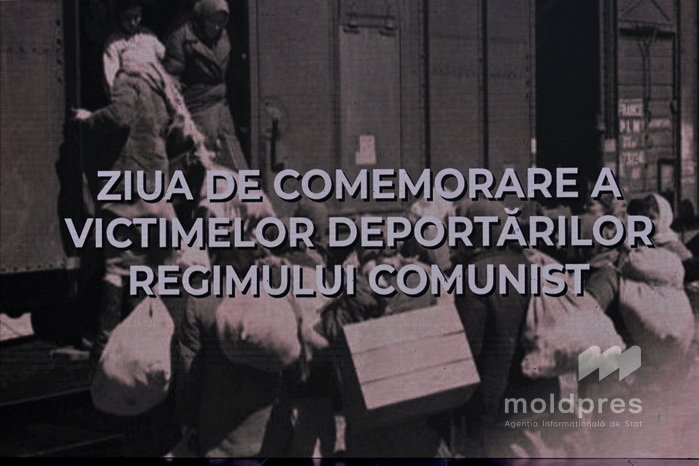
The commemorative program recalls both the deportation during the night of June 12–13, 1941, when over 18,000 people were deported as part of the “cleansing” of the territories occupied by the Soviet Union following the Ribbentrop–Molotov Pact, and the deportations of July 6–9, 1949, considered the largest operation of this kind carried out on the current territory of the Republic of Moldova.

As a result of the July 1949 deportations, over 11,000 families—35,796 people in total—were seized and forcibly deported to remote regions of the Soviet Union. Among them were 11,889 children, 14,033 women, and 9,864 men.

This year also marks 80 years since the onset of the organized famine of 1946–1947, one of the most dramatic consequences of Soviet repressive policies. The commemoration aims to keep alive the memory of the victims and to contribute to strengthening a culture of historical memory.
 Facebook
 Instagram
 X/Twitter
 Telegram
Moldova presented artificial intelligence priorities at parliamentary meeting of Black Sea Region states
Parliamentary Committee on Economy, Budget and Finance has new chair
Breaking news
Prime Minister announces resignation
Parliament creates inquiry commission for state-owned enterprises: hiring, salaries and management of public funds to be reviewed
Phone scams tackled by law: Providers to block suspicious calls, with fines of up to 75,000 lei
MOLDPRES INTERVIEW // Ambassador Petru Frunze: Boosting domestic exports to Chinese market - one of Moldova’s priorities
New law for whistleblowers: Protection against retaliation and mandatory reporting channels
Speaker promises solutions for farmers
State-owned enterprises to be audited
Republic of Moldova moves toward EU standards: Parliament adopts new Arbitration Law in first reading
Deputy Speaker’s message on U.S. Independence Day
Ireland assumes presidency of EU Council
US Embassy marks 250 years of United States independence
Parliament convenes in plenary session on Thursday
Homeland and Diaspora Days to be marked in August in over 100 localities across country
President congratulated U.S. on Independence Day
Diplomatic relations between Moldova and China on rise: high-potential development areas on authorities’ agenda
PHOTO // Two more apartment courtyards in capital modernized under European Courtyard Program
 National Bank of Moldova
Deputy Prime Minister for Reintegration in dialogue with European Union Special Representative for Transnistrian settlement
President to hold press conference today, July 3
Social benefits totaling 76.3 million lei provided to citizens of Moldova residing in Transnistrian region in first half of 2026
Government Program: 85 young people to complete paid internships within public authorities
Prime Minister met with EU Representative for Transnistrian settlement

United States of America marks Independence Day
PHOTO // Parliament and Triumphal Arch illuminated in colors of US flag on 250th anniversary of adoption of Declaration of Independence
Moldova and Ukraine advance in EU accession process
PHOTO // Parliament hosts exhibition dedicated to civil society
Elections to People’s Assembly of Gagauzia set for 15 November
PHOTO // Moldovan products promoted through economic diplomacy
OPINION // Expert Andrei Curăraru: Government’s resignation reflects failure to manage tax reform and public communication
MP Valentin Gaidarji elected President of People’s Assembly of Gagauzia
VIDEO // Swedish Defence Minister visits Chișinău
Chinese market, strategic opportunity for exporters from Moldova
PHOTO // About 90 graduates of USMF “Nicolae Testemițanu” assigned to labor market
OPINION // Rapid formation of new Government, mandatory signal of stability for external partners of the Republic of Moldova
Secretary General of Government: Reforms must continue, regardless of political changes
Education Minister on disagreements with Prime Minister: I said what I think on fiscal policy
In June, Energocom purchased electricity at price of 131 euros/MWh
President: We are obliged to succeed in bringing Moldova into European Union and developing country
Receive the latest news directly to your email

Receive the latest news directly to your email