
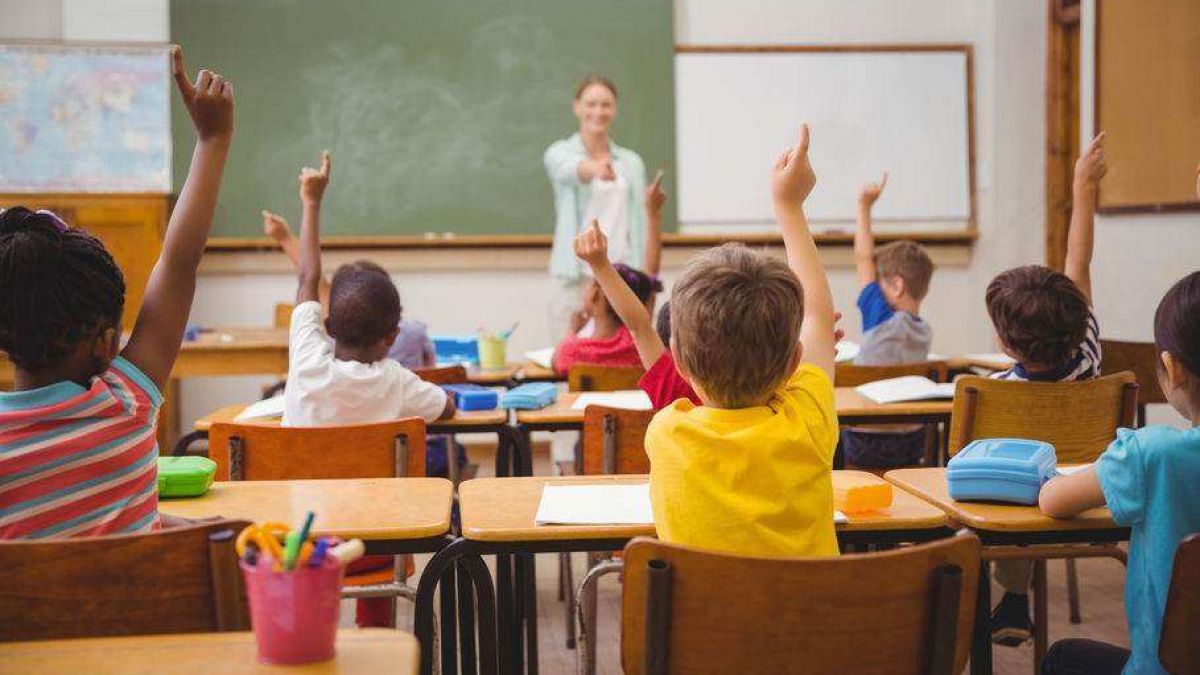
Equal access to education: thousands of refugee children from Ukraine integrated into educational system of Moldova
Thousands of refugee children from Ukraine have been supported in integrating into the educational system of Moldova. Thus, as of 1 September 2025, there were 2,866 pupils in schools and 846 children in early education institutions. The Education and Research Ministry (MEC) today presented data to this effect, marking four years since the outbreak of Russia’s war against Ukraine.

MEC underlined that, over the past four years, it had implemented a string of measures to ensure equal and unrestricted access to education for refugee children and young people.

In general education, administrative barriers to enrollment have been removed by waiving the requirement for notarized authentication and translation of documents, accepting copies of documents or a declaration on own responsibility, and assisting parents during the enrollment process. In 2025, the admission methodology was amended, so that 10 per cent of places in first grade and in upper secondary education are reserved for refugee children, without entrance examinations.

In higher and vocational education, admission procedures were simplified by eliminating the requirement for notarized authentication and mandatory translation of documents.

In the current academic year, 268 refugees have been enrolled in universities of Moldova, and 117 people have been admitted to vocational education institutions. In addition, Ukrainian citizens admitted on a contract basis pay tuition fees under the same conditions as citizens of Moldova.

In parallel with integration into the national system, the Ministry has encouraged both the learning of the Romanian language and the preservation of the mother tongue of refugees from Ukraine.

To this end, a Romanian language curriculum for refugee and repatriated children has been approved. Teachers provide additional support to overcome language barriers. Presently, 35 EduTech laboratories are operating, involving 905 children, 425 of whom are studying Romanian. At the same time, adult refugees have had access to free Romanian language courses organized under the National Programme for Learning the Romanian Language.

Recently, the Action Plan for the learning and promotion of the Ukrainian language among the Ukrainian community of Moldova, including refugees from Ukraine, has also been approved. It establishes a coherent framework for interventions, in order to support and promote the Ukrainian language in the educational system, in line with national and international commitments on the protection of national minorities.
 Facebook
 Instagram
 X/Twitter
 Telegram
PHOTO // Sweden and UNDP invest in protecting Dniester River, providing high‑performance equipment for rapid response in case of pollution
VIDEO // Labour Day 2026 marked by reforms in Moldova: strategies for competitive wages, digital employment services and stronger protection against discrimination
PHOTO // Republic of Moldova celebrates International Workers’ Day, between tradition, social rights and relaxation
Integrity assessment at Moldova's Anticorruption Prosecutor’s Office: two prosecutors pass, two fail test
Moldovan parliament speaker comments on detection of drones on country’s territory
Parliament tightens rules for operation of zoos
VIDEO // One year passes since launch of Identity Card in Moldova: over 360,000 documents requested
Moldova moved up in press freedom ranking
PHOTO, VIDEO // Prosecutor General took oath of office today
DOC // Mechanism for voluntary amalgamation of administrative-territorial units improved
Environment chapter - among most expensive in EU accession negotiations
Alexandru Machidon officially takes over as Prosecutor General
Defence Ministry says object found in central district drone which illegally flew over Moldova on March 30
Doctoral studies system to be modernized, aligned with European standards in Moldova
VIDEO // Moldova debuts at Venice Biennale for the first time; Moldovan culture minister describes action at moment of pride, opportunity to promote country's artists, art
Moldovan MPs to convene at plenary meeting on May 7; agenda includes draft laws on sport, energy, European integration
Discover Moldova with #MOLDPRES // “Grotto of Wishes” at Tipova, labyrinth hidden in rock on Dniester Riverbank
Moldovan president meets North Carolina Secretary of State Elaine Marshall in Chisinau
Moldova hosts global folklore event for the first time
First electrified railway segment of Moldova, part of connection with EU; Deputy PM says segment strategic step towards modern, cheaper, more efficient transport
Moldovan labour minister announces set of measures to prevent minors from leaving home
 National Bank of Moldova
Moldovan president meets North Carolina Secretary of State Elaine Marshall in Chisinau
All children with disabilities to receive annual allowance of 3,000 lei on 1 June
Combating high-level corruption and financial fraud to be carried out more rapidly and efficiently
Simplified procedures for development of electronic communications networks in Moldova
Stronger environmental institutions for better management, more effective control, prevention of violations

Moldova to conclude air services agreement with Bosnia & Herzegovina
Energy Minister at SolarPower Europe Summit: Solar and storage systems are now instruments of sovereignty, resilience and secure access to energy
Deputy Prime Minister about sugar market situation: We will hold discussions with all stakeholders
Travel alert for Belgium: air traffic to be disrupted due to national strike
Local Public Administration Reform: 435 decisions to launch amalgamation process approved
Government approves new regulation for Environmental Inspectorate
Prosecutors appealed court ruling in case of Vladimir Plahotniuc
All children with disabilities to receive annual allowance of 3,000 lei on 1 June
IMF team of experts coming to Chișinău
Combating high-level corruption and financial fraud to be carried out more rapidly and efficiently
Simplified procedures for development of electronic communications networks in Moldova
Stronger environmental institutions for better management, more effective control, prevention of violations
Giurgiulești–Cahul railway line fully operational
Germany to second expert to office of Deputy Prime Minister for European Integration of Moldova
Republic of Moldova and Poland to cooperate in defense
VIDEO // Children with disabilities to receive annual payment of 3,000 lei
Receive the latest news directly to your email

Receive the latest news directly to your email