
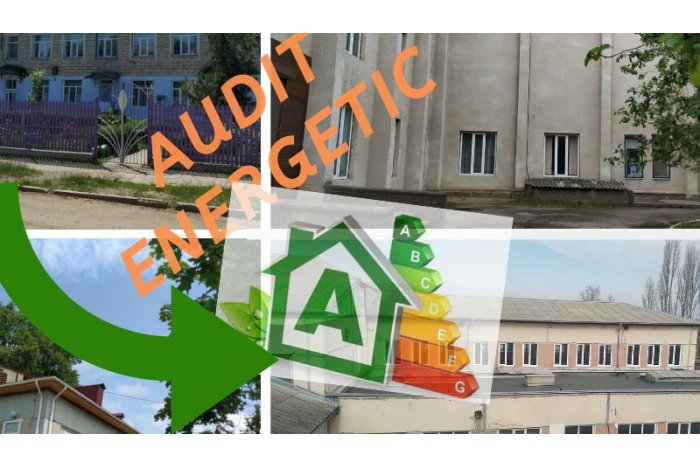
Large enterprises to have to carry out energy audit every 4 years, according to regulation approved by government
Chisinau, Dec. 11 /MOLDPRES/- Energy Ministry is stepping up energy efficiency efforts among the country's companies. In this context, the Cabinet of Ministers approved today the regulation on energy audit of large enterprises. The initiative responds to the critical need to reduce excessive energy consumption, as more than 50% of the energy consumed in the country is used for building maintenance.
In this context, the regulation introduces a strict framework for monitoring and reporting energy consumption, based on the latest measurement and evaluation technologies. The document sets the obligation for large enterprises to conduct energy audits every four years. The audits are essential for identifying energy saving potential and implementing effective measures to reduce consumption. The Regulation also encourages the implementation of energy or environmental management systems, which will contribute to the continuous optimization of the use of energy resources, according to the Energy Ministry.
The regulation also provides for the creation of support mechanisms for the targeted enterprises, including the possibility to access funds in the form of grants for the implementation of energy efficiency measures.
Thus, by approving the Regulation, the aim is to optimize the consumption of energy resources by large industrial consumers, which would lead to reducing in energy consumption at the national level, increase the competitiveness of products and services provided by these entities, as well as increase the energy security of the state.
The list of large enterprises that will be obliged to perform energy audits will be generated by the National Statistics Bureau, and the National Center for Sustainable Energy and the Ministry of Energy will have key roles in monitoring and implementing the regulation.
In the Republic of Moldova, twice as much energy is consumed to maintain one square meter of building as in EU countries.
 Facebook
 Instagram
 X/Twitter
 Telegram
Prime Minister explains failure of Zarea hotel privatization, announces changes for future auctions
Chisinau Airport to have new air connection with Serbia
Made in Moldova exhibition to take place on 27-31 January 2027
CFM resumes rail imports of scrap metal after several years of interruption
Four state-owned enterprises to be put up for privatization again after failing to attract investors
DOC // Currency operations to be simplified
Electricity consumption falls by 6.5 per cent in Moldova in one week; fuel stocks remain stable
IMF mission to visit Chisinau on October 21–28 for discussions with authorities
Moldovan Finance Ministry launches new subscription session for government securities with interest rates of up to 8.05 per cent
VIDEO // Moldova explores opportunities to import liquefied natural gas from United States
PHOTO // Railway of Moldova enterprise tests new Chisinau–Revaca–Sangera railway route
VIDEO // Shepherds' family of Moldova sets national record with 30.7-kilogram cheese
PHOTO GALLERY // 30.7-kilogram cheese set national record at Moldexpo
Government launches in-depth assessment of Yandex Go’s activities in Moldova
“The Prut will remain just a river, not a border separating two Romanian states,” Moldovan PM says at news conference with Romanian counterpart
Moldova, Romania examine joint programmes for counter-drone defense
Moldovan PM says agreement signed in Kyiv not security treaty, but technical-military cooperation agreement
Romania’s PM in Chisinau says European integration of Moldova strategic priority for Romania
VIDEO // PMs of Moldova, Romania discuss advancing bilateral cooperation: strategic infrastructure, energy projects prioritized
Moldovan PM says cybersecurity to stay priority for Moldova
Moldova might start importing gas from Neptun Deep field as of next autumn
 National Bank of Moldova
Moldovan PM says Moldova, Romania connected by future countries want to build together
Moldovan PM's address at joint news conference with Romanian counterpart
Deputy Prime Minister for Reintegration meets with Croatia’s State Secretary for European Affairs
Moldovan President held farewell meeting with Slovak Ambassador
Deputy Prime Minister for Reintegration holds talks with Romanian Foreign Minister

STISC: Personal data of around 750,000 people may have been extracted following cyberattack on digital public services in Moldova
VIDEO // Romanian PM welcomed with honors at Moldova's government
ARMENPRESS: Netherlands to provide financial assistance to Armenia in search for people missing in war
Deputy Prime Minister for Reintegration meets with Croatia’s State Secretary for European Affairs
VIDEO // Romanian investments in Moldova created 12,000 jobs
National Army receives logistical equipment from United Kingdom
Moldovan President held farewell meeting with Slovak Ambassador
Foreign Minister approached European integration and countering hybrid threats in Cyprus
Deputy Prime Minister for Reintegration holds talks with Romanian Foreign Minister
Old-Calendar Orthodox Christians celebrate Saint Venerable Paraskeva, patron saint of Moldova
Prime Minister encouraged Ukrainian entrepreneurs to invest in Moldova
Speaker at meeting with Slovak ambassador: Slovakia’s experience in European integration process remains valuable
Moldova strengthens relations with Cyprus: Honorary Consulate inaugurated in Nicosia
ANALYSIS // Moldovan Prime Minister in Kyiv, consolidation of Moldovan-Ukrainian cooperation
PM invites Ukrainian companies to invest in Moldova
Cahul boxer wins bronze at European U-15 Championships
Receive the latest news directly to your email

Receive the latest news directly to your email