
What state of alert in Moldova's energy sector means: preventive measure due to allow reacting quickly when necessary
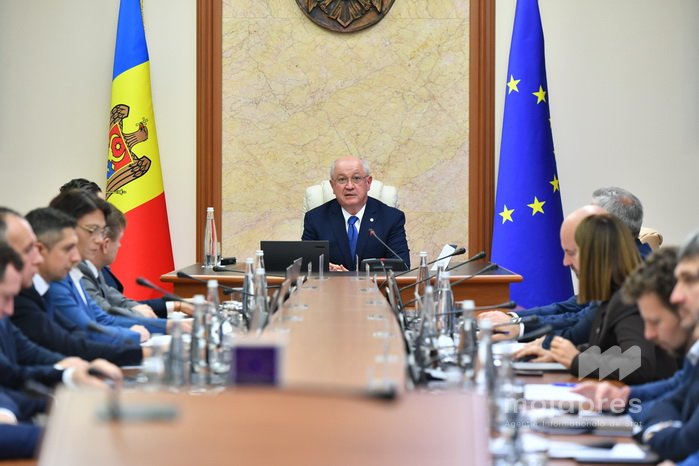
The state of alert in the energy sector is a preventive measure that will allow the authorities to react quickly and only when necessary. Prime Minister Alexandru Munteanu made statements to this effect at the beginning of a today’s government meeting. At the meeting, the cabinet members approved the decisions on ending the state of emergency and introducing the state of alert in the energy sector.

In the context of the proposal to end the state of emergency as of April 25, PM Alexandru Munteanu emphasized that the competent institutions must continue to act with caution, as the global and regional context remains complicated. Under these conditions, the government proposed introducing a state of alert in the energy sector for a period of 60 days.

“We propose lowering the level of caution from the state of emergency to the state of alert, to be reintroduced for a period of 60 days. It is a preventive measure that will allow us to react quickly and only when necessary,” said Alexandru Munteanu.

According to the decision approved by the government, the state of alert is introduced, in order to prevent disruptions in the work of the energy sector, protect the vital functions of the state, ensure the security of energy supply, maintain economic stability and public confidence, as well as ensure an adequate level of preparedness and response by public authorities.

At the government meeting, Director of the National Crisis Management Center (CNMC) Serghei Diaconu said that the decision to introduce the state of alert came as the analysis of risk indicators shows that, although the critical phase had been overcome, maintaining a necessary level of petroleum product stocks on a permanent basis still requires strict management and constant monitoring, in the context of international logistical constraints that limit supply flexibility, triggered by vulnerabilities in the Strait of Hormuz area and the ongoing impact of Russian attacks on Ukraine.

“The switch from the state of emergency to the state of alert represents a responsible and proportionate approach. We no longer justify an emergency regime, but we need a preventive legal framework to protect citizens from international volatility and persistent regional risks, as well as from the reduction of domestic production once the heating season is over,” said Serghei Diaconu.

According to the official, by introducing the state of alert more goals are set, including maintaining the diesel price calculation mechanism based on a seven-day average, instead of the previous 14-day mechanism, guaranteeing supply and fuel stock security, strict market monitoring through daily stock reporting and 30-day import planning, as well as ensuring the security of domestic electricity consumption.

At the same time, in order to prevent any risk of shortage, a string of restrictions have been introduced. More specifically, the Customs Service will allow exports from the Giurgiulesti Port, only if stocks exceed 25,000 tons of diesel and 2,500 tons of petrol. Moreover, oil products that have already entered the country and have been released for free circulation are blocked for export or re-export. The green corridors for customs clearance, with priority for imports, are also maintained, in order to ensure the smooth flow of stocks to filling stations. Likewise, Moldelectrica will set export capacity to zero between 17:00 and 21:00, thus ensuring that the available energy is directed primarily to household consumers and public institutions.

The authorities will also maintain the lists of vital consumers who will benefit from absolute priority in electricity supply in the event of new unforeseen deficits in the system. Starting from April 25 this year, Moldova is due to exit the state of emergency in the energy sector, which was introduced by the parliament on March 25, after the Isaccea–Vulcanesti overhead power line had been disconnected following attacks on energy infrastructure in southern Ukraine.
 Facebook
 Instagram
 X/Twitter
 Telegram
Prime Minister explains failure of Zarea hotel privatization, announces changes for future auctions
Chisinau Airport to have new air connection with Serbia
Made in Moldova exhibition to take place on 27-31 January 2027
CFM resumes rail imports of scrap metal after several years of interruption
Four state-owned enterprises to be put up for privatization again after failing to attract investors
DOC // Currency operations to be simplified
Electricity consumption falls by 6.5 per cent in Moldova in one week; fuel stocks remain stable
IMF mission to visit Chisinau on October 21–28 for discussions with authorities
Moldovan Finance Ministry launches new subscription session for government securities with interest rates of up to 8.05 per cent
VIDEO // Moldova explores opportunities to import liquefied natural gas from United States
PHOTO // Railway of Moldova enterprise tests new Chisinau–Revaca–Sangera railway route
VIDEO // Shepherds' family of Moldova sets national record with 30.7-kilogram cheese
PHOTO GALLERY // 30.7-kilogram cheese set national record at Moldexpo
Government launches in-depth assessment of Yandex Go’s activities in Moldova
PHOTO // Moldovan parliament speaker, Romanian PM discuss energy independence, connectivity between Romania and Moldova
“The Prut will remain just a river, not a border separating two Romanian states,” Moldovan PM says at news conference with Romanian counterpart
Moldova, Romania examine joint programmes for counter-drone defense
Moldovan PM says Moldova, Romania connected by future countries want to build together
Moldovan PM says agreement signed in Kyiv not security treaty, but technical-military cooperation agreement
Romania’s PM in Chisinau says European integration of Moldova strategic priority for Romania
VIDEO // PMs of Moldova, Romania discuss advancing bilateral cooperation: strategic infrastructure, energy projects prioritized
 National Bank of Moldova
Moldovan PM says Moldova, Romania connected by future countries want to build together
Moldovan PM's address at joint news conference with Romanian counterpart
Deputy Prime Minister for Reintegration meets with Croatia’s State Secretary for European Affairs
Moldovan President held farewell meeting with Slovak Ambassador
Deputy Prime Minister for Reintegration holds talks with Romanian Foreign Minister

LIVE // PMs of Moldova, Romania hold news conference
STISC: Personal data of around 750,000 people may have been extracted following cyberattack on digital public services in Moldova
VIDEO // Romanian PM welcomed with honors at Moldova's government
ARMENPRESS: Netherlands to provide financial assistance to Armenia in search for people missing in war
Deputy Prime Minister for Reintegration meets with Croatia’s State Secretary for European Affairs
VIDEO // Romanian investments in Moldova created 12,000 jobs
National Army receives logistical equipment from United Kingdom
Moldovan President held farewell meeting with Slovak Ambassador
Foreign Minister approached European integration and countering hybrid threats in Cyprus
Deputy Prime Minister for Reintegration holds talks with Romanian Foreign Minister
Old-Calendar Orthodox Christians celebrate Saint Venerable Paraskeva, patron saint of Moldova
Prime Minister encouraged Ukrainian entrepreneurs to invest in Moldova
Speaker at meeting with Slovak ambassador: Slovakia’s experience in European integration process remains valuable
Moldova strengthens relations with Cyprus: Honorary Consulate inaugurated in Nicosia
ANALYSIS // Moldovan Prime Minister in Kyiv, consolidation of Moldovan-Ukrainian cooperation
PM invites Ukrainian companies to invest in Moldova
Receive the latest news directly to your email

Receive the latest news directly to your email