
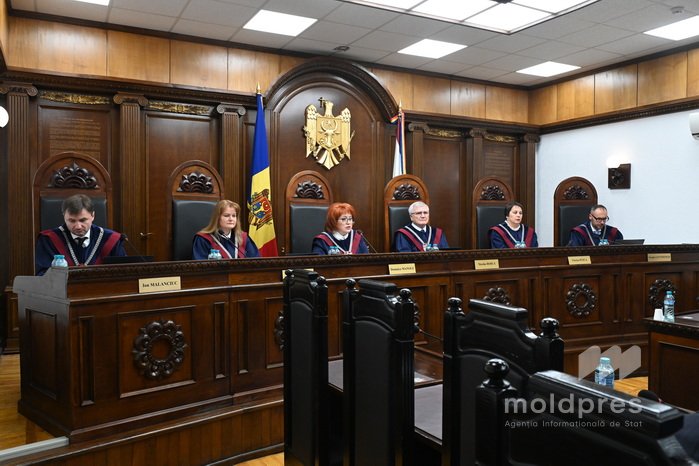
Constitutional Court annuls right of Comrat authorities to appoint heads of Interior, Intelligence and local electoral bodies
The Constitutional Court of the Republic of Moldova has declared unconstitutional several legal provisions concerning the approval of the composition of the electoral commission responsible for organizing elections in the Autonomous Territorial Unit of Gagauzia. At the same time, the Court struck down provisions that allowed the People’s Assembly of Gagauzia to participate in the appointment and dismissal of the heads of the Directorate of Internal Affairs, the Directorate of Justice and the Directorate of the Intelligence and Security Service in Comrat.

The decision was issued today following the examination of a referral submitted by the Minister of Justice, Vladislav Cojuhari. At the same time, the Constitutional Court rejected a related referral filed by the People’s Assembly of Gagauzia, which challenged provisions of the Electoral Code regarding the appointment of the electoral body in the autonomy. As a result, the Gagauz autonomy will no longer have the right to establish its own electoral authority and to set special rules for organizing elections in the region.

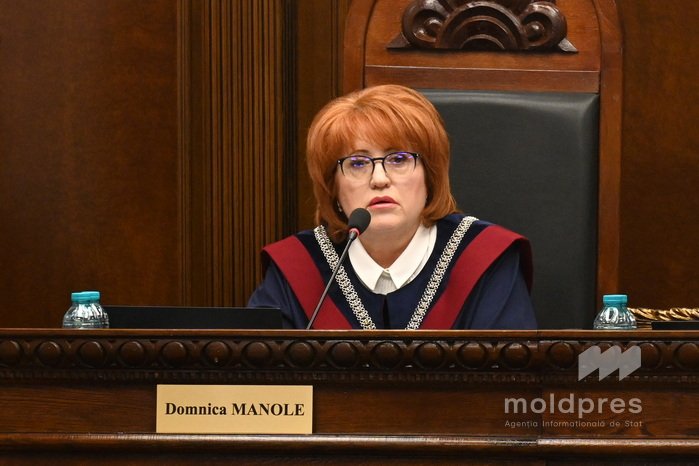
President of the Constitutional Court Domnica Manole explained that the High Court emphasized that “in a unitary state there cannot be multiple centers of sovereign power, and the autonomy cannot hold its own powers that conflict with the powers of the central authorities.”

“The Court stressed that local autonomy must have limits, which are determined in particular by the principle of the unitary state. The unitary character of the state presupposes a single holder of sovereignty and a single system of central public authorities. In a unitary state there cannot be multiple centers of sovereign power. The autonomy cannot have its own competences that conflict with the competences of the central authorities. Article 111 of the Constitution does not create a second level of constituent power or an autonomous legal order, but allows the existence of territorial autonomy within the national constitutional order,” argued Domnica Manole.

At the same time, the President of the Constitutional Court said that “the High Court found that ensuring public order and state security does not fall within the scope of the powers of the Autonomous Territorial Unit of Gagauzia, but represents fundamental functions of the state, exercised by the central public administration authorities or other national administrative authorities.”

Domnica Manole also provided clarifications regarding the competences of the local bodies of UTA Gagauzia in electoral matters.

“The competence of the People’s Assembly of Gagauzia to approve the composition of the central electoral commission for organizing elections does not fall within the limits of the competences of local public administration, nor within those of a territorial autonomous unit with special status,” the President of the Constitutional Court underlined.

The ruling of the Constitutional Court is final, cannot be appealed by any means, enters into force on the date of its adoption and is to be published in the Official Journal.

At the beginning of June, the issue of organizing elections in Gagauzia was discussed during consultations held at the Presidency, with the participation of representatives of the central authorities, the Central Electoral Commission and the autonomy.

Following the discussions, the participants agreed on the need to harmonize the local electoral legislation with the provisions of the Electoral Code of the Republic of Moldova, so that elections in the autonomy are organized in accordance with national standards on transparency, campaign financing and the functioning of electoral bodies.

According to the authorities in Chisinau, the draft law amending the legal framework was developed after several rounds of consultations with representatives of the People’s Assembly of Gagauzia, the Executive Committee and deputies from the autonomy. Despite the compromises identified during the negotiations, the process of adopting the new electoral rules remained blocked.
 Facebook
 Instagram
 X/Twitter
 Telegram
VIDEO // Moldova commemorates 77 years since second wave of deportations
President congratulated U.S. on Independence Day
Diplomatic relations between Moldova and China on rise: high-potential development areas on authorities’ agenda
VIDEO // Voluntary amalgamation in Cahul: Three localities merge into single city hall, with 16 million lei incentive from Government
United States of America marks Independence Day
PHOTO // Parliament and Triumphal Arch illuminated in colors of US flag on 250th anniversary of adoption of Declaration of Independence
Moldova and Ukraine advance in EU accession process
Elections to People’s Assembly of Gagauzia set for 15 November
PHOTO // Moldovan products promoted through economic diplomacy
OPINION // Expert Andrei Curăraru: Government’s resignation reflects failure to manage tax reform and public communication
MP Valentin Gaidarji elected President of People’s Assembly of Gagauzia
OPINION // Rapid formation of new Government, mandatory signal of stability for external partners of the Republic of Moldova
Secretary General of Government: Reforms must continue, regardless of political changes
Education Minister on disagreements with Prime Minister: I said what I think on fiscal policy
Constitutional Court annuls right of Comrat authorities to appoint heads of Interior, Intelligence and local electoral bodies
VIDEO // Voluntary amalgamation process to end on July 31
World record and gold medal for Moldovan athlete Maxim Caraion at World Championships in Milan
EU to fund creation of at least four community homes for children with severe disabilities in Moldova
Speaker: Candidate for prime minister position could be announced by end of week
Approved by Parliament: Moldova to integrate into European social security coordination system
Moldova modernizes regulatory framework on financial guarantees, in line with EU legislation
 National Bank of Moldova
Bilateral meetings with Lithuanian officials during working visit of Deputy Prime Minister for Reintegration to Vilnius
Discussions with representatives of Norwegian Refugee Council on activities carried out in Moldova
Almost 360 thousand residents of Transnistrian region hold citizenship of the Republic of Moldova
President launches consultations on nominating candidate for Prime Minister
Government State Secretary for Reintegration in dialogue with local public authorities on community development and citizens’ access to public services

Discussions with representatives of Norwegian Refugee Council on activities carried out in Moldova
Almost 360 thousand residents of Transnistrian region hold citizenship of the Republic of Moldova
President launches consultations on nominating candidate for Prime Minister
MPs to convene in plenary session on Thursday
Government State Secretary for Reintegration in dialogue with local public authorities on community development and citizens’ access to public services
Acting Prime Minister welcomes European Parliament report on Moldova
In 2027, Republic of Moldova to host Conference of Speakers of EU Candidate Countries
European Parliament report welcomes Moldova’s progress
ARMENPRESS: EU donates next-generation demining machine to Armenia
Court of Appeal upholds sentence in case of former BEM head: 10 years in prison and 100 million dollars in damages
Speaker after European Parliament vote on Report on the Republic of Moldova: Moldova moves forward. Step by step, ever closer to European Union
Moldovan Deputy Prime Minister for Reintegration meets Speaker of Lithuania
Moldovan MPs present Moldova’s priorities at OSCE PA Session in The Hague
European Parliament calls for opening all negotiation clusters with Moldova: report backed by large majority
VIDEO // European Commissioner calls for opening all negotiation chapters on Moldova’s EU accession
Over 770 city halls involved in voluntary amalgamation process
Receive the latest news directly to your email

Receive the latest news directly to your email