
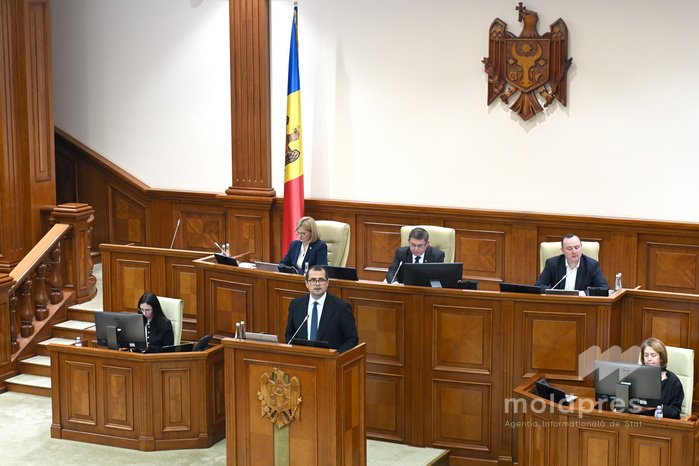
Moldovan parliament approves establishment of state of emergency in energy, hydrological sectors for 60 days
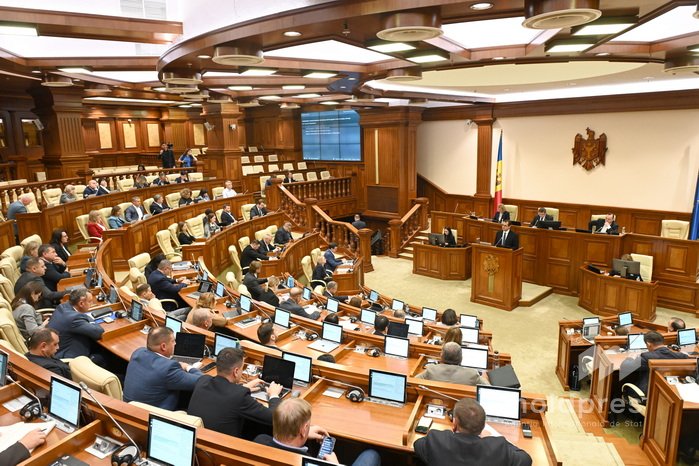
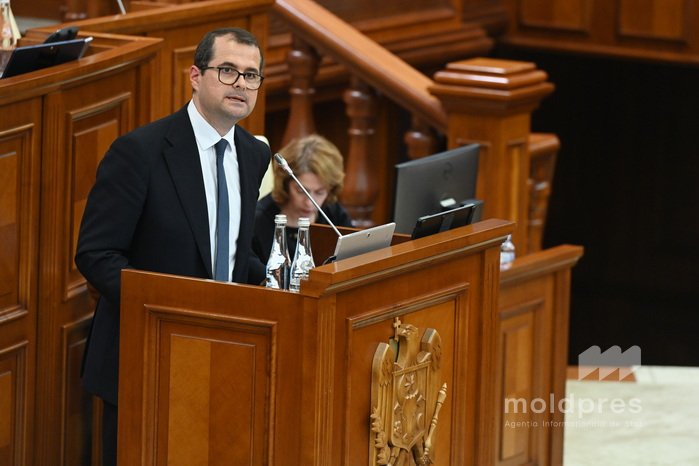
The parliament today approved the establishment of a state of emergency in the energy and hydrological sectors for a period of 60 days, starting from September 26. The initiative was supported by 54 lawmakers following a meeting that lasted approximately five hours. The draft law was submitted by the government and presented by Prime Minister Vasile Tofan. The PM said that the measure was necessary to enable rapid action and ensure the continuity of citizens’ access to energy resources and water, amid multiple overlapping risks.

The official pointed out that the beginning of the cold season brings more overlapping risks concerning the supply of gas, fuel, electricity and water resources, as well as the high prices of energy resources.

The prime minister noted that the state of alert in the energy and hydrological sectors expires on September 25, while the risks that led to its introduction had not disappeared but, on the contrary, had intensified.

Thus, according to the prime minister, “the government’s role is not to wait for a crisis to occur and then explain why it did not act”; instead, the authorities must have the necessary instruments to manage the situation effectively before potential crises materialize.

“We are requesting a state of emergency, as we are entering a period in which the risks are greater and more interconnected than the ones covered by the instruments available under a state of alert. Extending the state of alert would not cover some of the more severe scenarios that we must be prepared to manage. And I want to be very clear: we are not asking for a blank check or unlimited freedom. Precisely because the instruments are stronger, responsibility and oversight must also be greater. (...) The government’s role is not to wait for a crisis to occur and then explain why it did not act. We must have the instruments in place before these crises materialize. I would rather come to parliament today to transparently explain the risks and be prepared than reach January in a situation where we need these instruments, but do not have them available. I hope that, in 60 days, we will be able to say that many, ideally all, of these instruments did not even have to be used. That would be the best outcome. But preparing for a crisis does not begin when the lights go out, the pump stops working or diesel disappears from filling stations. It starts when the crisis has not yet struck with full force. It begins today,” Vasile Tofan said at the parliamentary session.

At the same time, Prime Minister Vasile Tofan noted that, amid high energy resource prices, the government is considering increasing the number of families eligible for energy compensation compared with the authorities’ initial estimates.

After presenting the draft law, Prime Minister Vasile Tofan answered lawmakers’ questions for approximately three hours. The questions concerned the reasons behind the need to declare a state of alert, the measures to be implemented to manage the situation and ensure the country’s supply with energy and water resources, as well as the actions proposed to support citizens.

Lawmakers acknowledged that “the situation is complicated” and that the authorities must be prepared to take the necessary action, but stressed the need to ensure transparency in the measures implemented, efficient management of available resources and support for the most vulnerable categories of citizens.

“The situation is extraordinary and requires extraordinary action. There will be a lot of criticism today, but we hope to find solutions, as we live in the same country,” said lawmaker Igor Dodon.

Prime Minister Vasile Tofan assured lawmakers that, at the end of the state of emergency, the government would present a report on the measures implemented.

The draft law was presented to parliament after being approved by the government earlier today. The decision comes after the National Security Council, which convened on September 21, agreed on the need to declare a state of emergency in the energy and hydrological sectors, so that institutions would have the necessary tools to respond quickly in the event of major disruptions and ensure the country’s supply of electricity, natural gas and oil products.
 Facebook
 Instagram
 X/Twitter
 Telegram
Moldovan Foreign Affairs Ministry condemns incident near Colonita settlement
Estonia to continue providing expertise to Moldova in EU accession process
Joseph Mark Burkhalter sworn in as U.S. Ambassador to Moldova
Speaker about protests in Transnistrian region: Reintegration process irreversible
Moldovan parliament speaker provides details on administrative and territorial reform
Moldovan parliament speaker, after meetings in Budapest, says Hungary supports Moldova in its efforts
Moldovan parliament speaker explains need to create Moldova Project: “We must concentrate expertise in a single entity”
Lithuania to support Moldova’s European path during Presidency of Council of EU
Family members of Moldovan and Danish diplomats to gain access to paid work under new agreement
Brussels sends important message to countries moving forward with reforms
Moldova condemned repeated violations of airspace to OSCE
Moldovan parliament speaker in Budapest says Moldova, Hungary can open new chapter in relations between parliaments of two countries
President at Forum on justice reform and fighting corruption: Building rule of law most complicated commitment in EU accession program
Republic of Moldova among countries in EU enlargement perspective
Moldovan-American sectoral cooperation discussed at Moldova's Defense Ministry
Moldovan energy minister gives explanations on how Transnistrian region to be supplied with energy resources during next cold season
Moldovan PM says situation on Dniester must not be turned into subject of political speculation
Moldovan PM presents draft law establishing state of emergency in parliament
 National Bank of Moldova
Moldovan PM, European Commission official discuss accelerating growth plan projects
Moldovan PM's speech at parliament's plenary meeting on establishment of emergency state
Moldovan president, delegation of Czech senators discuss Moldova’s European path, bilateral cooperation
Government improves financing mechanism for regional and local development projects
National railway infrastructure program for 2026–2030 approved by Government: Railway to be modernized and passenger transport expanded

Moldovan PM's speech at parliament's plenary meeting on establishment of emergency state
LIVE // Moldovan PM in parliament: government calls for establishing state of emergency in energy, hydrological sectors
Moldova, Austria strengthen cooperation; Moldovan parliament speaker meets new Austrian ambassador
Bypass road of over 7 km to be built in Cimislia town of Moldova under a 43.3 million-euros-worth contract
Moldovan president, delegation of Czech senators discuss Moldova’s European path, bilateral cooperation
Moldova establishes diplomatic relations with Togo
Energocom company's leadership rules to give up part of salary payments, postpone string of investments, with estimated savings of 17.5 million lei
Moldova's Foreign Minister discusses expanding bilateral cooperation with Chilean and Tunisian counterparts in New York
Czech Senator: Moldova belongs at European table and is part of European project
Environment Minister on Dniester situation: Water reserves three times lower than discharges, situation worsened
Energy Minister on declaring state of emergency: We must be prepared to act quickly
Council of Europe Office to UN inaugurated in New York
Government improves financing mechanism for regional and local development projects
National railway infrastructure program for 2026–2030 approved by Government: Railway to be modernized and passenger transport expanded
Crime victims to gain easier access to support and compensation
Chisinau's Triumphal Arch to be restored
Receive the latest news directly to your email

Receive the latest news directly to your email